



19th Century Howard Armchair
A 19th century howard armchair brings deep-seated English country house comfort and exceptional Victorian upholstery to a room.
19th Century Howard Armchair
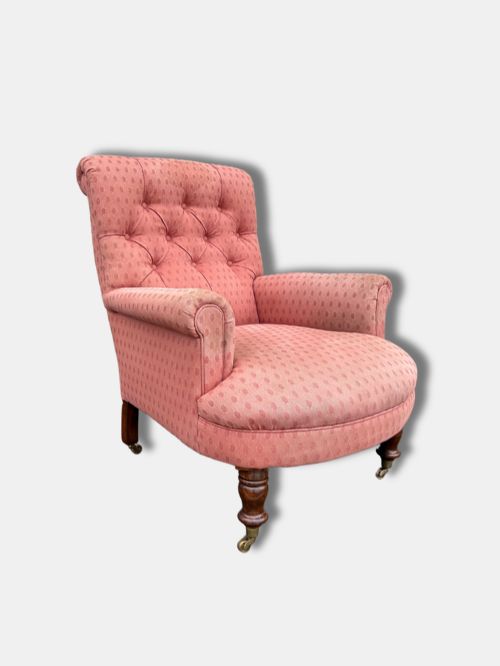
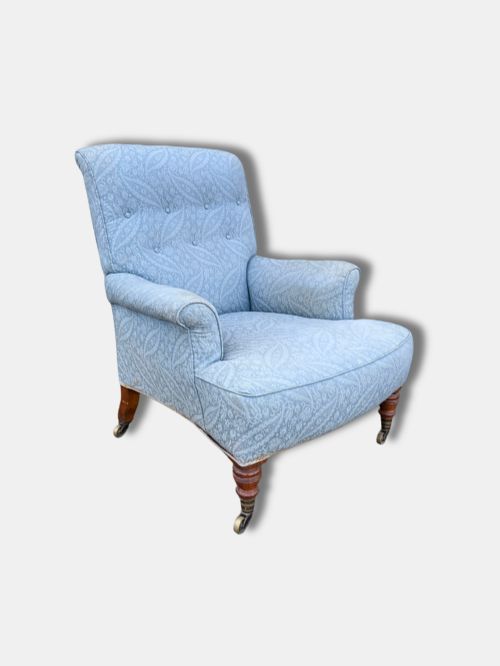
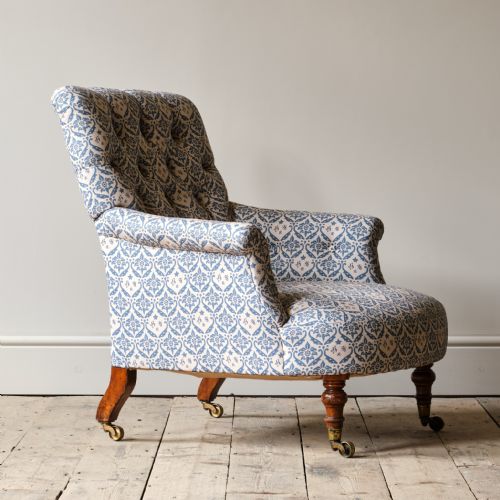
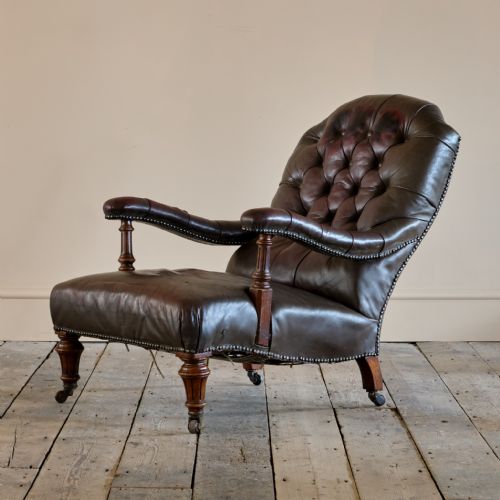
A 19th century howard armchair represents the pinnacle of Victorian lounging, defined by low-slung profiles, scrolled arms and generous proportions. These pieces range from authentic stamped workshop productions to finely made examples following the signature aesthetic.
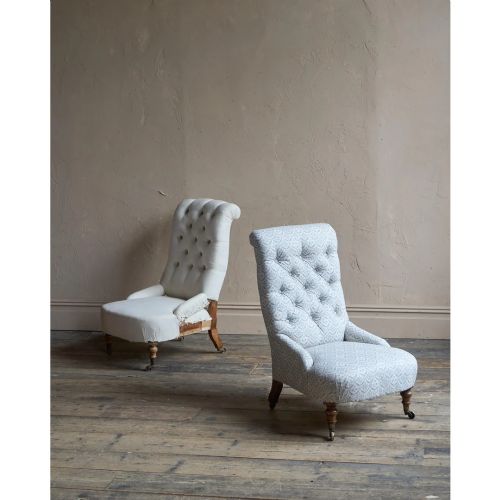
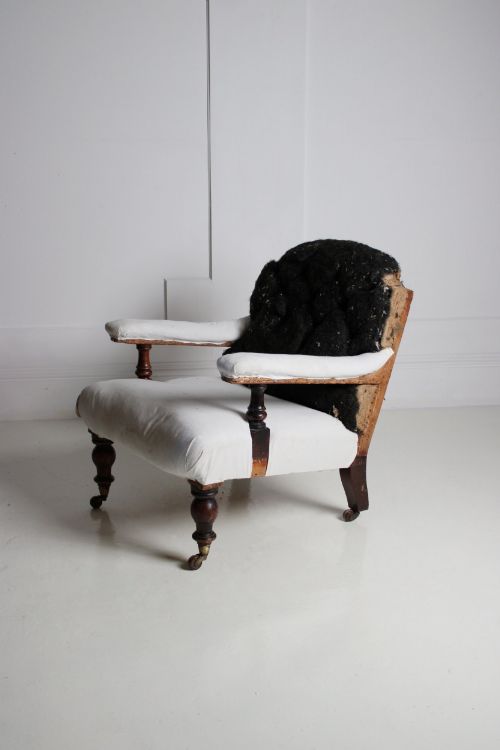
The selection on this page centres primarily on armchairs, alongside related forms such as bedroom chairs, slipper chairs and open armchairs. Pieces emerge from various decades of the 19th century, carrying the distinct lineage of English country house seating.
How They Were Made
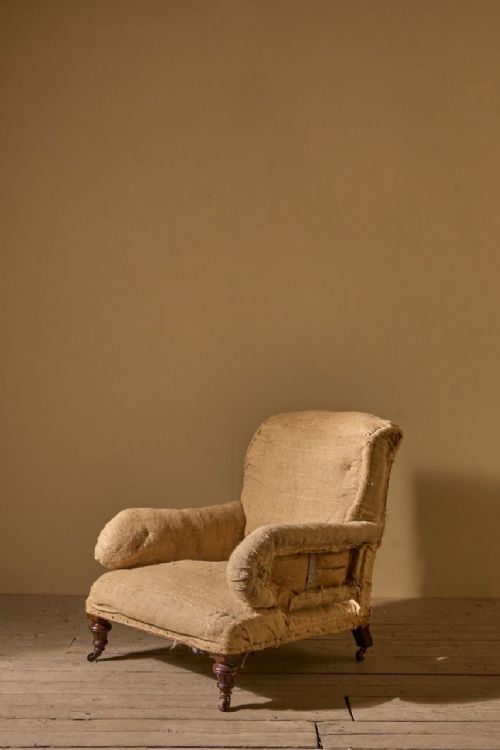
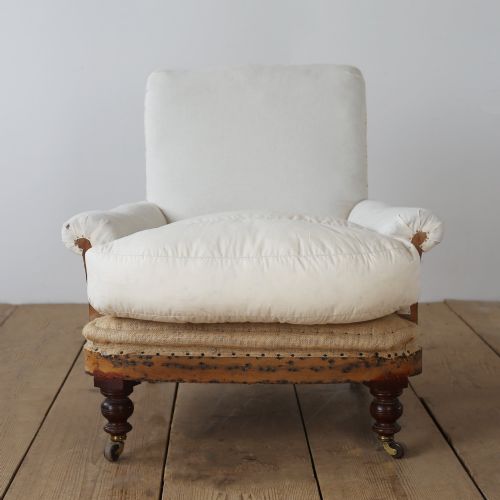
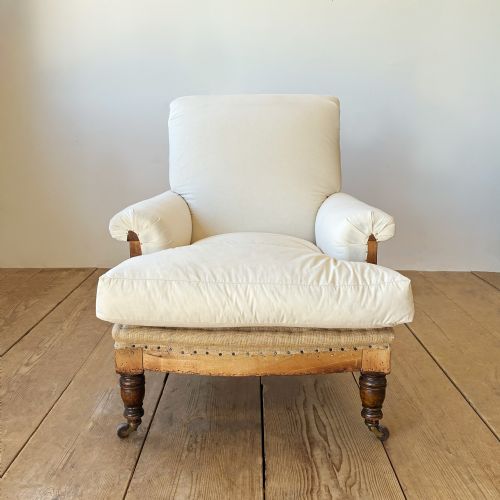
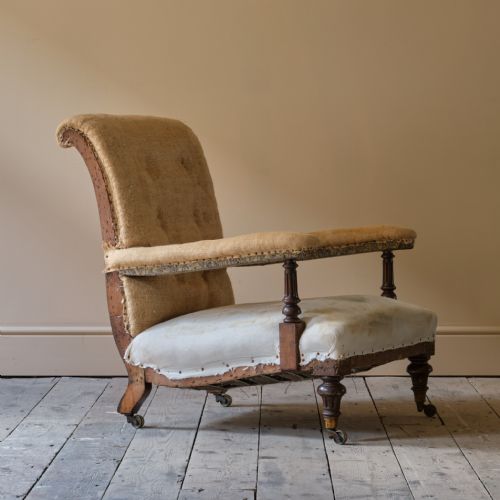
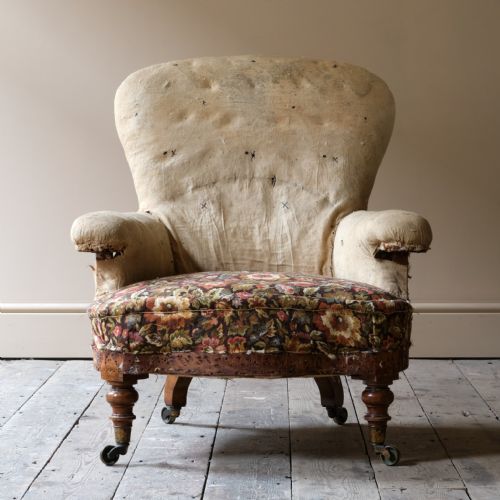
Frames rely on sturdy timbers including mahogany, walnut and general wood construction, built to withstand generations of heavy use. Interior stuffing utilises traditional materials like hessian and calico to support the deep cushioning.
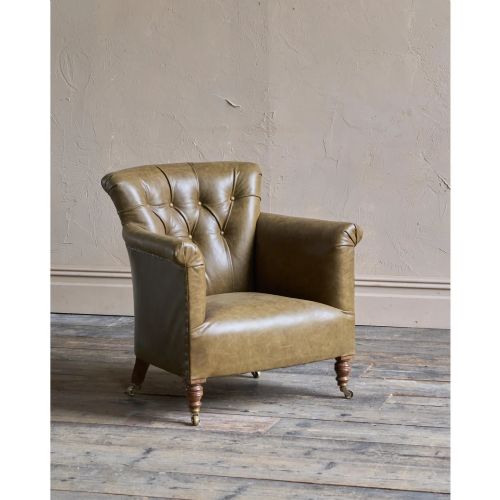
Visible elements integrate turned wooden legs terminating in brass castors, while exposed frames showcase polished hardwood surfaces. Upholstery finishes span patterned fabrics, leather and cotton in various tones.
Several armchairs still retain their original brass castors designed for gliding across Victorian carpets without catching.
What Varies in Quality
Distinction lies in the integrity of the original frame construction and whether maker stamps remain intact upon the timber or castors. Authenticity of the internal stuffing and supporting webbing dictates the historical value of each chair.
Proportion and scale separate standard regional seating from the celebrated models produced by premier makers. The preservation of original castors and the subtlety of the arm scroll further distinguish superior examples.
Howard and Sons·Robert Strahan Dublin
The 19th Century Howard Armchair Glossary
- Castor
- A small wheel mounted on a swivel assembly attached to the base of each leg, allowing the heavy chair to move smoothly across floors. These brass components often carry maker stamps on authentic pieces.
- Calico
- A plain-woven cotton fabric used as an internal lining and base layer beneath the final top upholstery. It holds the stuffing tightly in place across the sprung back and seat.
- Hessian
- A coarse woven fabric, typically made from jute fibres, utilised for interior webbing and foundation support. It provides the durable tension required for deep-sprung seating.
- Open Armchair
- A seating form featuring uncovered wooden arms rather than fully upholstered padding. This lighter construction often highlights turned mahogany or walnut framing.
- Bridgewater
- A specific model style characterised by low, rolled arms and a deep seat designed for relaxed lounging. It remains one of the most recognisable shapes associated with the maker.
19th Century Howard Armchair: Frequently Asked Questions
How do I identify a genuine piece?
Look for stamped maker marks on the back legs or brass castors, alongside traditional construction methods like hessian webbing and coiled spring stuffing.
Examine the proportions, weight and silhouette against known nineteenth-century country house models.
Were these chairs used in bedrooms?
Smaller variations, often listed as bedroom chairs or slipper chairs, were designed specifically for dressing rooms and private chambers.
These pieces maintained the same deep comfort as larger models while fitting into more compact residential spaces.
What wood was used for the frames?
Frames were constructed from durable hardwoods such as mahogany and walnut, ensuring structural integrity for the heavy sprung interiors.
Exposed wooden elements on open armchairs or legs display the natural grain and rich tone of these timbers.
How do I care for the leather?
Leather upholstery requires regular dusting and occasional conditioning to maintain suppleness and prevent cracking over time.
Keep the chair away from direct sunlight and heat sources to preserve the natural finish.