


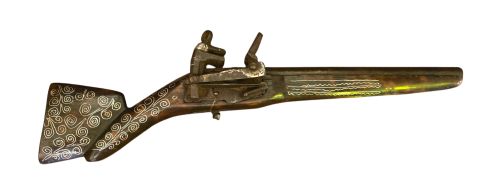

19th Century Horse Pistol
A 19th century horse pistol is a robust military or service sidearm designed for mounted troops, offering tactile historical weight and martial pedigree.
19th Century Horse Pistol
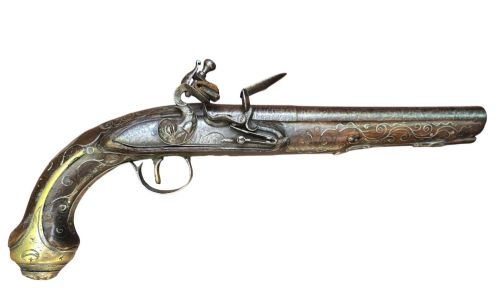
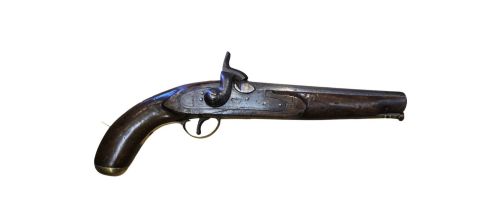
A 19th century horse pistol encompasses heavy-duty sidearms issued to cavalry regiments, light dragoons, and officers during a turbulent military era. These pieces frequently span the transition from flintlock ignition to percussion cap systems across British, European, and Ottoman territories.
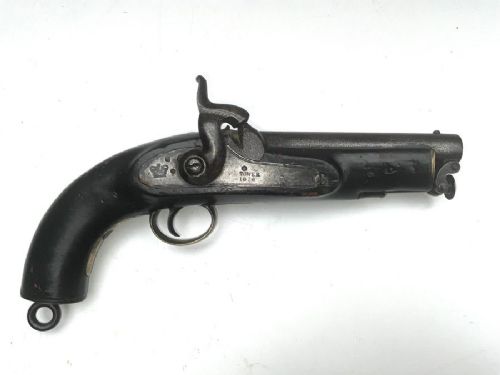
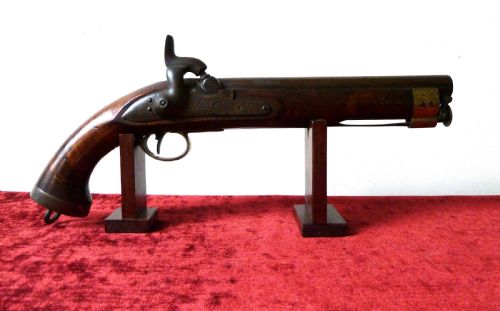
The version most commonly encountered on this page is the British military percussion or flintlock cavalry pistol, often bearing official government proofs and Tower markings. Collectors also find occasional regional variants including East India Company pieces and Afghan snaphaunce long pistols.
These arms served primarily on horseback where manoeuvrability and stopping power mattered more than fine target precision. Today, they form a cornerstone of antique militaria collections, prized for their direct association with mounted warfare.
Materials and construction
Makers built these heavy sidearms using dense walnut or general wood for stocks, shaped to absorb the recoil of large-bore barrels. Iron and steel formed the functional lock mechanisms, barrels, and furniture, while brass appeared on select sideplates, trigger guards, and select barrel components.
Decorative and structural detailing involved hand-stamping workshop marks, engraving lockplates with crowns, and occasionally embedding silver inlay work into exotic long pistols. Flintlock and percussion ignition systems required precise metallurgical hardening on frizzens and hammers to generate reliable sparks or strikes.
Materials documented across the inventory include walnut, steel, brass, iron, and silver.
Judging quality and originality
The distinction between standard military issue and finer quality lies in the clarity of government inspection stamps, crispness of lockplate engravings, and the retention of original wood contours. Examples bearing distinct maker names, such as Wilson, or verified regimental markings command greater historical interest than unmarked pieces.
Originality of components heavily dictates standing, particularly where stocks remain un-sanded and metal surfaces retain honest patination without aggressive cleaning. The presence of functioning mechanical actions and matching barrel proofs elevates a piece within its respective period.
WILSON
The 19th Century Horse Pistol Glossary
- Percussion cap
- An ignition system utilising a small metal percussion cap placed on a nipple, struck by the hammer to fire the charge.
- Flintlock
- A lock mechanism that creates a spark by striking a piece of flint against a steel frizzen to ignite gunpowder.
- Tower marking
- An official stamp indicating manufacture or inspection at the historic Tower of London armouries.
- Snaphaunce
- An early type of flintlock mechanism employing a separately pivoted frizzen and a spring-held pan cover.
- Bore
- The interior diameter of the firearm barrel, determining the calibre or size of the lead ball fired.
19th Century Horse Pistol: Frequently Asked Questions
What is a horse pistol?
A horse pistol is a large firearm specifically issued to mounted soldiers and cavalrymen during the eighteenth and nineteenth centuries. Their substantial size made them impractical for foot soldiers, requiring a holster attached to a horse's saddle.
These weapons provided close-range defence for troopers before the widespread adoption of reliable revolvers. Today, collectors value them for their rugged utility and direct connection to historical cavalry tactics.
How do flintlock and percussion pistols differ?
Flintlock pistols rely on a piece of flint striking a steel frizzen to produce sparks that ignite priming powder in an external pan. Percussion pistols use an enclosed hammer striking a primed percussion cap placed directly onto a nipple, offering much greater reliability in wet weather.
The transition from flintlock to percussion occurred during the early nineteenth century, rendering older flintlocks obsolete for active military service. This technological shift helps date specimens encountered on the market today.
Were these pistols used by officers?
Military officers frequently purchased their own private-purchase sidearms, which often featured finer finish and detailing than standard government-issued weapons. Gentlemens and officers variants served as personal defence arms during campaigns.
These private pieces sit alongside standard cavalry arms on the market, offering insight into the personal equipment carried by military commanders.
How should I display a horse pistol?
Displaying an antique pistol safely involves secure wall mounting or placement in a dedicated glass display cabinet away from direct sunlight and moisture fluctuations. Stable environmental conditions prevent wood shrinkage and metal oxidation.
Ensuring the firearm remains unloaded and inert is essential, while handling should be kept to a minimum to protect the antique finish and wood patina.