






Antique Percussion Firearm
An antique percussion firearm brings nineteenth-century mechanical ingenuity to the shelf, offering a tangible link to the development of black powder weaponry.
Antique Percussion Firearm
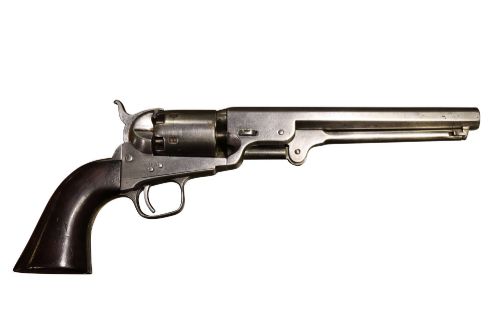
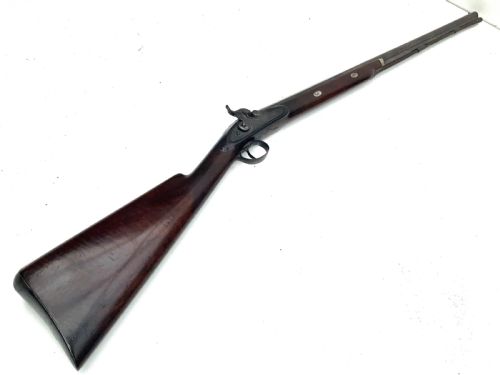
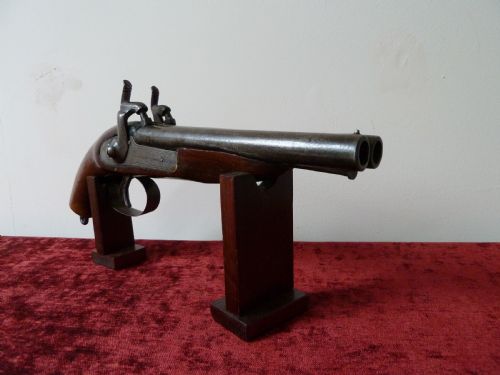
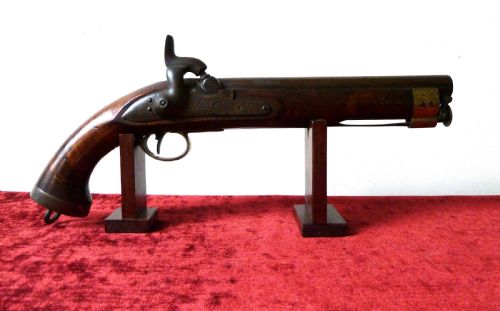
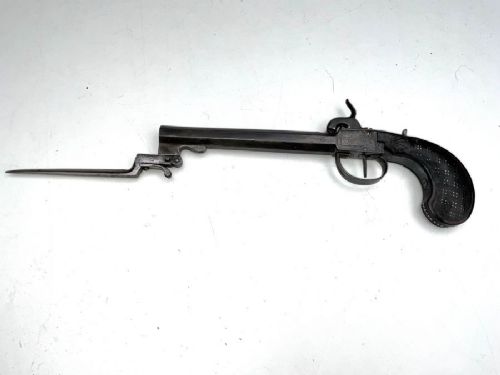
An antique percussion firearm represents the major nineteenth-century shift from flintlock ignition to the percussion cap system, which utilised a small priming charge struck by a hammer to ignite the main black powder load inside the barrel. These pieces span civilian pocket pistols, heavy military belt arms, multi-shot revolvers, and long sporting guns.
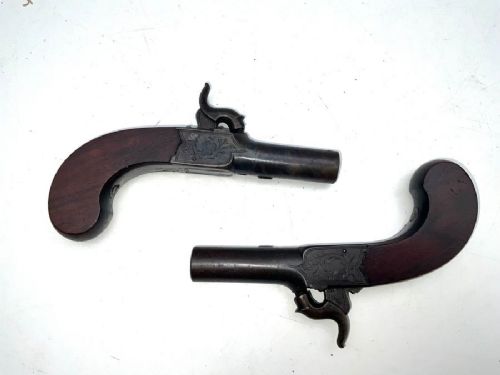
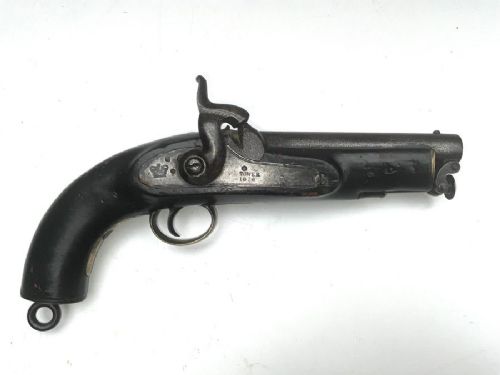
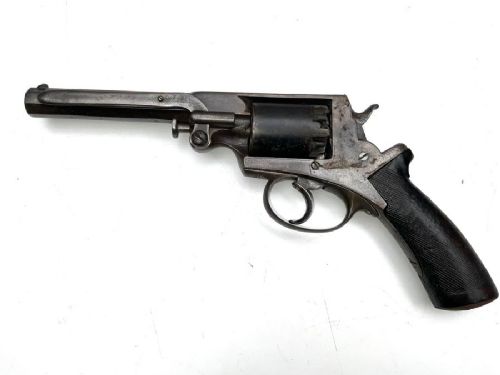
The versions most commonly met on this page are mid-nineteenth-century pocket pistols and military sidearms dating from the 1850s and 1860s, alongside notable revolving firearms by makers such as Colt and Beaumont-Adams. Such items reflect the widespread adoption of percussion technology by both armed forces and private citizens across the Victorian period.
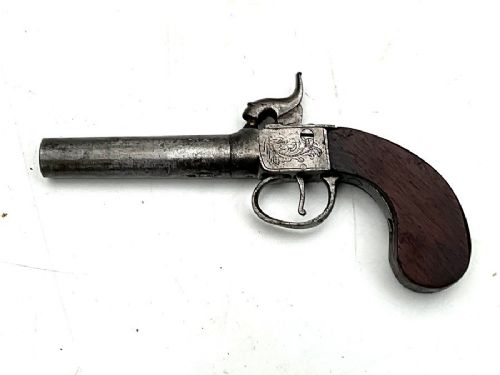
Forms range from compact boxlock pocket pistols designed for personal defence to large cavalry pieces, pepperbox revolvers with multiple rotating barrels, and Enfield or East India Company muskets. Each category reveals distinct manufacturing priorities, balancing portability, firepower, and mechanical complexity.
How they were made
Makers shaped barrels and actions from forged steel and iron, pairing these metallic components with stocks carved from dense walnut, mahogany, or other seasoned woods. Metal surfaces often received browning, bluing, or fine engraving, while brass mountings and trigger guards provided durable contrast.
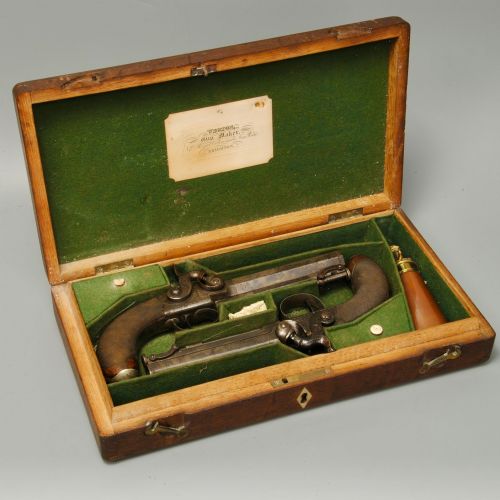
Mechanisms relied on precision engineering, incorporating internal lockwork, nipples to hold the percussion cap, and rifled or smoothbore barrels. Fitted cases frequently integrated velvet linings and specific compartments for accessories like bullet moulds, powder flasks, and cleaning rods.
Current listings feature steel, brass, and iron mechanisms fitted into walnut and mahogany stocks across the nineteenth century.
What varies in quality
The standard of an antique percussion firearm depends heavily on the crispness of the lock mechanism, the integrity of the metal finish, and the quality of the timber stock. Finer specimens display harmonious proportions, sharp checkering, and maker signatures that denote reputable workshops.
Execution of engraved decoration and the precision of mechanical fitting separate standard military issue pieces from bespoke civilian target pistols and cased sets. Original matching numbers and complete accessory kits elevate the overall coherence of a piece.
Colt·Beaumont-Adams·J.R. Cooper·Joseph Egg·Auguste Francotte·John Manton & Son·George Sherwood·A.W Spires·Tower
The Antique Percussion Firearm Glossary
- Percussion cap
- A small copper or brass cup containing a priming compound placed on the nipple of the firearm. When struck by the hammer, it creates a flame that ignites the main powder charge.
- Pepperbox
- A multi-barrelled firearm where the barrels themselves revolve around a central axis when the trigger or hammer is cocked. This design offered multiple shots before reloading was necessary.
- Smoothbore
- A barrel without internal rifling grooves, designed to fire lead shot or round balls over shorter distances. These were common in muskets and certain pocket pistols.
- Nipple
- The small threaded cone upon which the percussion cap sits. It channels the flame from the detonating cap directly into the powder chamber.
- Boxlock
- A firearm design where the breech and lock mechanism are forged as an integral unit with the frame. This layout creates a compact, streamlined profile often seen on pocket pistols.
Antique Percussion Firearm: Frequently Asked Questions
What is a percussion firearm?
A percussion firearm uses a chemical priming cap placed on a nipple, struck by a hammer to ignite the gunpowder within.
This mid-nineteenth-century innovation replaced the earlier flintlock system, offering greater reliability in wet weather.
How do I care for my piece?
Keep the metal components lightly oiled and store the firearm in a stable environment away from damp conditions and direct sunlight.
Wooden stocks benefit from occasional applications of appropriate wax to maintain their condition without damaging the finish.
How do I distinguish military and civilian models?
Military pieces typically feature government inspection stamps, standard issue markings, and robust, plain iron or steel furniture.
Civilian versions often showcase finer engraving, polished brass or silver mounts, checkered grips, and specialised calibres suited for personal protection or target shooting.
What does matching numbers mean?
Matching numbers indicate that the primary components of the firearm, such as the frame, barrel, and cylinder, were stamped with the same serial number during production.
This shows the piece retains its original factory configuration rather than having parts swapped from other weapons over time.