
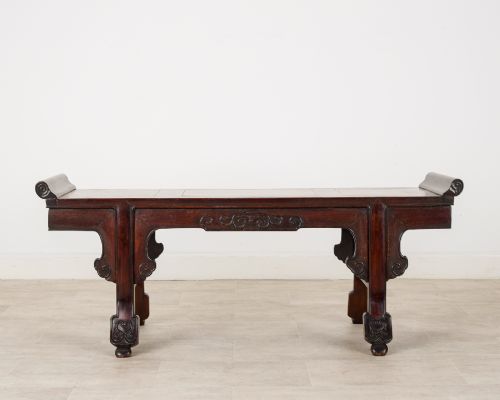

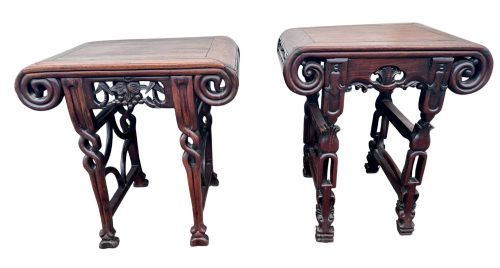


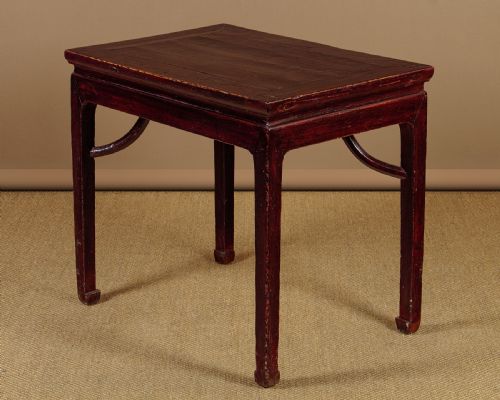


19th Century Hardwood Stools
These 19th century hardwood stools unite heavy timbers and intricate carving from Victorian workshops and Chinese dynasties.
19th Century Hardwood Stools
The selection on this page leans heavily towards Chinese provincial and Qing Dynasty stands, alongside Anglo-Burmese and Anglo-Indian colonial examples. You will frequently find items functioning simultaneously as stools, side tables, or plant stands.
Forms vary from drum-shaped barrel stands to long altar benches and low footstools. Many integrate dense exotic woods like hongmu and rosewood, occasionally paired with inset marble or porcelain panels.
How they were made
Maker workshops utilised dense tropical and domestic hardwoods, including rosewood, elm, and hongmu, often ebonised for a dramatic dark finish. These heavy timbers provided the structural integrity needed for deeply carved motifs.
Joinery techniques combined traditional framing with intricate hand-carving depicting foliage, animals, and geometric patterns. Artisans also set delicate materials like marble, bone, mother-of-pearl, and fabric directly into the wooden frames.
The listings span the nineteenth century, including specific dates from 1860, 1880, 1890, and 1900, alongside general Victorian and Qing Dynasty periods.
What varies in quality
The calibre of these items rests upon the crispness of the hand-carving and the choice of timber. Pieces fashioned from heavy hongmu or rosewood with deeply undercut relief display superior craftsmanship compared to simpler elm variants.
Integration of secondary materials dictates distinction. Stands featuring precisely fitted marble tops, intact mother-of-pearl inlay, or porcelain panels represent the upper tier of period production.
The 19th Century Hardwood Stools Glossary
- Hongmu
- A dense, heavy Chinese hardwood prized for its dark red-brown tone and durability. It provides the foundation for intricate period carving.
- Ebonised
- Wood treated with a chemical stain or finish to imitate ebony. This dark treatment was popular in late Victorian design.
- Qing Dynasty
- The final imperial dynasty of China, spanning the seventeenth to early twentieth century. Pieces from this era often feature elaborate carved motifs.
- Anglo-Indian
- Furniture made in India during British rule, combining local craftsmanship with European forms. These items frequently display dense elephant or foliage carving.
- Occasional table
- A small, versatile table used for general purposes rather than dining. They appear frequently in various heights alongside seating.
19th Century Hardwood Stools: Frequently Asked Questions
How do I clean a hardwood stool?
Dust the surfaces regularly with a soft, dry cloth to protect the carved details and polished finish. Avoid using harsh chemical cleaners or excess water, which can damage aged timber and inlay.
Apply a quality beeswax occasionally to nourish the hardwood and maintain its natural lustre. Keep the piece away from direct sunlight and heat sources to prevent the wood from splitting.
Can I use these stools for seating?
Many of these items were originally constructed as functional seats, footstools, or window benches. Their sturdy hardwood frames generally support normal weight.
Delicately carved decorative stands or pieces with inset marble panels are better suited for use as side tables or plant stands. Check the structural stability of older joinery before daily seating use.
How do I identify Anglo-Indian pieces?
Anglo-Indian pieces typically feature dense, deep relief carving depicting flora, fauna, or figures like elephants. They combine traditional British furniture shapes with Indian artisanal techniques.
These items often emerge from nineteenth-century production centres such as the Bombay presidency. The choice of native timbers and heavy proportions distinguishes them from Chinese regional equivalents.