





19th Century Girandole Mirrors
These 19th century girandole mirrors bring flickering candle-light and deep reflection into a room, combining practical illumination with ornate wall decoration.
19th Century Girandole Mirrors
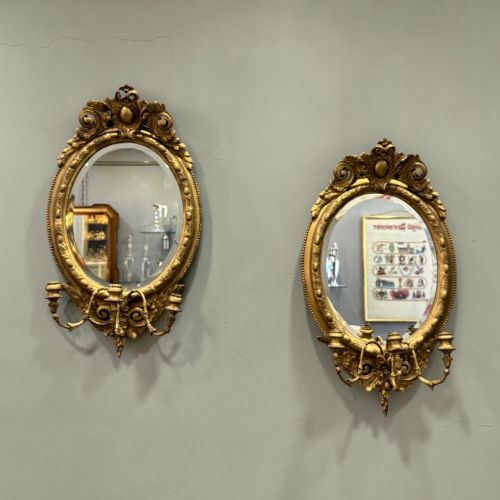
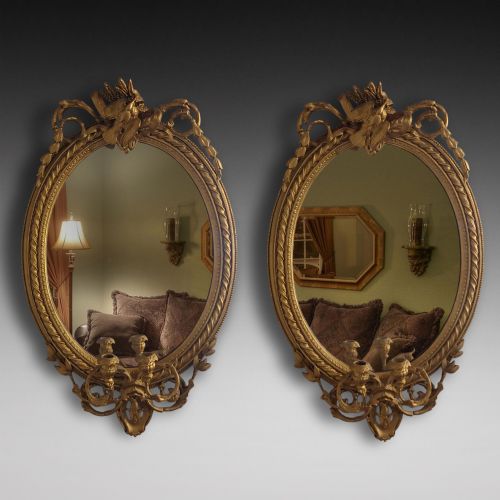
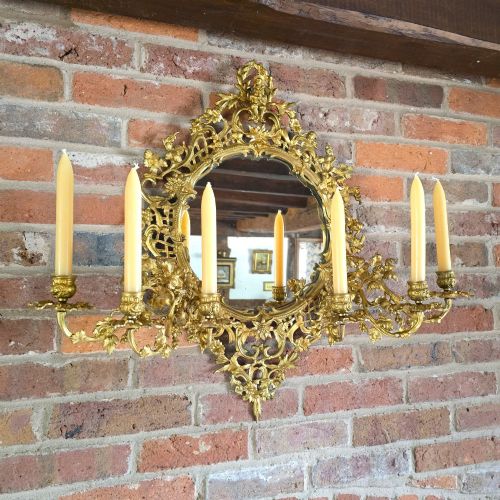
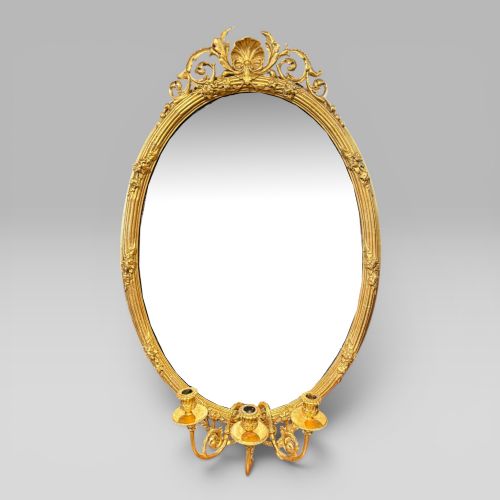
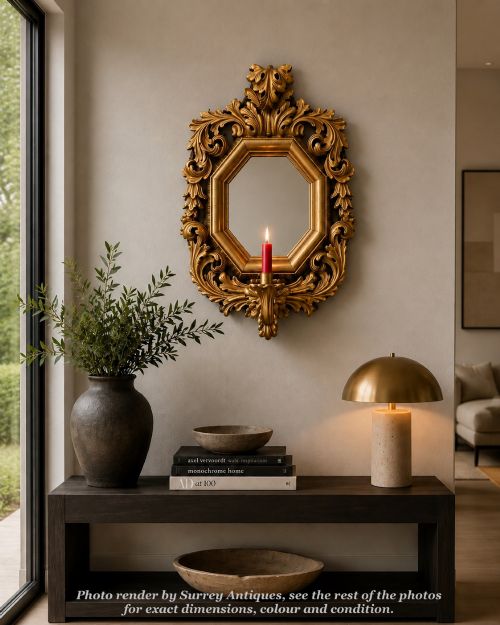
19th century girandole mirrors combine reflective glass with integrated candle branches, functioning simultaneously as sources of light and decorative focal points. Buyers encountering this selection will find a predominance of gilded wall pieces designed to catch and multiply ambient illumination in period interiors.
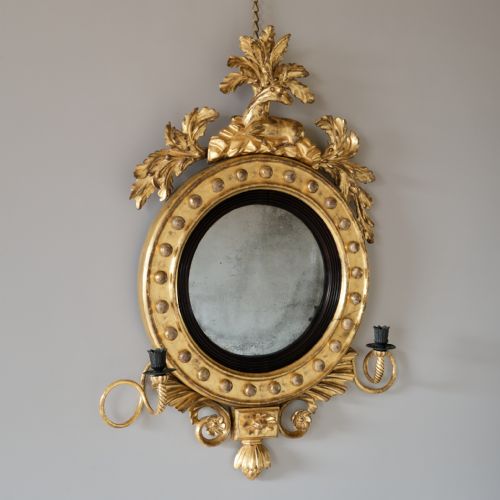
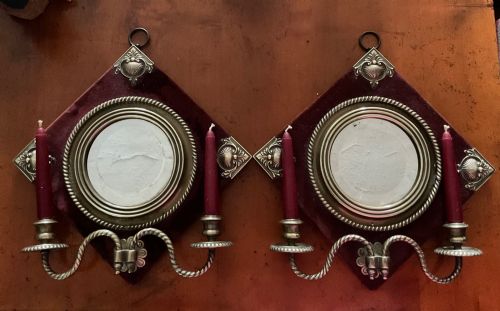
The objects span several distinct eras, including Regency, Victorian, and Edwardian periods, alongside French Rococo Revival and Belle Epoque styles. Common forms range from circular convex plates set in heavy gilded frames to pairs of carved sconces and pier mirrors incorporating brass, copper, or bronze elements.
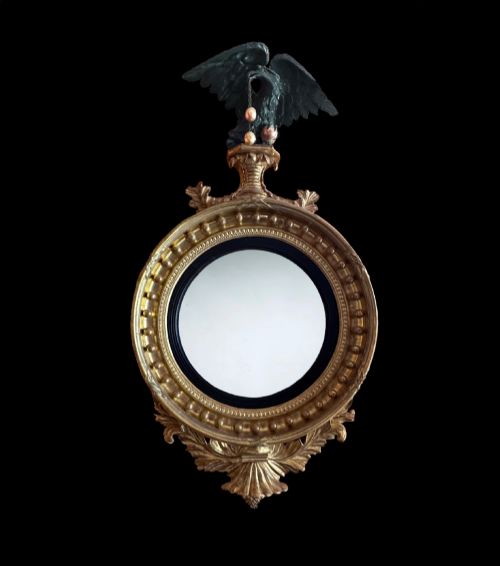
Origins vary across English, French, and Italian workshops, displaying regional preferences in ornamentation such as carved wooden eagles, rope twist borders, or elaborate ormolu candelabra branches. These diverse pieces share the defining characteristic of holding candles alongside the reflective glass.
Materials and construction
Makers constructed the primary framework of these pieces using timber, giltwood, and gesso, often applying a fine layer of gold leaf to the carved wooden surfaces. Metal components such as brass, copper, or bronze form the structural arms for candle branches and sconces.
Reflective surfaces consist of traditional mirror glass, frequently shaped into convex plates that provide a wide-angle view of the surrounding room. Craftsmen finished the wooden and gesso elements with detailed carving, gilding, and occasional painted highlights.
19th Century Girandole Mirrors Retail Price Guide 2026
Typical asking prices for 19th century girandole mirrors among the pieces listed under this phrase on Sellingantiques today, from the lower quarter to the upper quarter. They describe what is for sale here now, not the wider market.
Current listings feature pieces spanning the Regency, Victorian, and Edwardian periods, utilising materials such as giltwood, gesso, brass, copper, and bronze.
Assessing quality and craftsmanship
Quality rests upon the crispness of the carved details within the giltwood or gesso frame and the depth of the original gilding. Superior examples display sharply defined motifs without the softening that occurs when moulds are reused excessively.
The integrity of the reflective glass and the secure attachment of the candle branches dictate the structural standard of each piece. Finer items retain their original mirror plates and robust metal armatures without heavy replacement or structural compromise.
The 19th Century Girandole Mirrors Glossary
- Girandole
- A branched candleholder equipped with a mirror backplate designed to reflect the flame. These fixtures hung on walls to maximise candlelight in dark rooms.
- Convex mirror
- A round looking glass with an outward-curving surface that produces a wide, distorted panoramic reflection of the interior. They gained popularity during the Regency period.
- Giltwood
- Timber that has been coated with a thin layer of gold leaf or gold paint. It provides a bright, reflective surface that enhances the decorative appeal of frames.
- Gesso
- A plaster-like mixture applied to wood surfaces as a base for carving and gilding. Craftsmen shaped it into ornate relief decorations before applying gold leaf.
- Ormolu
- Gilded bronze ornamentation applied to furniture and decorative objects in French pieces. It offers a rich metallic finish that contrasts with wood and glass.
19th Century Girandole Mirrors: Frequently Asked Questions
How were these mirrors used?
These pieces hung in principal rooms such as drawing rooms, parlours, and dining spaces to provide both illumination and decoration.
Positioned opposite windows or fireplaces, they captured natural daylight or candlelight and reflected it back into the room.
How do I date a convex mirror?
Dating relies on examining the frame style, construction timber, and the characteristics of the glass plate itself.
Regency examples often feature eagle crests and heavy reeded bezels, while later Victorian versions incorporate rope twists or simpler circular gilt wood frames.
How should I hang a heavy wall mirror?
Secure hanging requires locating firm wall studs or using heavy-duty masonry fixings appropriate for the weight of the timber and glass.
Because many pieces combine dense giltwood with metal candle branches, professional installation ensures the wall can support the total load safely.