
19th Century French Statuette
A 19th century french statuette brings classical mythology, animal studies and historical figures into a room through cast metal and painted porcelain.
19th Century French Statuette
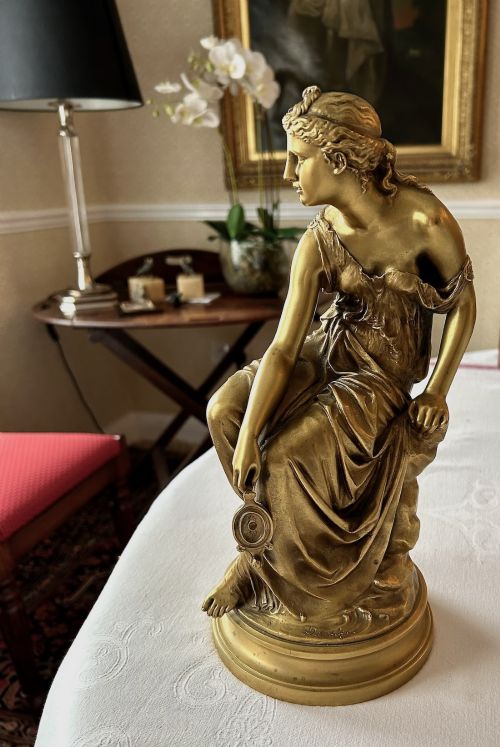
A 19th century french statuette represents a diverse category of small-scale sculpture created across the nineteenth century in France, spanning classical maidens, putti, and historical subjects. Collectors exploring this page encounter works cast in bronze or moulded in porcelain, reflecting the dominant sculptural tastes of the period.
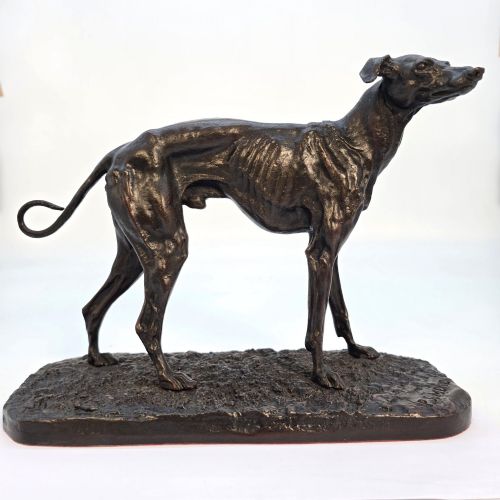
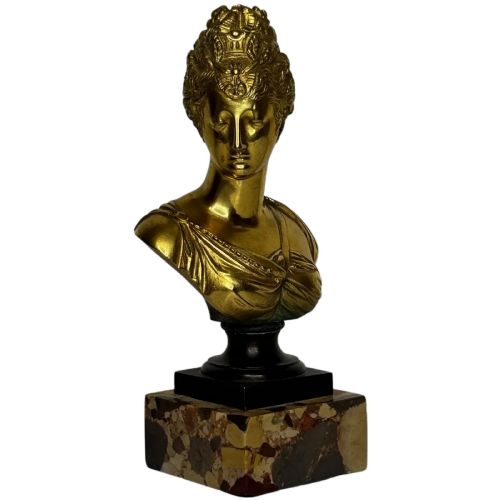
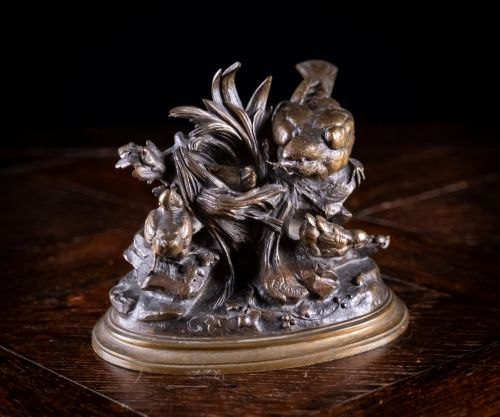
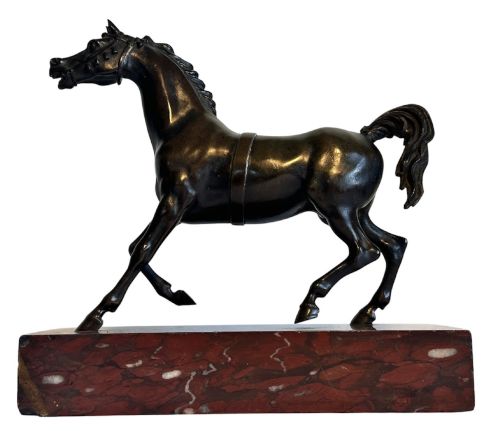
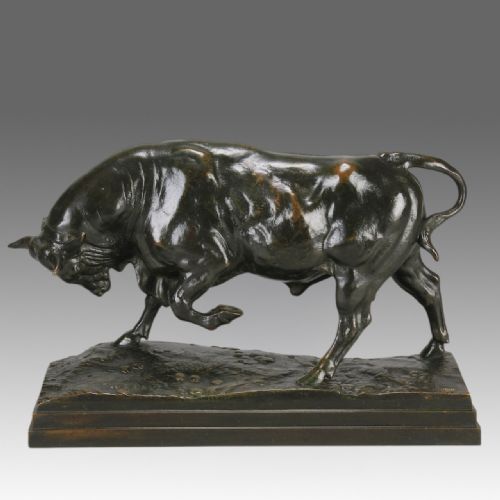
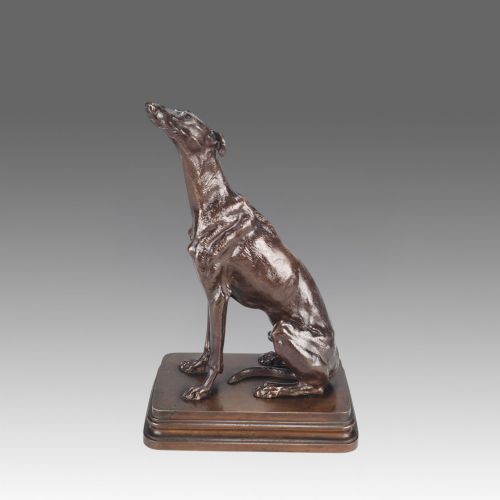
The objects take many forms, including animalier studies of horses and hounds, allegorical pairs, and portrait busts of figures such as Napoleon Bonaparte or Diana de Poitiers. These pieces range from cabinet bronzes mounted on marble bases to hand-painted porcelain figures produced in Parisian workshops.
Makers and artists of the era drew inspiration from classical antiquity, the Renaissance, and contemporary life, translating these themes into compact statuary designed for domestic display. The selection on this page captures this wide stylistic range, moving from Neoclassical severity to Rococo Revival exuberance.
Materials and casting methods
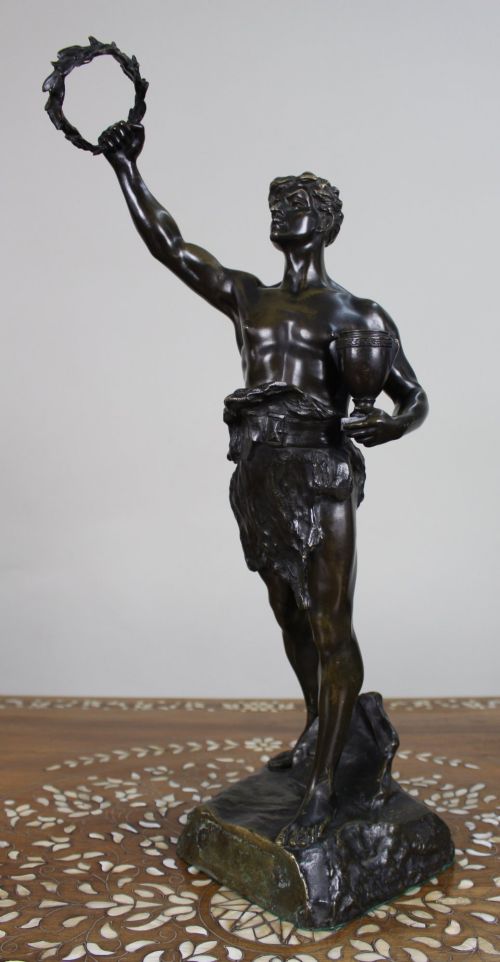
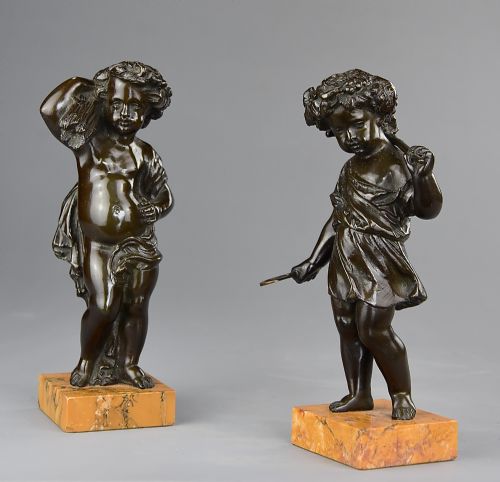
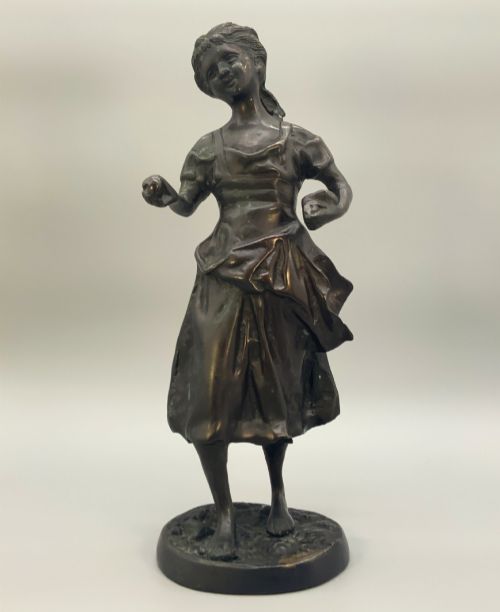
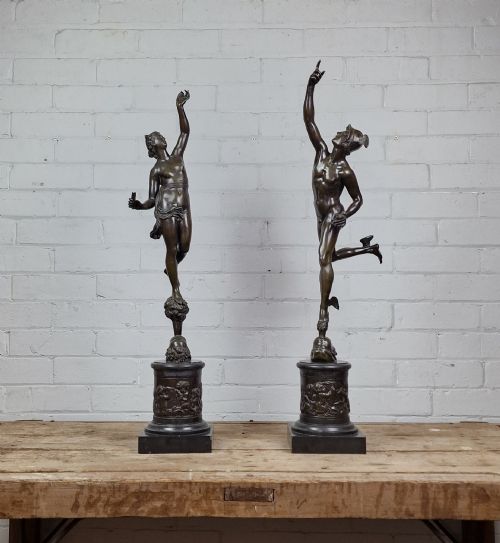
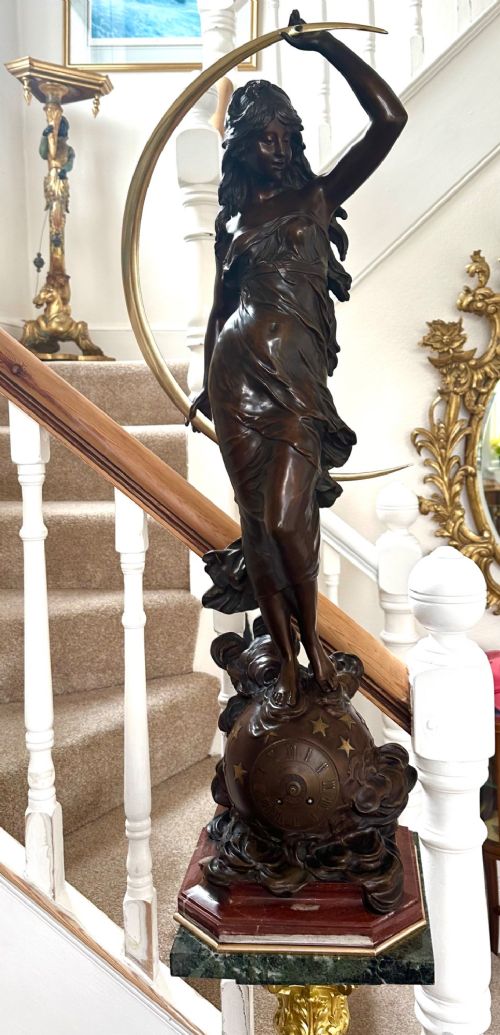
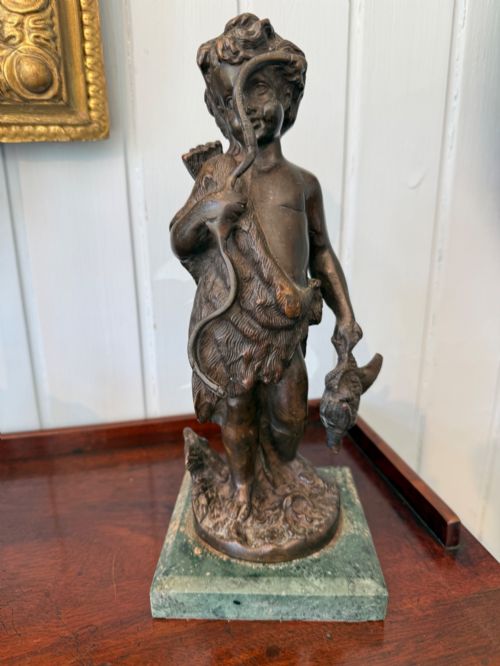
Foundries utilised traditional bronze casting techniques to produce detailed figures, frequently finishing the metal with patination, gilding, or gold leaf to enhance surface depth. Many bronzes are mounted upon solid marble bases, providing stability and visual contrast to the dark metal.
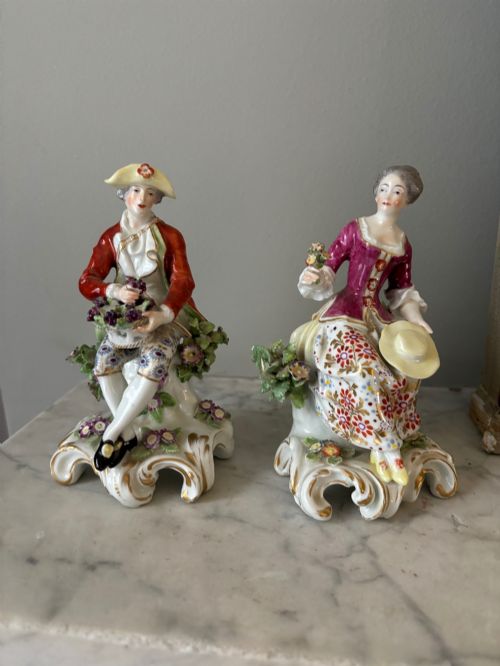
Porcelain statuettes involve the shaping of soft-paste or hard-paste clay bodies, followed by hand-painting and high-temperature firing in kilns. Makers such as Edmé Samson and Vion & Baury applied intricate enamel decoration and gold anchors to mimic earlier factory styles.
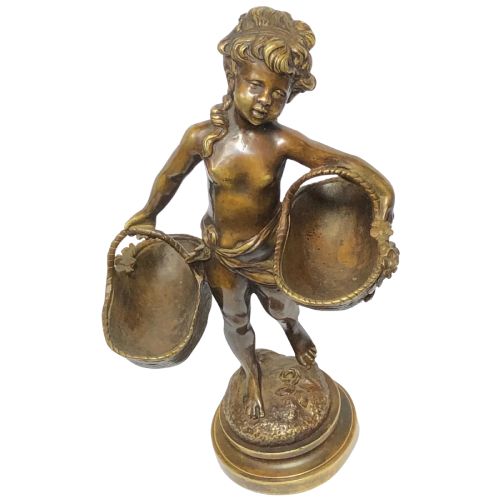
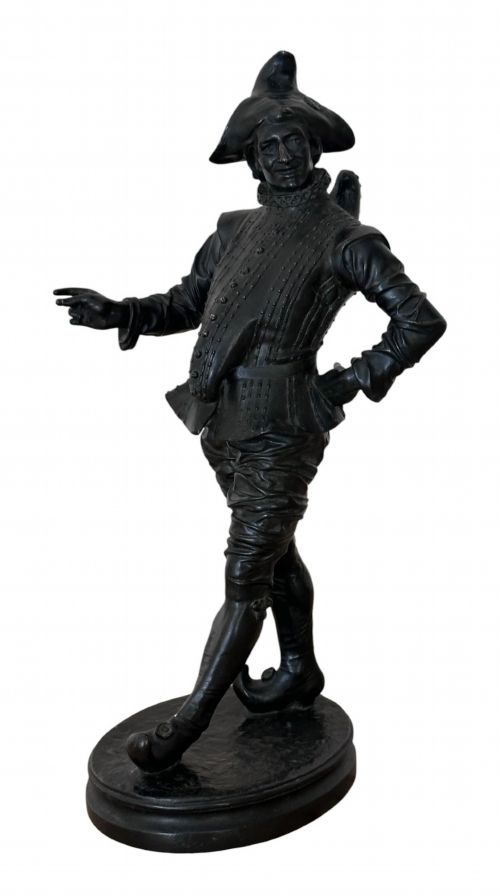
Harlequin figures, harvest putti, and playful cherubs bring distinct theatrical charm to nineteenth-century mantelpieces.
Judging sculptural execution
In porcelain pieces, the delicacy of the hand-painted enamels and the precision of the modelling dictate the standard. Superior examples maintain balance and proportion across complex multi-figure compositions without blurring the underlying ceramic details.
Etienne Henri Dumaige·Antoine Louis Barye·Alfred Dubucand·Isadore Bonheur·Edme Samson
The 19th Century French Statuette Glossary
- Animalier
- A nineteenth-century artistic movement focusing on the realistic depiction of animals, particularly horses, dogs, and bulls. Practitioners captured beasts in motion or repose with anatomical precision.
- Patinated Bronze
- Bronze metal treated with chemical solutions to produce a specific surface colour, ranging from deep brown to greenish hues. This treatment protects the metal and defines sculptural contours.
- Ormolu
- Gilded bronze ornamentation applied to furniture, bases, or statuary, created by fusing a mercury and gold amalgam to a bronze object. The technique produces a rich, durable golden surface.
- Spelter
- A zinc alloy frequently used as a less expensive substitute for bronze in nineteenth-century figure casting. It is lighter than bronze and typically bears a painted or faux-bronze finish.
- Hard-paste porcelain
- A dense, durable ceramic composed of kaolin and petuntse, fired at high temperatures. It formed the basis for many nineteenth-century Parisian decorative figures.
19th Century French Statuette: Frequently Asked Questions
What is an animalier bronze?
An animalier bronze is a nineteenth-century sculpture dedicated to realistic portrayals of animals, capturing creatures such as hounds, horses, and bulls in naturalistic poses.
Artists of this school studied anatomy closely, often setting their metal casts upon polished marble bases for display in domestic interiors.
How do I identify porcelain figures?
Nineteenth-century porcelain figures from Paris workshops often feature hand-painted enamel decoration and simulated marks referencing earlier factories like Chelsea or Derby.
Examining the base and the finesse of the painted details helps distinguish these nineteenth-century interpretations from eighteenth-century originals.
What materials were used?
Sculptors of this era primarily worked in bronze, utilising patinated or gilt finishes to alter the appearance of the metal surface. Some pieces incorporate marble for structural bases or gold leaf for highlights.
Ceramic figures rely on hand-painted porcelain bodies, while alternative metal editions occasionally employ spelter.
Who were the notable sculptors?
The period produced numerous skilled artists whose signatures appear on cast metal works, including Antoine Louis Barye, Isadore Bonheur, and Etienne-Henri Dumaige. Many exhibited at the Paris Salon.
Ceramic works were likewise shaped by established Parisian firms such as Edmé Samson and Vion & Baury.