




19th Century French Bronze Figural Group
A 19th century french bronze figural group captures classical narratives and domestic tenderness through cast metal, bringing nineteenth-century foundry work directly to your interior.
19th Century French Bronze Figural Group
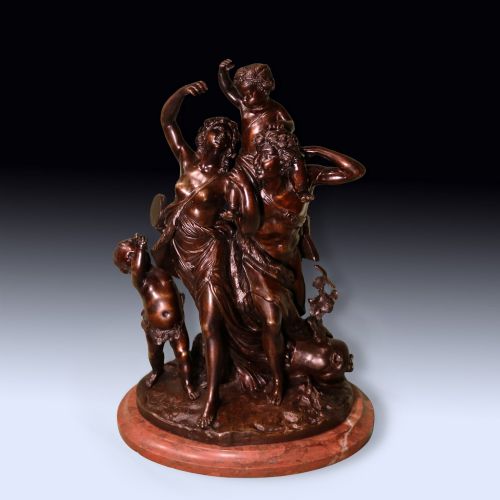
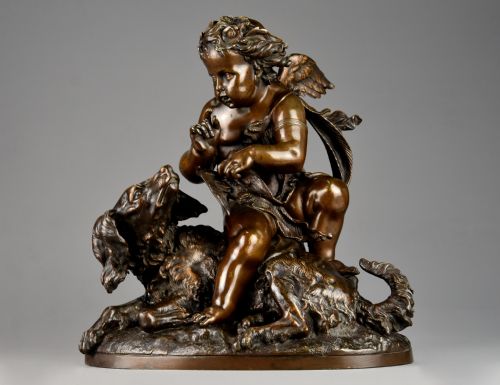
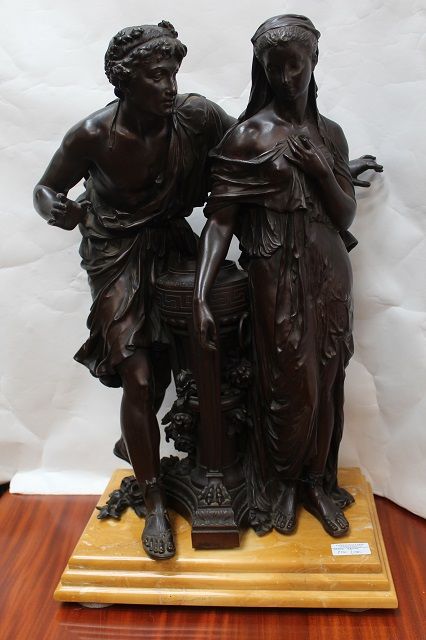
A 19th century french bronze figural group presents multiple figures interacting within a single composition, ranging from mythological Bacchic scenes with putti to domestic depictions of motherly love. These works draw heavily upon classical sculpture and the lively spirit of eighteenth-century models, reinterpreted through nineteenth-century foundry traditions.
The versions most commonly met on this page combine bronze figures with solid supports such as marble pedestals, depicting dancing maidens, quarried labourers, or winged putti with animals. They span across various decades of the nineteenth century, reflecting shifts from strict neoclassical revival to expressive realism.
Makers and sculptors often looked to historical precedents, particularly the compositions of Clodion, while other pieces bear the signatures of known artists like Auguste Moreau or E. Drouot. Buyers encounter both small cabinet sculptures and large-scale figural groups designed as centrepieces.
Materials and Casting Techniques
Surface finishes vary significantly across the pieces, employing dark patinas, silvered bronze highlights, or gilt brass to accentuate the forms. Many figural groups are securely mounted onto heavy marble bases to provide structural stability and visual contrast.
Listings feature 19th century french bronze figural groups incorporating marble pedestals, silvered bronze surfaces, and dark patinas.
Distinctions in Quality
The calibre of a 19th century french bronze figural group rests primarily on the crispness of the chasing and the subtlety of the patina. Superior castings retain sharp details in hair, fingers, and background elements without softening during the finishing process.
Compositional balance and the expressiveness of the figures distinguish workshop output, alongside the quality of the marble pedestals and whether the piece bears an authentic signature from a recognised sculptor.
Clodion·E. Drouot·Auguste Moreau·Carrier
The 19th Century French Bronze Figural Group Glossary
- Patina
- The surface coloration and chemical sheen developed naturally over time or applied chemically by the foundry. This finish protects the metal and defines the visual depth of the sculpture.
- Chasing
- The manual post-casting process where artisans use small punches and hammers to refine details and remove casting flaws from the bronze surface.
- Putto
- A chubby male child figure, often winged, frequently depicted in classical mythology and Bacchic scenes alongside grapes and wine.
- Lost-wax casting
- A traditional method where a wax model is melted out of a ceramic mould to create a cavity for pouring molten bronze.
- Neoclassical
- An artistic revival drawing inspiration from the classical art and culture of ancient Greece and Rome, evident in many nineteenth-century subjects.
19th Century French Bronze Figural Group: Frequently Asked Questions
How do I clean a bronze sculpture?
Dust the surface gently with a soft, dry brush to remove particles. Avoid using water, soap, or chemical polishes that can strip the original patina.
Apply a very light coat of microcrystalline wax occasionally if the bronze requires protection, buffing it gently with a clean cloth.
Are these pieces signed by artists?
Some sculptures bear cast signatures or foundry marks on the base, identifying the sculptor or the producing workshop. Unsigned pieces remain common and reflect the wider commercial foundry production of the period.
Signatures add historical context but should be evaluated alongside the overall quality of the casting and chasing work.
What is a Bacchic group?
A Bacchic group depicts scenes related to Bacchus, the Roman god of wine, frequently featuring putti, maidens, and grapes. These compositions emphasise movement, celebration, and classical mythological narratives.
Artists in the nineteenth century often revived these themes in homage to earlier eighteenth-century sculptors.
Where should I display a figural group?
Place the sculpture on a stable surface such as a heavy sideboard, desk, or dedicated pedestal away from direct sunlight and moisture. Ensure the supporting furniture can accommodate the substantial weight of bronze and marble.
Position the piece where lighting can catch the contours of the patina and the details of the figures.