


19th Century Folk Chair
A 19th century folk chair brings unpretentious rural character into a room through honest vernacular carpentry and time-worn painted surfaces.
19th Century Folk Chair
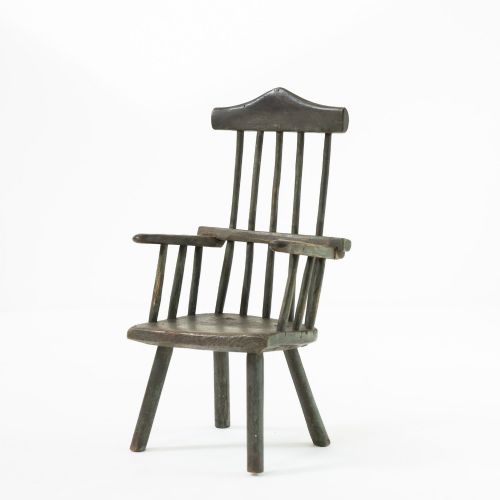
The aesthetic is grounded in primitive vernacular, Scandinavian country, Alpine folk art, and Gothic revival styles. You meet domestic forms such as dug-out chairs, bobbin thrones, stick-back armchairs, and chairs featuring plaited straw súgán seats.
Geographic origins recorded in the evidence stretch across Sweden, Ireland, Wales, Austria, Hungary, Switzerland, and the wider continent. Many examples are designed for children or nursery use, reflecting the domestic scale of rural cottage furniture.
How they were made
Makers utilised available local timbers including pine, oak, birch, ash, fruitwood, and mixed hardwoods. Solid construction methods often involved hollowing out single blocks of wood for dug-out seats or turning spindles on a lathe for stick-back and bobbin frameworks.
Surfaces frequently retain their original paint finishes, adding colour and decorative folk motifs typical of regional European workshops. Seat construction also incorporated natural forms and plaited straw or súgán cordage woven tightly between wooden frames.
Recorded styles span Scandinavian country, Alpine folk art, primitive vernacular, and Gothic revival forms.
What varies in quality
The distinction between ordinary and exceptional pieces rests primarily on the integrity of the original surface paint and the boldness of vernacular carving. Chairs retaining untouched historical pigment schemes command greater appreciation than those stripped or repainted over time.
Structural honesty and the preservation of original components also dictate merit, as regional seating frequently suffered heavy domestic use and subsequent repairs. Balance between rustic utility and distinctive sculptural form separates standard utilitarian seating from true examples of folk art.
Roosje Hindeloopen
The 19th Century Folk Chair Glossary
- Dug out chair
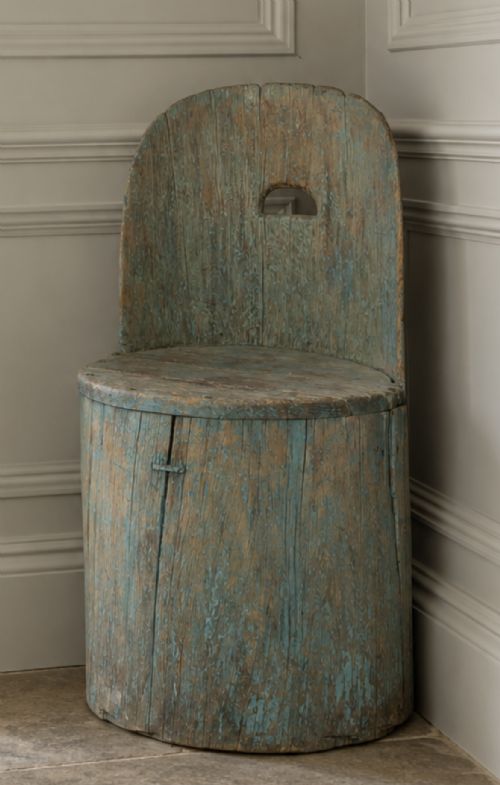
- A primitive seating form carved entirely from a single solid log or trunk. The lower section forms a heavy block base while the upper part is hollowed to create a seat and backrest.
- Stick back chair
- A vernacular chair constructed by inserting plain turned wooden spindles or sticks into a solid wooden seat slab. This method forms both the backrest and the supporting underframe.
- Súgán chair
- A traditional Irish chair featuring a seat woven from plaited straw or hay rope. The organic cordage provides a flexible and supportive surface within a wooden frame.
- Bobbin chair
- A decorative seating style characterised by turned woodwork resembling a series of wooden spools or bobbins threaded together. This technique was favoured in various regional European vernacular traditions.
- Vernacular furniture
- Domestic items built by local craftsmen or rural carpenters using regional materials and traditional techniques. These pieces reflect local practical needs rather than academic stylistic rules.
19th Century Folk Chair: Frequently Asked Questions
What is a folk chair?
A folk chair is a piece of vernacular seating made by local rural craftsmen or villagers during the nineteenth century. These items were built for domestic utility using regional materials and traditional woodworking methods rather than following metropolitan fashion.
The category encompasses diverse regional forms, from Swedish dug-out seats to Irish súgán chairs and Swiss alpine seating. They are defined by an honest, unpretentious construction that reflects the everyday life of the community that produced them.
How were folk chairs used?
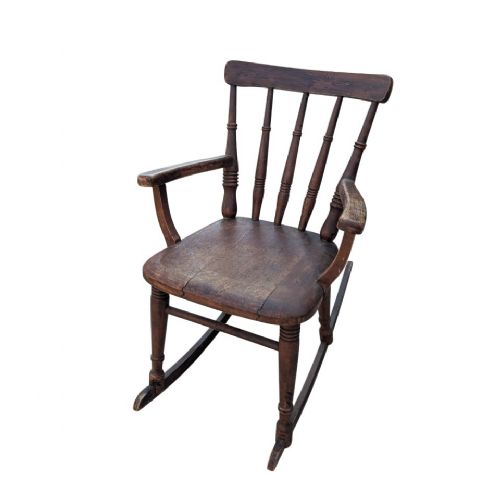
These chairs served everyday functional roles in rural cottages, farmhouses, and nurseries across Europe. Different forms accommodated specific domestic needs, including low nursing chairs by the hearth, rocking chairs, and high chairs for children.
Because they were intended for heavy daily use, many show signs of practical adaptation and repair over generations. Their presence in the home was entirely utilitarian before later collectors recognised their sculptural and artistic merit.
How do I live with a folk chair?
A folk chair functions well as a singular accent piece in modern or traditional interiors, adding textural warmth and historical contrast. Their compact domestic scale allows them to fit easily into hallways, bedrooms, or living spaces as decorative seating.
Placement should avoid direct sunlight and extreme temperature fluctuations to protect aged wood and original painted surfaces. Gentle dusting and minimal intervention preserve the historic patina built up over more than a century of existence.
How do I tell Swedish folk chairs apart?
Swedish folk chairs often display distinct regional traits such as turned bobbin work, carved pine dug-out bodies, or vibrant original paint finishes. Their construction frequently highlights Scandinavian country aesthetics, combining utilitarian strength with simple decorative elements.
Comparing the specific wood types, such as pine versus birch, alongside the joinery methods helps distinguish Swedish examples from other European alpine or British vernacular traditions.