





Dark Oak Folk Chair
These dark oak folk chair examples bring rustic regional character and carved domestic utility into modern interiors.
Dark Oak Folk Chair
A dark oak folk chair encompasses regional domestic seating created in rural workshops during the nineteenth century and earlier periods. Buyers searching for a dark oak folk chair encounter diverse regional vernacular traditions, including Welsh, Bavarian, Alpine, and Breton interpretations.
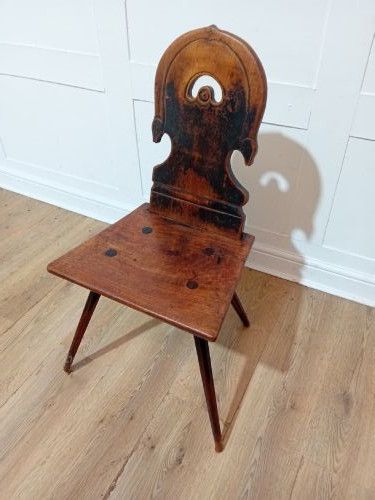
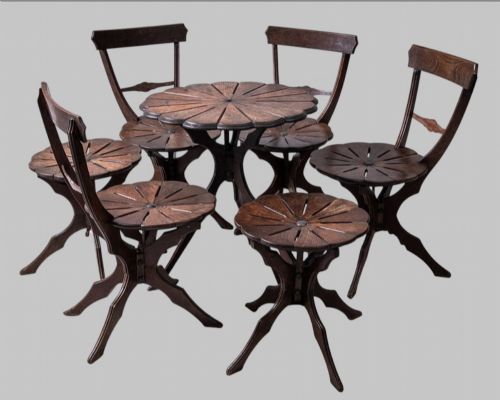
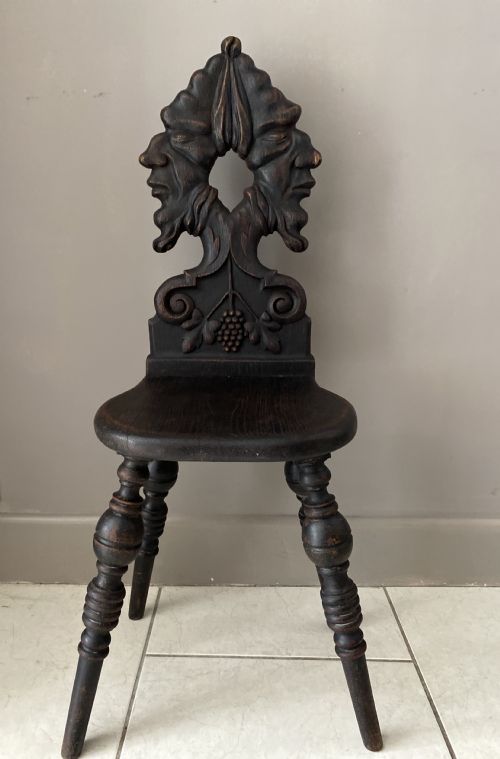
The selections on this page range from modest spinning chairs and child high chairs to substantial carved armchairs and parlour suites. Most pieces display heavy regional ornamentation, incorporating traditional motifs such as local flora, fauna, and geometric carving.
Common forms include low spinning seats, high-backed escabelle chairs, and side chairs constructed by local carpenters rather than large urban manufactories. Each piece reflects the specific domestic habits and aesthetic preferences of its geographic origin.
Materials and construction methods
Makers utilised solid timbers predominantly, with oak, elm, pine, and walnut appearing across the regional variations. These local woods were selected for structural integrity and local availability, often showing dense grain patterns that darkened naturally over centuries.
Carpenters relied on traditional joinery techniques, combining pegged mortise and tenon joints with hand-carved surface decoration. Iron and subsidiary woods occasionally reinforced structural stress points on functional household seating.
Dark Oak Folk Chair Retail Price Guide 2026
Typical asking prices for dark oak folk chair among the pieces listed under this phrase on Sellingantiques today, from the lower quarter to the upper quarter. They describe what is for sale here now, not the wider market.
Village ducking stools appear alongside standard parlour seating, proving that historic rural life involved both polite spinning and public humiliation.
Distinguishing quality in vernacular seating
The distinction between ordinary utility seating and superior regional works lies in the depth and execution of the hand carving. Crisp, deeply incised motifs show greater artisan skill than shallow, hasty surface scoring.
Structural honesty and the retention of original timber surfaces define the better examples in this category. Pieces that preserve their initial patination without excessive modern restoration hold greater integrity for collectors.
The Dark Oak Folk Chair Glossary
- Vernacular
- Everyday objects built by local craftspeople using traditional regional methods rather than academic academic designs. These pieces serve immediate domestic functions while displaying local aesthetic traits.
- Escabelle
- A traditional high-backed wooden chair form frequently associated with Alpine regions. It provides stable seating in draughty rural properties.
- Spinning chair
- A small, low-seated chair traditionally used for domestic textile production. They often feature intricately carved panel backs and compact dimensions.
- Patina
- The surface sheen and colour acquired by wood over decades of handling, light exposure, and polishing. It serves as an indicator of age and careful preservation.
Dark Oak Folk Chair: Frequently Asked Questions
Where were these chairs made?
These pieces originate from rural workshops across Britain, France, Germany, Switzerland, and the Alpine regions. Local carpenters built them to satisfy the immediate domestic needs of their communities.
Design choices reflect the specific timber supplies and decorative customs of each distinct geographic area.
How do I date an antique wooden chair?
Dating relies on examining construction marks, tool traces, timber shrinkage, and the style of hand carving. Secondary woods and fastener types also provide clues regarding the period of manufacture.
Comparing the piece to documented regional archetypes helps narrow the likely decade and origin.
Are these chairs suitable for daily seating?
Most historic vernacular chairs function well for occasional seating in modern rooms. Their sturdy solid wood construction allows them to endure normal domestic use.
Placing them away from direct heat sources prevents timber splitting and protects the historic surface.
What defines regional folk art furniture?
Folk art furniture combines functional utility with unpretentious decorative carving executed by self-taught or provincial makers. The ornamentation frequently depicts local folklore, regional fauna, or traditional geometric symbols.
These designs deviate from formal academic furniture styles by prioritising local character over current metropolitan fashions.