
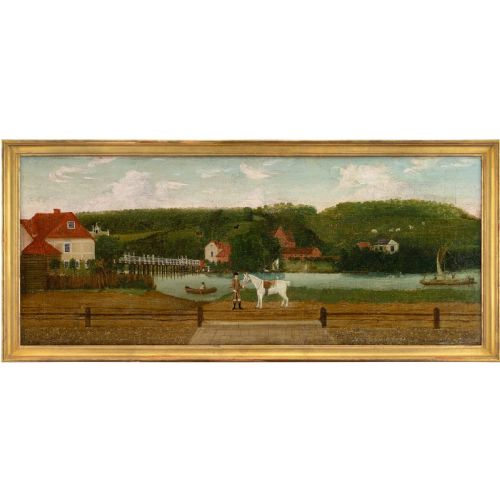
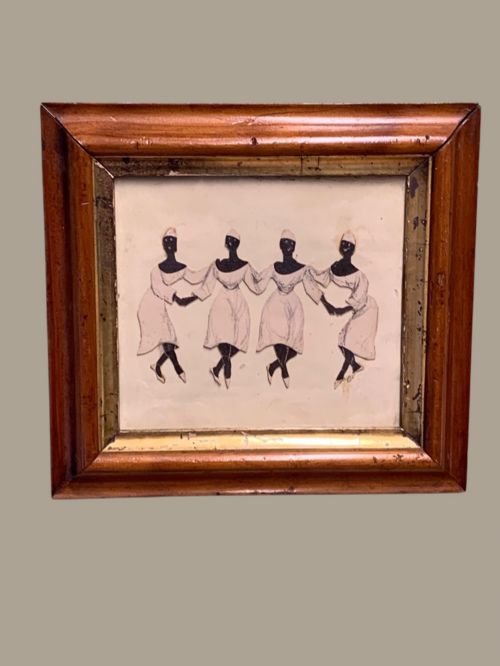
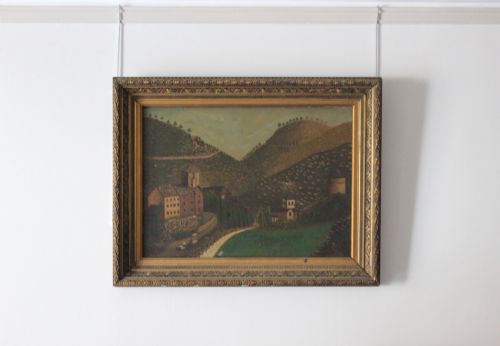
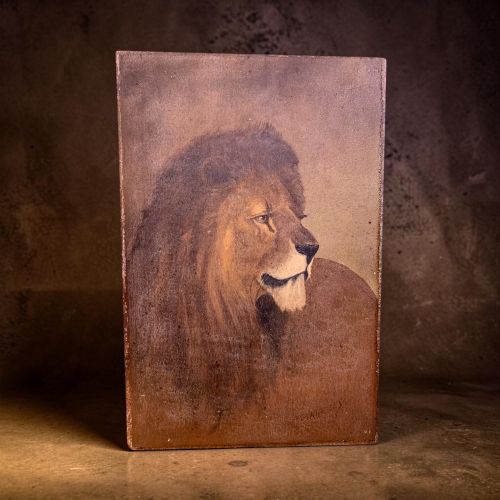





19th Century Folk Artwork
These pieces of 19th century folk artwork bring domestic history and naive charm directly to a wall.
19th Century Folk Artwork
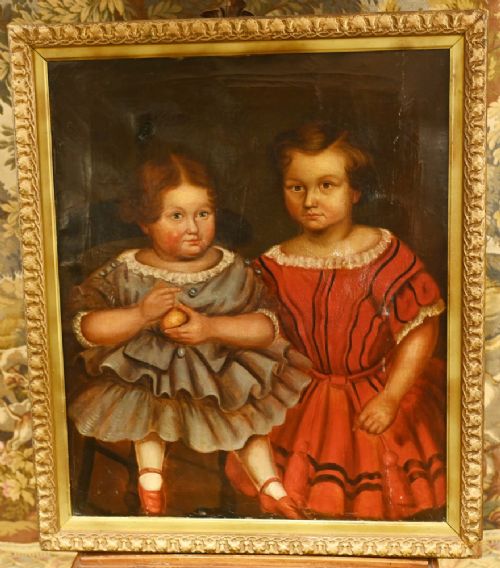
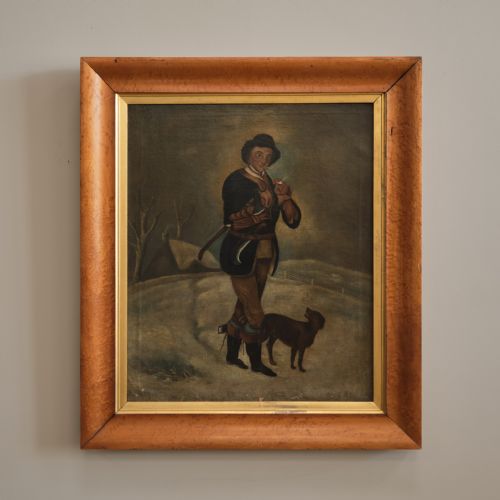
When searching for 19th century folk artwork, a buyer encounters a diverse range of items including oil paintings, watercolours, framed artwork, and decorative wall panels. Portraits of children, gentlemen, and family groups sit alongside animal studies and marine scenes.
The dominant forms on this page include oil on canvas and panel, alongside unusual collage work, beadwork pictures, and Welsh slate hearth pieces. These items originate from British, American, Dutch, German, Scandinavian, and broader continental schools.
Most pieces display a primitive or naive aesthetic rather than academic precision. They capture everyday rural and domestic life through the hands of provincial artists and untutored makers.
Materials and construction methods
Makers utilised oil paint on canvas, wood panel, board, and tinplate, building up surfaces with direct brushwork. Watercolours on paper appear frequently, often housed in period frames of rosewood or giltwood.
Alternative media include paper collage, beadwork on textile, and carved Welsh slate. Support materials reflect whatever was readily available to the provincial painter or vernacular artisan.
Bear trainers and dancing African girls share wall space with conventional portraits.
Factors that separate examples
Quality rests on the strength of characterisation and the confidence of the brushwork. Untutored artists vary widely in their handling of proportion and perspective.
Materials and survival condition dictate the appeal of an object. Intact original frames and stable paint surfaces preserve the immediate visual impact of the work.
James Kyd·Ferruccio Vitale·William Shayer·James G. Faulds·Louis Marie Dominique Robbe
The 19th Century Folk Artwork Glossary
- Naive art
- Visual expression created by a person without formal academic training. Perspective and proportion are often handled intuitively rather than geometrically.
- Oil on panel
- A painting executed on a wooden board rather than stretched canvas. Panels provide a rigid support that often survives in stable condition.
- Fairground panel
- Large decorative woodwork originally painted for amusement rides. These pieces display bold vernacular lettering and imagery.
- Welsh slate
- Fine-grained metamorphic rock used as a durable painting support. Artists applied pigments directly to carved or polished stone slabs.
19th Century Folk Artwork: Frequently Asked Questions
What defines naive art?
Naive art originates from makers without formal academic training in perspective or anatomy. The resulting images prioritize direct expression over realistic proportion.
Subjects often appear flat or stylized, lending the works a distinct charm and authenticity.
How are these paintings housed?
Many works retain their original timber frames, including examples in rosewood or giltwood. Framing often helps anchor the date of the piece.
Some panels and slate pieces remain unframed to display their edges and material construction directly.
Where did these items originate?
The listings include pieces from British, American, Dutch, German, and Scandinavian hands. Provincial schools across Europe and America produced distinct regional styles.
Subjects range from local domestic portraits to coastal marine scenes reflecting surrounding communities.
What materials appear besides canvas?
Makers utilised wood panels, tinplate, paper, and carved Welsh slate alongside traditional canvas supports. Beadwork pictures and paper collages also feature in the vernacular selection.
Painted surfaces rely on oil and watercolour pigments applied by local practitioners.