


19th Century Floor Light
A 19th century floor light brings practical height and heavy period character to a room, shifting illumination off tables and onto the boards.
19th Century Floor Light
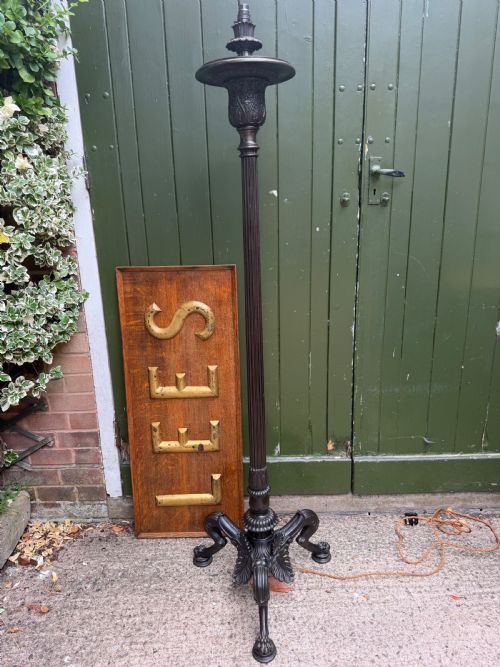
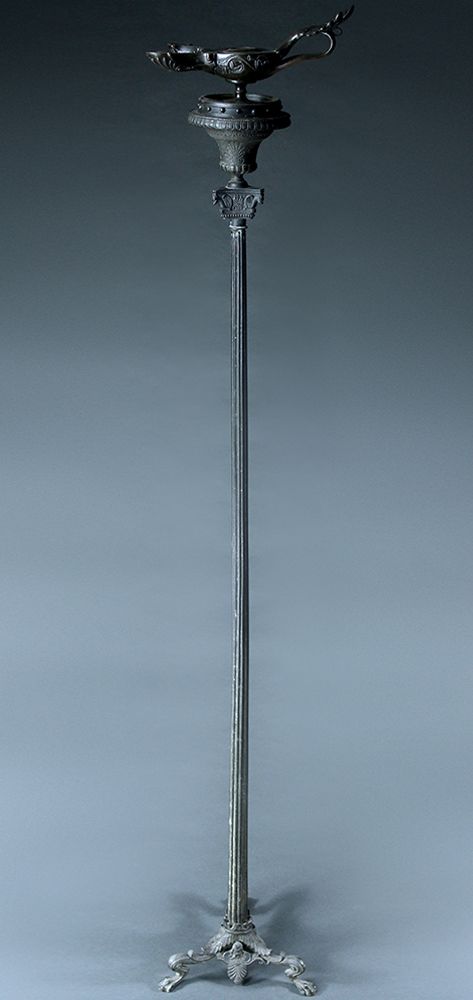
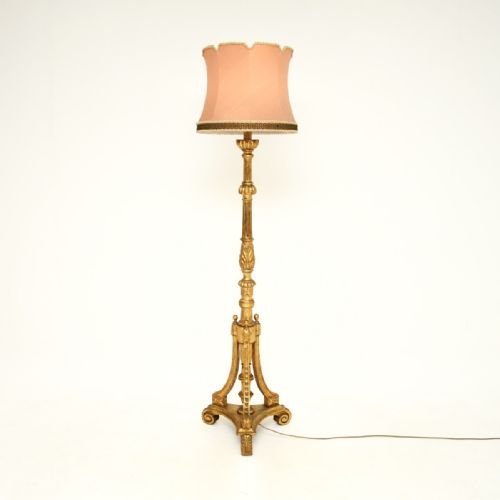
A 19th century floor light encompasses tall standing illumination and elevated supports, taking the form of standard lamps, standard oil lamps, torcheres and floor candlestick holders. You will frequently encounter brass and cast-iron standard lamps alongside carved wood and polychrome painted figures holding lights.
These pieces bridge domestic utility and grand interior display, originating from periods spanning the Victorian era through the mid and late 19th century. Alongside dedicated lamps, the selection includes converted pole screen lamps and tall church candle holders adapted for floor placement.
Makers and designers of the period drew upon classical Grecian, Neo-Pompeian, Gothic Revival, and Venetian Baroque styles. Whether cast in bronze or turned in mahogany, each object served to elevate a flame or bulb within principal reception rooms.
How they were made
Makers utilised metal casting techniques to form heavy bases and columns from brass, copper, iron, and bronze, often applying patination or gilding to the surface. Telescopic mechanisms and rise-and-fall engineering allowed owners to adjust the height of the light source mechanically.
Carved wood examples rely on traditional joinery and hand-carving, frequently paired with original polychrome paint, giltwood, or marbleised finishes. Hand-hammered wrought iron and combined brass with cranberry glass reservoirs represent the mixed media typical of Victorian oil-burning standards.
Structural elements such as Corinthian columns and figural supports required skilled assembly, joining cast metal shafts to weighted bases to ensure stability for tall standards and torchere stands.
Watch for Tibetan ceremonial copper horns pressed into service as towering standard lamps.
What varies in quality
The sophistication of the casting and carving dictates the standing of an individual piece, separating mass production from works of artistic ambition. Finely detailed Corinthian capitals, crisply chased bronze figures, and deep relief carving on gilt wood demonstrate superior workshop output.
Material integrity and the survival of original surface treatments define the character of surviving examples. Retaining original gilt polychrome paint, untouched patination, or signed bronze work elevates an object beyond standard utilitarian lighting.
The mechanical complexity of standard lamps, such as functional rise-and-fall mechanisms or telescopic brass columns, reflects the engineering standards applied during manufacture.
Humphrey Hopper·François-Christophe-Armand Toussaint·Coutan
The 19th Century Floor Light Glossary
- Torchere
- A tall decorative stand designed to carry a light or candle. These slender supports frequently take figural or classical column forms.
- Standard lamp
- A freestanding floor lamp used to illuminate a room from standing height. They commonly feature weighted bases to support extended shafts.
- Pricket stick
- A candlestick featuring a central spike upon which a candle is impaled. They appear frequently in ecclesiastical and large domestic settings.
- Polychrome paint
- Decoration executed in multiple colours upon wood, plaster, or metal surfaces. It frequently survives on Venetian figures and carved candle holders.
- Rise and fall
- A mechanical adjustment mechanism allowing the height of the lamp to be altered. This system is commonly found on late Victorian brass standards.
19th Century Floor Light: Frequently Asked Questions
What is a standard lamp?
A standard lamp is a tall, freestanding light designed to stand directly on the floor rather than on furniture. These pieces provide ambient illumination at a higher level within a room.
In the nineteenth century, these objects utilised oil reservoirs or candles before later conversions to electricity.
How do I date a 19th century floor light?
Dating relies on examining the stylistic vocabulary, manufacturing methods, and materials used in the construction. Pieces often incorporate Victorian, Gothic Revival, or Neoclassical design motifs tied to specific decades.
Signatures, foundry marks, and structural hardware such as telescopic adjustments also provide reliable chronological indicators.
What materials were used?
Makers constructed these tall lights from a wide variety of metals including brass, bronze, patinated iron, and copper. Wood was also heavily utilised, featuring carved mahogany, pine, and giltwood.
Additional elements such as cranberry glass, marbleising, and polychrome paint frequently decorate the surfaces.
Were these originally oil lamps?
Many standard lamps from this period were originally manufactured to burn oil using glass reservoirs and burners. Over time, a significant number underwent conversion to accommodate electrical wiring.
Other floor-standing pieces began life as candle holders, church pricket sticks, or torchere stands before being adapted.