


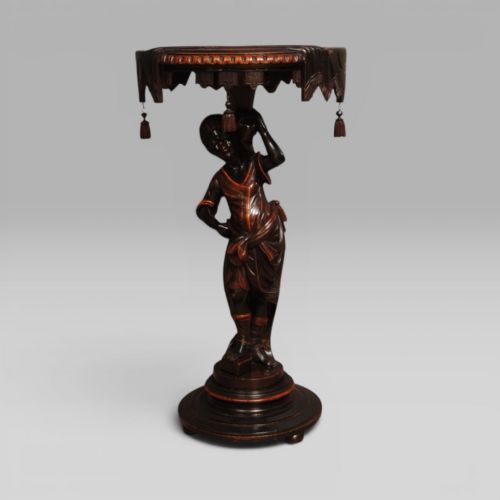


Polychrome Wooden Torchere
These polychrome wooden torchere pieces bring striking Venetian baroque presence to a room, offering functional pedestals and figures finished in bright pigments.
Polychrome Wooden Torchere
A polychrome wooden torchere takes the form of carved figures, stands, pedestals, and tables originating largely from Italian workshops. The listings show a strong presence of Venetian styles, including baroque, rococo, and revival designs alongside blackamoor figures.
The objects function variously as candle holders, side tables, waiters, and decorative floor lamps or pedestals. Most examples on this page date from the nineteenth century, with roots extending into the eighteenth century.
Buyers encounter carved wood forms that incorporate painted pigments, gesso, and gold leaf. The sculptural tradition relies heavily on figures holding trays or supporting stands.
Materials and construction
Artisans carved these pieces from solid wood before applying layers of gesso to prepare the surface for decoration. Paint and gold leaf finishes were then layered over the ground to create rich, textured coloration.
The surface decoration typically combines polychrome paint with parcel-gilt highlights or full giltwood application. Original paint surfaces rely on traditional pigments adhered to the carved wooden structures.
Polychrome Wooden Torchere Retail Price Guide 2026
Typical asking prices for polychrome wooden torchere among the pieces listed under this phrase on Sellingantiques today, from the lower quarter to the upper quarter. They describe what is for sale here now, not the wider market.
The object types on this page span side tables, floor lamps, pedestals, and figure sculptures holding trays.
Judging quality in polychrome wooden torchere pieces
The integrity of the original paint layer dictates much of the visual impact. Pieces retaining their early gilt and polychrome decoration without excessive overpainting offer greater authenticity.
The Polychrome Wooden Torchere Glossary
- Torchere
- A tall stand or pedestal originally designed to carry a torch or candle. These objects now function as decorative pedestals or side tables.
- Polychrome
- Decorated in multiple colours. This surface treatment utilises various pigments applied directly to wood or gesso.
- Giltwood
- Wood that has been treated with gold leaf or gold paint. Artisans apply this material to accent carved details and architectural elements.
- Gesso
- A plaster mix applied to wood surfaces as a base for paint and gilding. This preparation provides a smooth ground for intricate carved decoration.
- Parcel-gilt
- Partially gilded with gold leaf, leaving areas of painted wood exposed. This technique creates contrast between metallic sheen and matte pigment.
Polychrome Wooden Torchere: Frequently Asked Questions
What is a polychrome wooden torchere used for?
These pieces serve as decorative stands, display pedestals, small side tables, and sculptural figures. They elevate objects or hold candles within a room.
Historically designed to illuminate spaces, they now function chiefly as sculptural display furniture and focal points.
How do you date a polychrome wooden torchere?
Dating relies on stylistic cues, carving techniques, and the composition of the underlying gesso and paint layers. Eighteenth-century examples differ in structural joinery and pigment formulas from nineteenth-century revivals.
Examining the wear patterns on the wooden base and the oxidation of the gold leaf also helps establish the age of the piece.
Where were these pieces made?
The listings show a strong concentration of pieces originating from Italy, particularly Venice. Venetian workshops produced distinct baroque and rococo revival forms during the eighteenth and nineteenth centuries.
Regional Italian carvers utilised local timber and traditional pigment recipes to create these characteristic figures and stands.
How do I care for original paint and giltwood?
Preserving original surfaces requires avoiding harsh chemical cleaners and modern polishes that can lift fragile gesso and paint. Dusting gently with a soft, dry cloth protects the delicate pigments.
Keeping the pieces away from direct sunlight and excessive humidity prevents the wood from warping and the paint from flaking.