



Blackamoor Figure Pedestal
A blackamoor figure pedestal brings dramatic Venetian Baroque presence into a room, serving as a striking stand, torchere, or plant holder.
Blackamoor Figure Pedestal
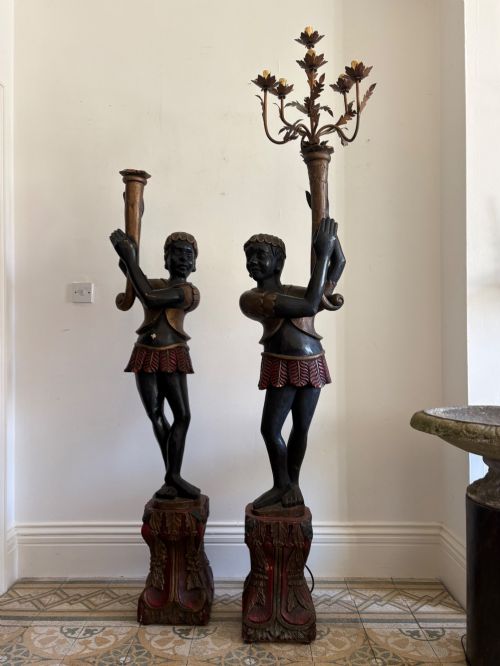
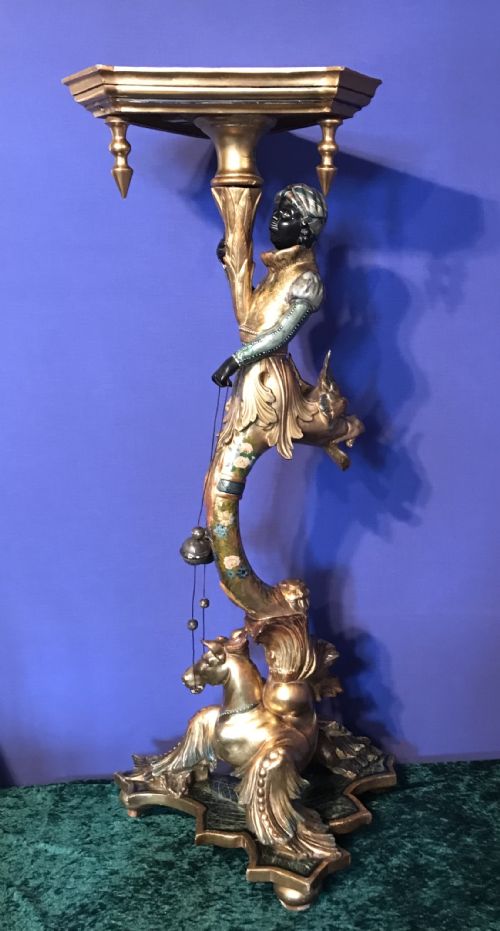
A blackamoor figure pedestal combines carved sculptural figures with functional stands, torcheres, plant holders, and tables. These pieces emerge primarily from the nineteenth century, spanning Victorian examples and earlier Venetian revivals.
Most pieces encountered on this page date from the nineteenth century, including specific years like eighteen-fifty and eighteen-ninety. The forms range from tall floor torcheres and plant stands to side tables and sculptural figures holding stands.
Materials and construction
Artisans built these supports using carved wood, walnut, and ebonised wood as the primary structural foundations. Figures and bases frequently received polychrome paint, polychrome decoration, gold leaf, and giltwood finishes.
Makers applied intricate hand-carved details to depict figures such as Venetian gondoliers. Original paint and gilt polychrome surfaces were meticulously layered onto the carved wooden bodies.
Blackamoor Figure Pedestal Retail Price Guide 2026
Typical asking prices for blackamoor figure pedestal among the pieces listed under this phrase on Sellingantiques today, from the lower quarter to the upper quarter. They describe what is for sale here now, not the wider market.
Listings feature materials including carved wood, walnut, ebonised wood, gold leaf, and polychrome paint across the nineteenth century.
Assessing craftsmanship
Quality rests in the precision of the wood carving and the preservation of the original polychrome and gilt surfaces. Finer examples display expressive facial details and drapery carved with deep relief.
The integrity of the original paint and gold leaf decoration distinguishes superior pieces from those with later overpainting. Depth of design within Venetian Baroque and Rococo revival styles also dictates the visual impact.
The Blackamoor Figure Pedestal Glossary
- Torchere
- A tall stand or floor lamp designed to hold a light source or decorative object. These tall supports elevate figures or plants above floor level.
- Giltwood
- Wood that has been treated with gold leaf or a gold-coloured finish. It provides a reflective surface that catches candle or natural light.
- Ebonised
- Wood finished to resemble ebony through a dark staining or painting process. This technique creates a stark contrast against gilt or polychrome highlights.
- Venetian Baroque
- An ornate artistic style originating in Venice characterised by dramatic movement and rich ornamentation. Pieces from this tradition show theatrical poses and elaborate carving.
Blackamoor Figure Pedestal: Frequently Asked Questions
Where were these pieces made?
The majority of these pieces originate from Venice and Italy, created during the nineteenth century. Venetian workshops specialised in these ornate, carved wooden figures.
Maker traditions in Venice drew upon Baroque and Rococo revivals, producing works that travelled across Europe during the Victorian era.
How do I care for original paint?
Protect original polychrome and gilt surfaces by keeping pieces away from direct sunlight and fluctuating humidity. Dust gently with a dry, soft cloth without using liquid cleaners or polishes.
Maintaining a stable indoor climate preserves the fragile layers of gold leaf and historic paintwork found on nineteenth-century surfaces.
How can I date a pedestal?
Dating relies on examining the wood type, such as walnut or ebonised timber, alongside the characteristics of the hand-carving and the formulation of the polychrome paint. Nineteenth-century examples often show specific tool marks and wear patterns consistent with Victorian production.
Stylistic cues, including Venetian Baroque revival motifs, help narrow the period of manufacture to specific decades like eighteen-fifty or eighteen-ninety.