

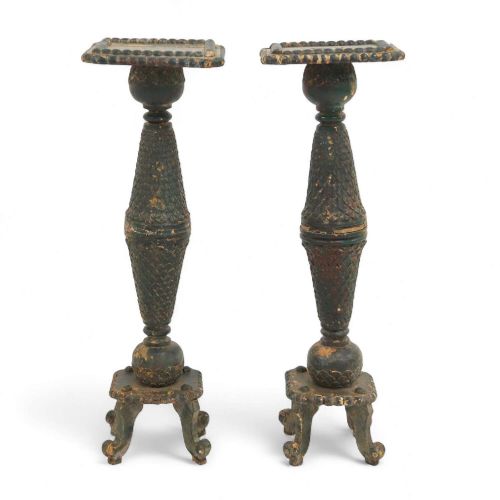


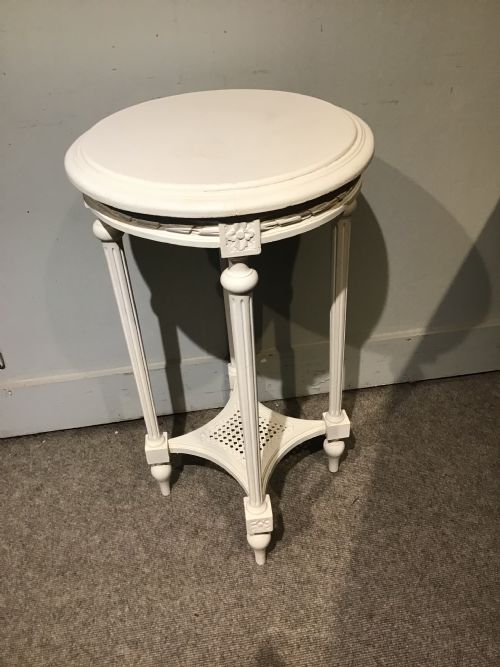
Painted Wood Torchere
A painted wood torchere brings height and architectural presence to a room, carrying light or display work on carved timber.
Painted Wood Torchere
A painted wood torchere is a tall standing pedestal or lamp designed to hold lights, figures, or plants in a room. When you search for a painted wood torchere, you encounter everything from Venetian figural standards to simple eighteenth-century pedestals.
The pieces on this page span the eighteenth, nineteenth, and early twentieth centuries, drawing heavily on Italian, French, and Victorian design traditions. You meet carved Blackamoor figures holding trays or lights, alongside parcel-gilt columns and simple painted stands.
Forms range from slender fluted pedestals to elaborate figural sculptures that double as standard lamps or small tables. The finish is central to their character, whether rendered in original green paint, polychrome, or layered gesso and gold leaf.
How they were made
Makers shaped these supports from carved wood, applying gesso to smooth the surface before laying down paint, polychrome, or gold leaf. The structure relies on solid timber turned or carved by hand, often paired with marble tops on related table forms.
Decoration involves detailed hand-painting, sometimes enhanced with parcel-gilding to catch the light in domestic interiors. Later examples integrate wiring for standard lamps while retaining carved wooden bodies and original painted surfaces.
Painted Wood Torchere Retail Price Guide 2026
Typical asking prices for painted wood torchere among the pieces listed under this phrase on Sellingantiques today, from the lower quarter to the upper quarter. They describe what is for sale here now, not the wider market.
Several stands double as polite waiters, offering a carved tray to hold your calling card.
What varies in quality
Originality of finish dictates the standing of a piece, with undisturbed gesso and authentic period paint holding greater integrity than later overpainting. Proportions also matter, as finer examples balance considerable height with stable, well-balanced bases.
The Painted Wood Torchere Glossary
- Torchere
- A tall stand or pedestal originally intended to carry a torch or candle, later adapted for lamps and display. The form provides vertical emphasis in interior schemes.
- Gesso
- A plaster-like mixture applied to wood to create a smooth surface for gilding and painting. It allows fine detail to be carved and built up before decoration.
- Polychrome
- The practice of decorating architectural elements or sculpture in several colours. It brings vibrant realism to figural stands and floral motifs.
- Parcel-gilt
- Partially gilded, where gold leaf is applied only to specific raised details of a carved object to contrast with the painted wood beneath.
- Blackamoor
- A decorative figural sculpture, often originating from Venetian traditions, depicting an exoticised human figure acting as a stand, waiter, or lamp bearer.
Painted Wood Torchere: Frequently Asked Questions
What is a painted wood torchere used for?
These tall stands were traditionally built to hold candles or torches, lifting light sources to illuminate dark corners of a grand room.
Today, they serve as striking display pedestals for sculpture, heavy table lamps, or large floral arrangements, adding height and structure to an interior scheme.
How do I identify a Venetian torchere?
Venetian pieces often feature elaborate figural carving, such as Blackamoor standards, combined with rich polychrome paint and parcel-gilding.
They frequently draw on Baroque and Rococo styles, showing theatrical posture and intricate surface decoration that distinguishes them from simpler English or French stands.
Were these stands wired for electricity originally?
Early examples were built strictly for wax candles or oil lamps, so any modern electrical wiring is a later addition.
Many standard lamps on the market have been adapted over the decades to function safely with modern plugs while preserving the antique carved wooden body.
How do I care for an antique painted surface?
Painted and gilded wooden antiques require a stable indoor climate away from direct sunlight and excessive moisture to protect the gesso and pigments.
Dust them gently with a soft, dry cloth and avoid harsh chemical cleaners that can strip or soften historic paint layers.
What is the difference between a torchere and a pedestal?
While both provide elevated display space, a torchere historically relates to lighting and often incorporates more decorative or figural elements.
Pedestals can be plainer architectural columns designed solely to support statues, urns, or busts without the specific lamp-bearing history of a torchere.