


19th Century Flip Top Table
A 19th century flip top table serves multiple functions in a room, shifting easily from a compact console to a generous surface for tea or cards.
19th Century Flip Top Table
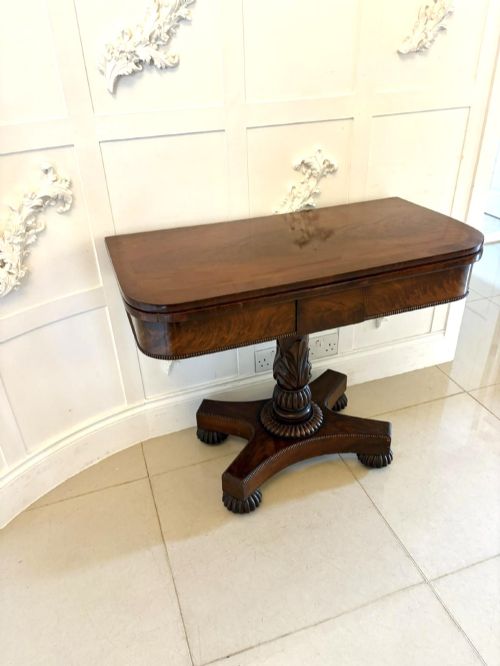
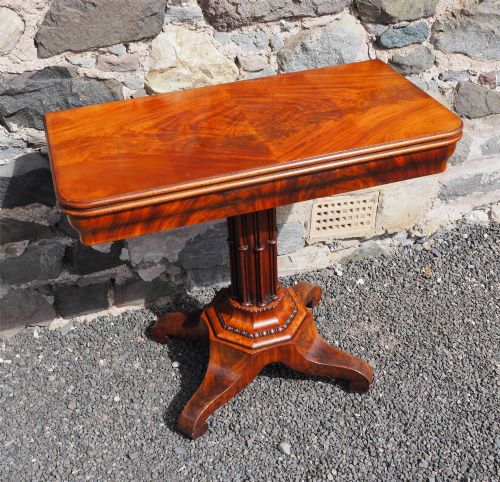
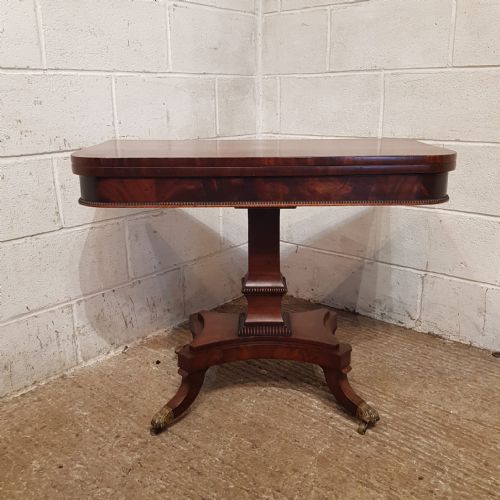
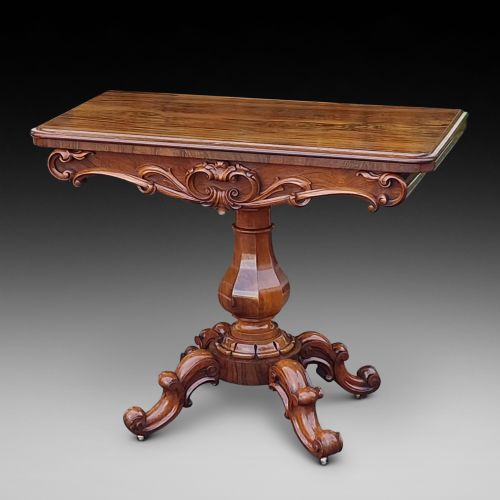
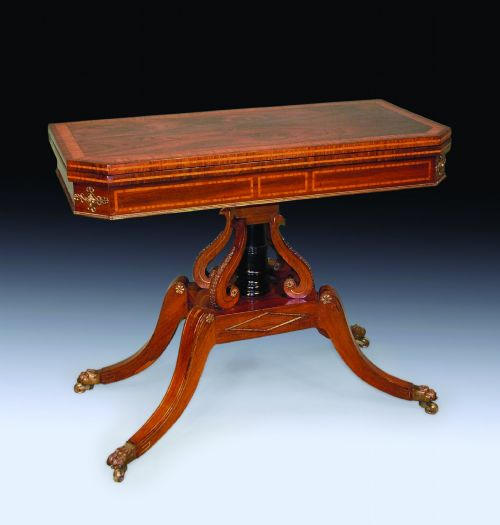
A 19th century flip top table brings versatile form and rich timber to a room, functioning primarily as a tea table, card table or games table. These pieces adapt to daily needs by folding or tilting flat when not in use, making them practical additions to period interiors.
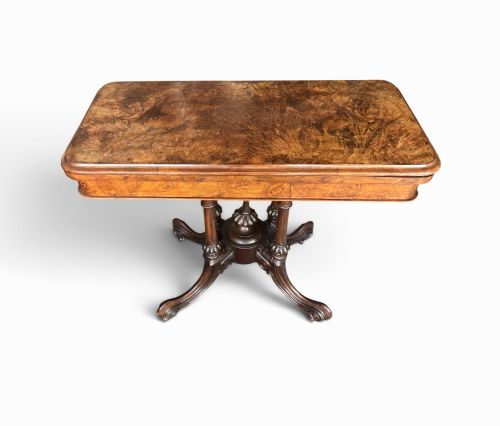
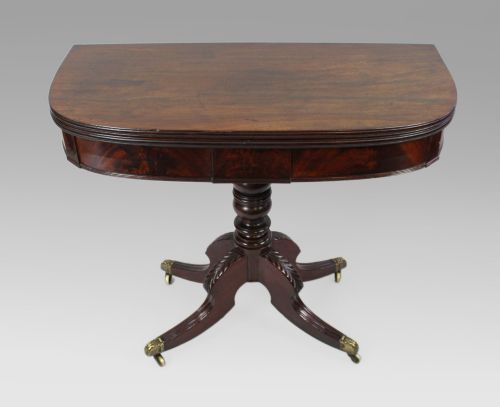
The versions most commonly met on this page date from the Regency, William IV and Victorian eras. Mahogany and rosewood dominate the selection, often accompanied by walnut, burr walnut and exotic woods.
Forms vary from demi lune shapes to rectangular console tables and circular tilt top supper tables. Many rest on pedestals with scroll bases or four swept legs, combining utility with decorative presence.
How they were made
Cabinet makers utilised dense hardwoods such as mahogany, rosewood and walnut for the primary structure and veneers. Flame mahogany and burr walnut were selected for their striking grain patterns on the folding tops.
Inlay work added geometric or floral detail using boxwood, satinwood, ebony and various exotic woods. Gilded brass mounts and ormolu sometimes enriched the frames and pedestals of higher status pieces.
Secret compartments occasionally lurk within the frieze, ready to hold forgotten visiting cards.
What varies in quality
The choice of timber creates a distinct hierarchy, with highly figured flame mahogany, burr walnut and amboyna marking out superior examples. The crispness of carved detailing on pedestals and legs also separates standard items from finer workshop output.
Complexity of construction defines the upper tier, seen in elaborate marquetry inlay, contrasting satinwood stringing and the inclusion of gilded brass mounts. The mechanical action of the hinge or pivot mechanism requires precise joinery to ensure the top rests level in both positions.
George Bullock·Gregory and Co
The 19th Century Flip Top Table Glossary
- Flip top table
- A table with a hinged or pivoting surface that folds over or tilts upright. This design allows the piece to function as a wall console before expanding into a dining or games surface.
- Card table
- A specialised folding table often lined with baize or velvet, designed for evening card games. They frequently feature small internal wells for counters or coin storage.
- Flame mahogany
- A veneer cut from the fork of a mahogany tree where the branch joins the trunk. This produces a distinctive flickering flame pattern highly prized in nineteenth century cabinet making.
- Marquetry
- The art of applying decorative pieces of veneer to a structure to form intricate pictorial or geometric designs. Craftsmen used contrasting timbers like ebony, boxwood and satinwood to achieve tonal variety.
- Demi lune
- A half moon shape used for tables designed to stand flat against a wall. They open out via a pivoting leg or gateleg action to form a full circle.
19th Century Flip Top Table: Frequently Asked Questions
How did people use these tables?
These pieces sat against drawing room walls as slim console or side tables when closed. When guests arrived, the top unfolded or pivoted outward to accommodate tea service or card playing.
Their dual nature made them essential furniture for entertaining in period homes where floor space remained at a premium during the day.
How do I tell Regency from Victorian pieces?
Regency items generally display architectural restraint, classical brass mounts, rosewood surfaces and sabre or scroll pedestal bases. They reflect the influence of classical antiquity.
Victorian pieces often favour heavier proportions, darker burr walnut or rosewood timbers, and richer floral carving on the legs and frieze.
Are these tables sturdy when opened?
The stability of an open top depends on the integrity of the gateleg swing or the central pivot mechanism. Well constructed examples distribute weight evenly across a sturdy pedestal or four swept legs.
Careful alignment ensures the folding leaf rests flat without excessive strain on the brass hinges.