

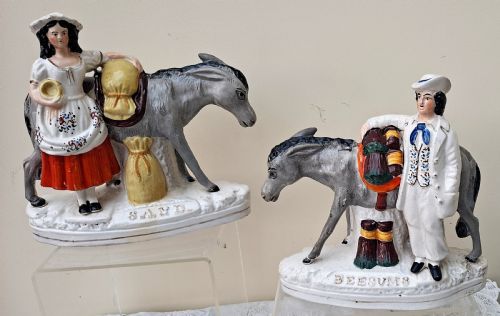


19th Century Flatbacks
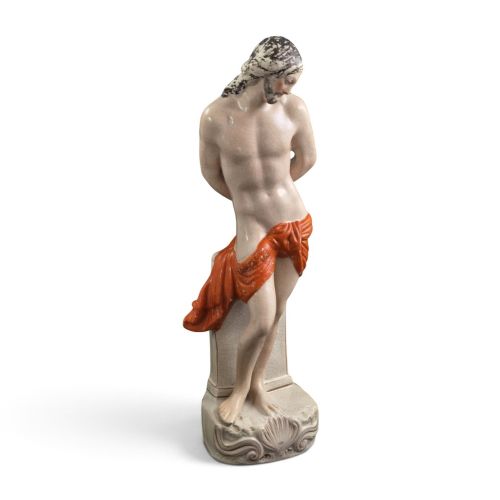
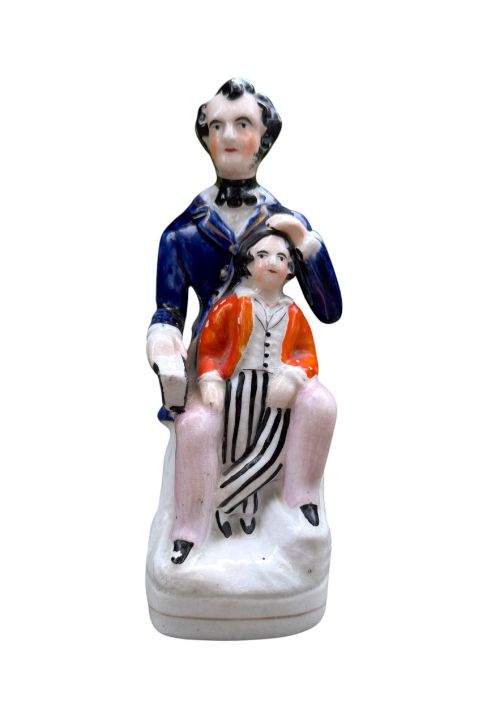
These 19th century flatbacks are Victorian pottery figures designed to sit neatly against a mantelpiece, depicting royals, literary heroes and exotic animals.
19th Century Flatbacks
When you search for 19th century flatbacks, you enter the colourful world of Victorian Staffordshire pottery designed specifically for display on mantelpieces and shelves. Because the backs were left unpainted and flat, these figures saved on material costs and sat flush against cottage walls.
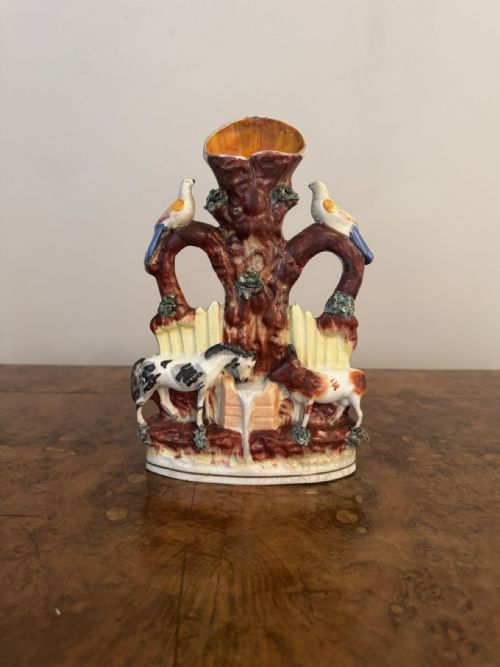
The pieces you meet most often on this page depict historical personalities, royal family members, literary characters and theatrical figures. Makers also turned their hands to spill vases, castles, cottages and exotic animals like zebras.
Dating primarily from the middle to the late nineteenth century, these earthenware figures capture the popular culture and news events of the Victorian era. Portrait groups commemorate weddings, military alliances and temperance movements alike.
Materials and Technique
Potters shaped these figures using press moulds, joining front and back halves together before firing the clay body. Earthenware served as the primary ceramic base, finished with lead glazes to create a glossy protective surface.
The listings show earthenware and ceramic materials finished with lead glaze and enamel paint.
Judgements of Quality
Proportion and scale distinguish finer portrait figures and large castles from simpler, distorted models. The clarity of the lettering on named pieces also marks out superior workshops.
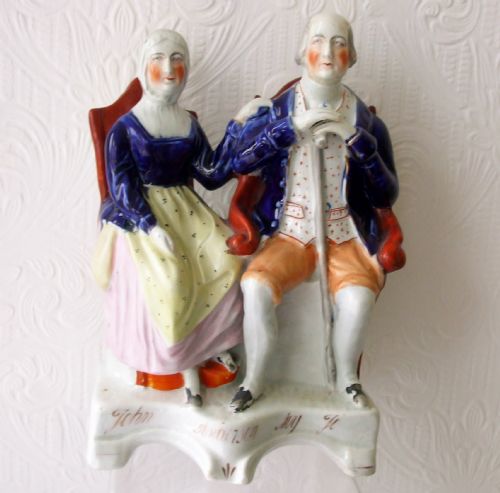
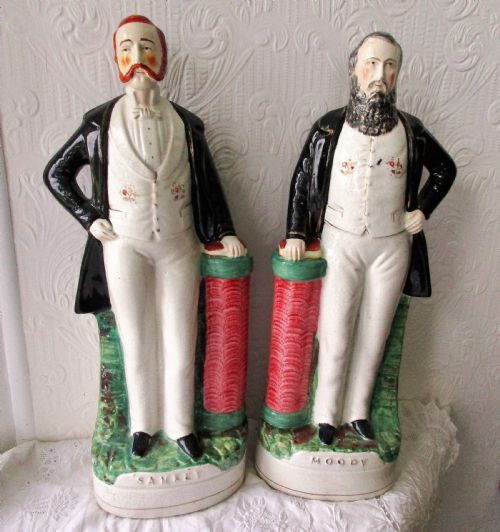
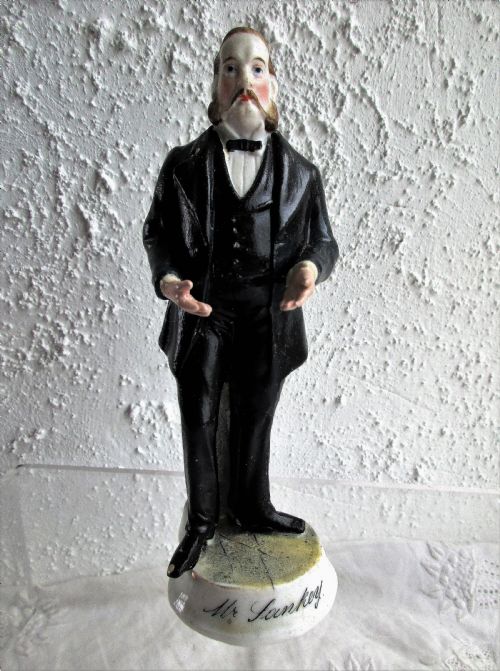
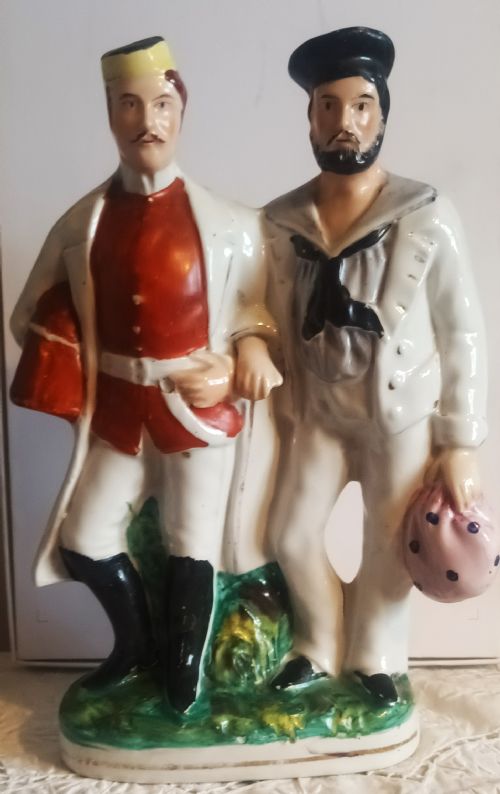
Moody and Sankey·Lord Shaftesbury·John Anderson My Jo·Will Watch Smuggler·Highland Jessie
The 19th Century Flatbacks Glossary
- Flatback
- A ceramic figure modelled fully on the front while the reverse remains flat and unglazed. This construction kept production costs low and allowed the piece to rest directly against a wall.
- Spill Vases
- Hollow pottery figures incorporating cylindrical holders designed to store wooden spills for lighting fires. They frequently take the form of animals or pastoral scenes.
- Lead Glaze
- A glossy coating containing lead compounds applied to earthenware before firing. It creates a smooth, waterproof surface that intensifies the colours beneath.
- Enamel Paint
- Vitreous coloured pigments fused onto the glazed ceramic surface during a secondary low-temperature firing. This technique provides the bright reds, blues and greens seen on Victorian figures.
- Watch-Holder
- A decorative ceramic stand featuring a small hook or recess to suspend a pocket watch. They often incorporate figural groups or architectural elements.
19th Century Flatbacks: Frequently Asked Questions
What are 19th century flatbacks?
These pieces are moulded ceramic figures produced in Staffordshire potteries during the Victorian period. They served as affordable household ornaments celebrating royalty, public figures and popular stories.
Potters cast them in two halves, leaving the reverse flat so they could stand against a mantelpiece. The range includes human portraits, animals, cottages and spill vases.
How were flatbacks displayed?
Victorian households arranged these pottery figures along mantelpieces, sideboard tops and cottage shelves. Their flat backs allowed them to push securely against the wall in domestic interiors.
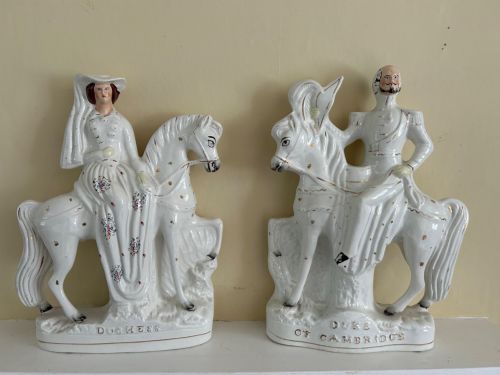
Pairs of figures often flanked clocks or ornaments, creating a balanced display across the hearth.
How do you identify historical figures?
Many flatbacks feature hand-painted names or titles inscribed directly onto the clay base. Portrait pieces depict specific individuals such as Queen Victoria, Prince Albert or military leaders from the Crimean War.
Clothing styles, royal insignia and contemporary events recorded in the titles help pinpoint the exact subject matter.
What animals appear on flatbacks?
Potters modelled a variety of creatures including zebras, deer and dogs accompanying huntsmen. These exotic and domestic animals reflect Victorian tastes in popular illustration and menagerie displays.
Animals frequently appear alongside human figures or function as the central subject of spill vases.