




19th Century Firearm
These 19th century firearm examples bring tactile engineering and military history into your study.
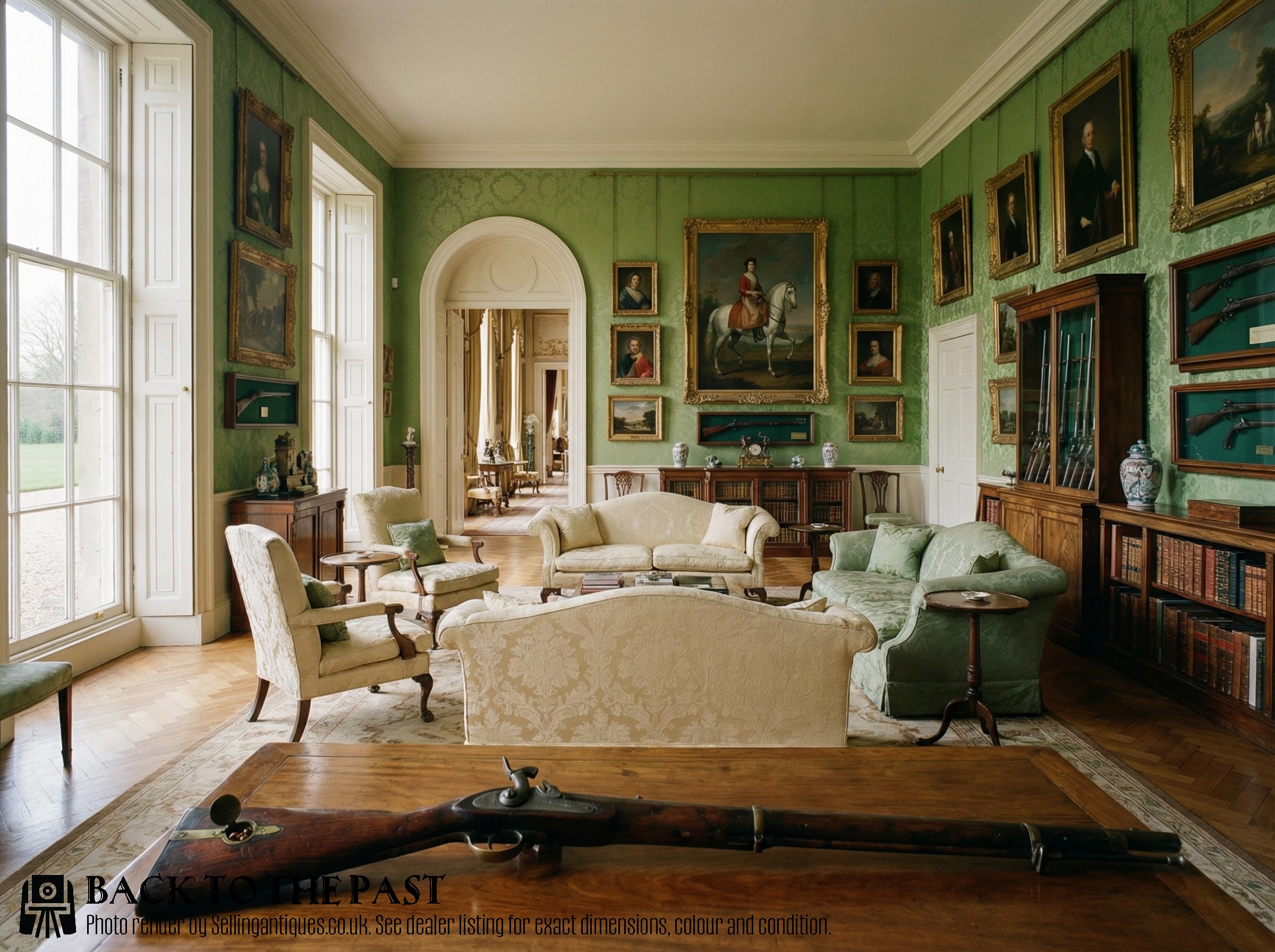
19th Century Firearm
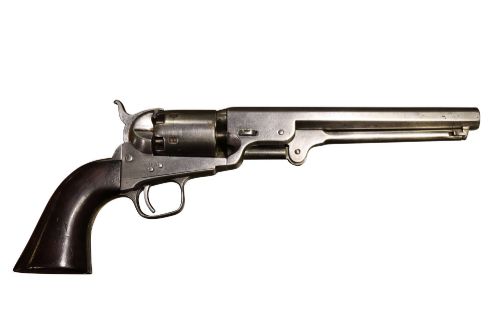
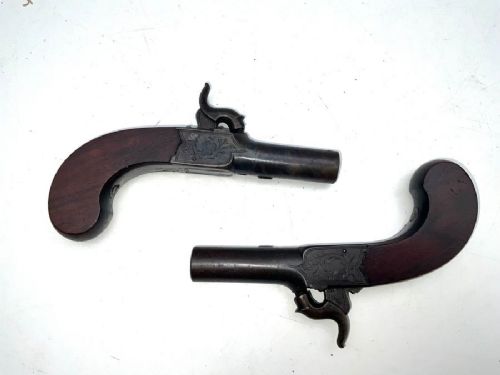
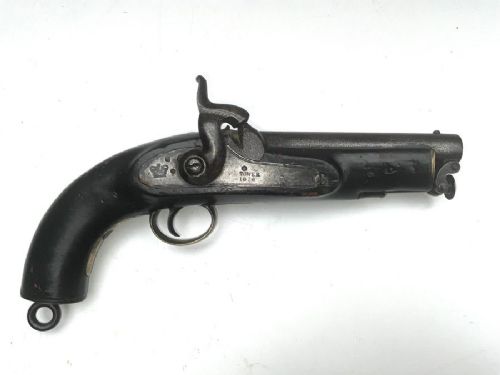
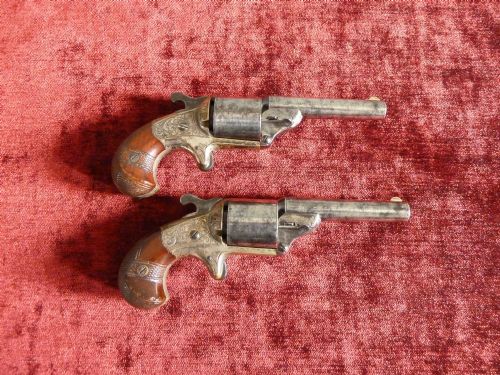
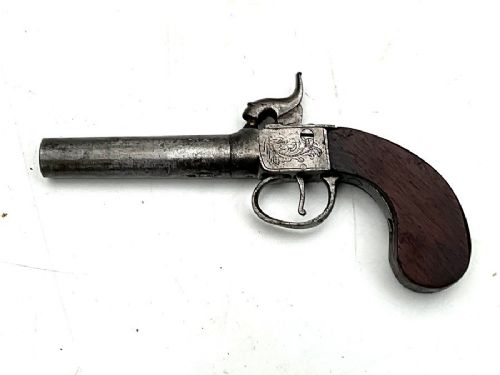
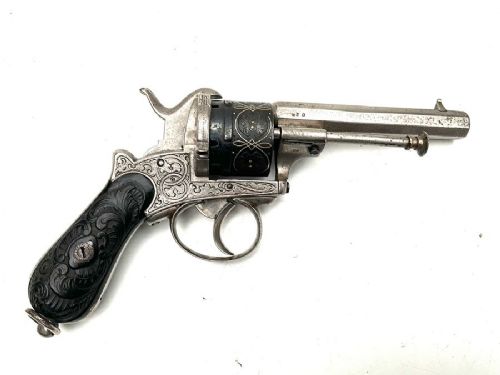
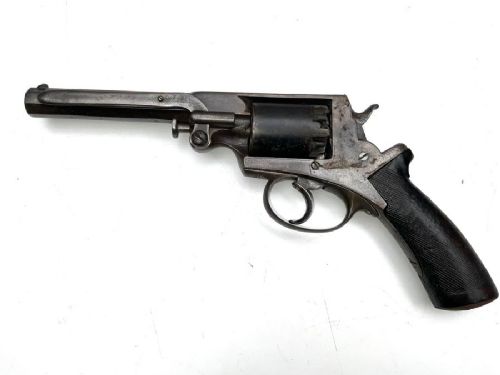
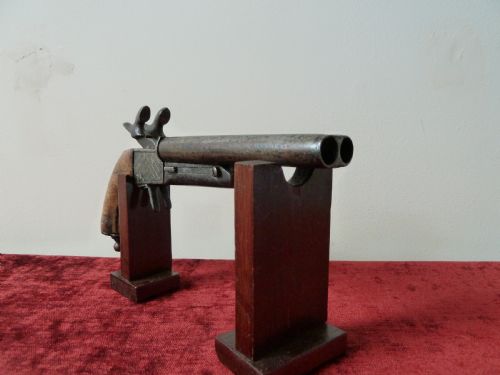
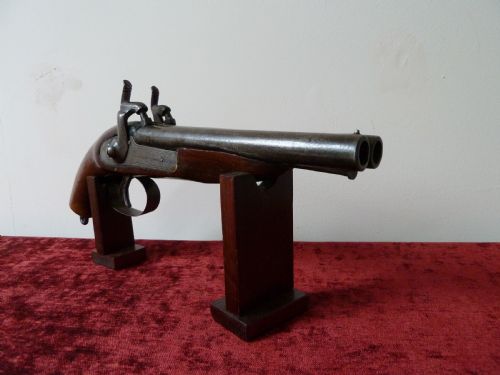
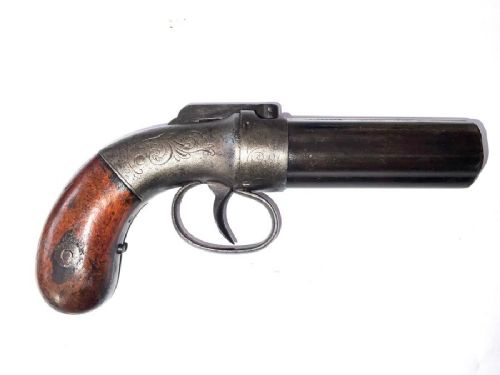
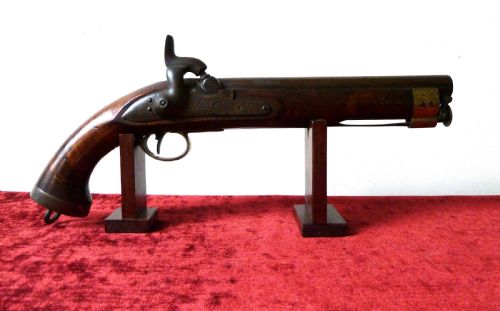
A 19th century firearm encompasses military percussion pistols, pocket and belt pistols, rimfire revolvers, and rifles spanning the Victorian, Victorian Military, American Victorian, and Regency styles. These pieces record the rapid mechanisation of personal defence and military equipment throughout the eighteen-hundreds.
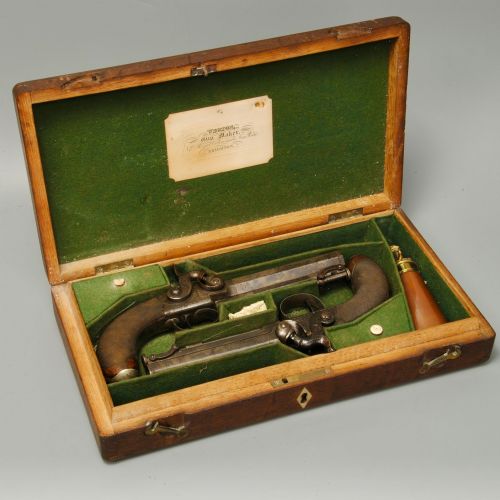
The specimens on this page include boxed Beaumont-Adams revolvers, two-band Enfield rifles, and smooth-bore percussion pistols. Makers such as George Sherwood of Portsmouth and A.W Spires appear alongside American rimfire revolvers and English sea service arms.
Materials and construction
Makers utilised steel for barrels, locks, and internal actions to withstand explosive force, pairing these metal components with shaped walnut stocks. Brass fittings frequently reinforce trigger guards, butt caps, and ramrod pipes on military and sea service patterns.
Production combined hand-fitting of moving lock mechanisms with stock shaping. Mechanics relied on percussion cap ignition systems and early cartridge designs, replacing earlier flintlocks with more reliable chemical priming.
19th Century Firearm Retail Price Guide 2026
Typical asking prices for 19th century firearm among the pieces listed under this phrase on Sellingantiques today, from the lower quarter to the upper quarter. They describe what is for sale here now, not the wider market.
Current listings span the nineteenth century, focusing particularly on the eighteen-forties, fifties, and sixties through steel, walnut, and brass construction.
Evaluating quality and execution
Quality separates standard service issue arms from bespoke civilian pieces through the crispness of lock engraving, the tightness of wood-to-metal fit, and the smoothness of the mechanical action. Superior makers applied finer checkering to walnut grips and cleaner finishing to steel barrels.
Completeness dictates standing within the category, particularly where original accessories, matching serial numbers, or maker-cased sets remain intact. Retained finishes on steel and well-preserved maker inscriptions on barrel flats elevate individual examples.
George Sherwood·A.W Spires·Beaumont Adams
The 19th Century Firearm Glossary
- Percussion
- An ignition system utilising a small percussion cap struck by the hammer to detonate the main powder charge.
- Rimfire
- A metallic cartridge type where the priming compound is spun into the hollow rim of the base.
- Smooth-bore
- A barrel lacking interior rifling, designed primarily for use with shot or specific spherical balls.
- Action
- The mechanical assembly of moving parts that loads, fires, and ejects cartridges or caps.
19th Century Firearm: Frequently Asked Questions
What is an Enfield rifle?
The Enfield rifle is a military arm produced in standard patterns, such as the two-band configuration seen from the mid-nineteenth century.
These arms served infantry forces with interchangeable steel components and walnut woodwork designed for durability in the field.
How should I clean my antique firearm?
Maintenance requires dry cloths and microcrystalline wax or light gun oils applied sparingly to steel and walnut surfaces to prevent active corrosion.
Avoid aggressive metal polishes or abrasives that remove original finish, patination, and maker markings.
What distinguishes Regency from Victorian styles?
Regency pieces reflect the earlier decades of the nineteenth century with specific trigger guard shapes, brass mountings, and stock contours associated with the Georgian transition. NINETEENTH century Victorian arms introduce heavier military standardisation, altered lock mechanisms, and distinct regional manufacturing marks.