



19th Century Farm Animal Art
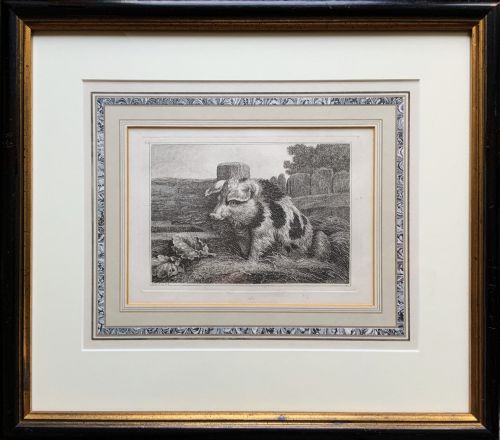
These pieces of 19th century farm animal art bring rural life and pastoral realism into domestic interiors through oil paintings, prints, and carved sculptures.
19th Century Farm Animal Art
Most examples originate from British and continental European traditions, encompassing styles such as Victorian realism, pastoral realism, and Belgian animal painting. Alongside traditional canvas works, the category includes framed prints and life-size carved wooden sculptures of livestock.
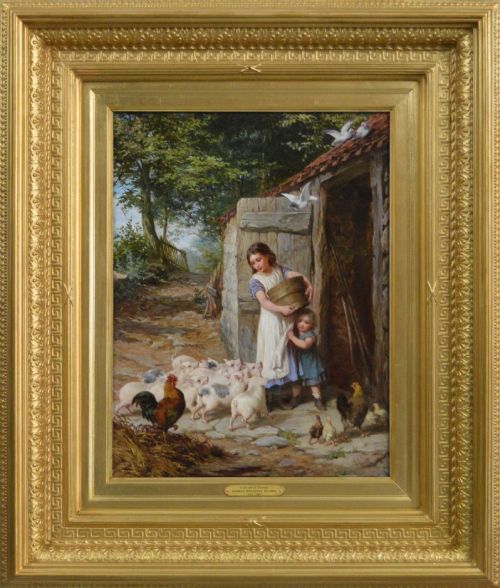
Works range from detailed depictions of cattle and horses in open landscapes to intimate genre scenes featuring children or figures interacting with farmyard animals. The common thread is a focused observation of domestic livestock, rendered through the dominant medium of oil paint.
Materials and construction
The primary technique relies on oil paint applied to canvas, often supported by wooden stretchers and housed within decorative frames adorned with gold leaf, gesso, and giltwood. Artists built up their compositions using traditional brushwork to capture the textures of animal coats, feathers, and rustic farmyards.
Sculptural pieces within the genre utilise carved wood, demonstrating the era's craftsmanship in translating rural subjects into three dimensions. Framing materials typically combined timber with moulded gesso and gilding to complement the tonal qualities of the paintings.
19th Century Farm Animal Art Retail Price Guide 2026
Typical asking prices for 19th century farm animal art among the pieces listed under this phrase on Sellingantiques today, from the lower quarter to the upper quarter. They describe what is for sale here now, not the wider market.
A life-size carved Indian goat stands shoulder-to-shoulder with European oil paintings of pigs, ducks, and ponies.
Assessing quality
Quality in these works is defined by the artist's ability to render the anatomy, movement, and individual character of livestock with anatomical precision and naturalistic light. Finer examples display subtle handling of texture in animal fur and plumage, alongside well-balanced composition within the wider landscape or farmyard setting.
The sophistication of the supporting frame, particularly period giltwood and gesso mouldings, contributes to the overall integrity of the piece. Works by named artists or recognised followers working within established Belgian and British realist traditions generally exhibit higher execution standards than anonymous studio pieces.
George Augustus Holmes·Franz van Severdonck·John Frederick Herring Jnr·Samuel Joseph Clark·Eugene Verboeckhoven·Percival Glenfern·Claude Cardon·Pierre Emmanuel Dielmans·Thomas Sidney Cooper·Edgar Hunt·A Davis·Louis Marie Dominique Robbe·H Strafford·Charles Hunt Jnr
The 19th Century Farm Animal Art Glossary
- Giltwood
- Wood carved and prepared with gold leaf or metallic leaf gilding. This finish is commonly found on the ornate frames enclosing Victorian oil paintings.
- Gesso
- A plaster-like mixture applied to wooden frames as a base for moulding and gilding. It allows for intricate decorative relief work around the edges of artworks.
- Pastoral Realism
- An artistic style focusing on authentic, unidealised depictions of rural life and agricultural scenes. It prioritises truthful representation of animals and farm workers over romanticised fantasy.
- Genre Painting
- The pictorial representation of scenes from everyday life, often including figures, cottage interiors, and domestic animals. In this category, it frequently intersects with animal portraiture.
19th Century Farm Animal Art: Frequently Asked Questions
What subjects appear in this art?
Paintings and prints typically depict cattle, sheep, horses, pigs, goats, and poultry situated in farmyards, pastures, and country landscapes.
Some compositions incorporate human figures, including dairy farmers and children feeding piglets or tending to livestock.
How do I date these pieces?
Dating relies on stylistic markers of Victorian realism, artist signatures, and framing materials such as period giltwood and gesso.
Many works carry specific dates or reflect the distinct aesthetic movements of the nineteenth century.
Are these works painted on canvas?
The majority of the pictorial works are executed in oil paint upon canvas surfaces.
Alternative formats include framed prints and carved wooden animal sculptures.
Where were these artists from?
The creators span British and continental European traditions, including notable Belgian and British animal painters.
Followers and circle members of prominent nineteenth-century masters also contributed significantly to the genre.