



19th Century Equine Portrait
A 19th century equine portrait captures the muscle, breeding and individual character of celebrated horses through traditional oil paint on canvas.
19th Century Equine Portrait
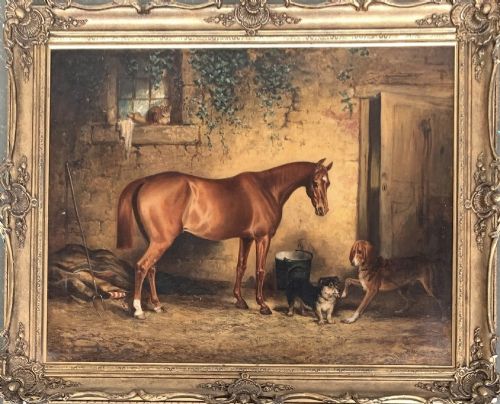
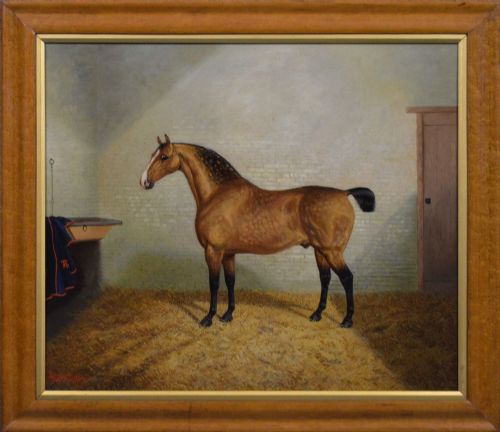
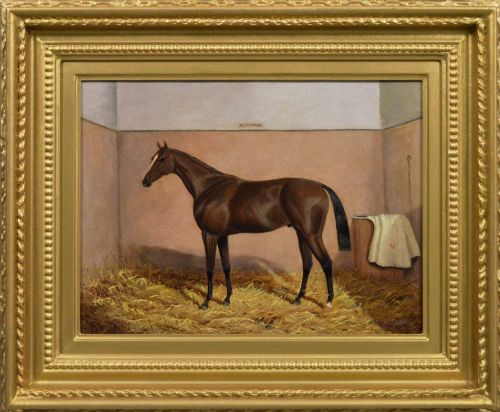
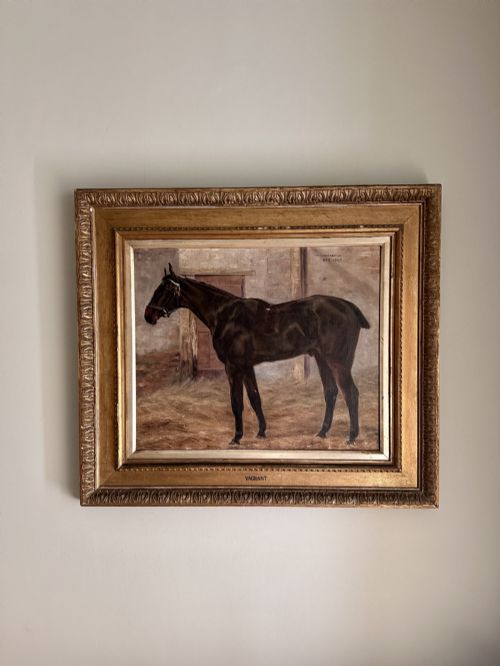
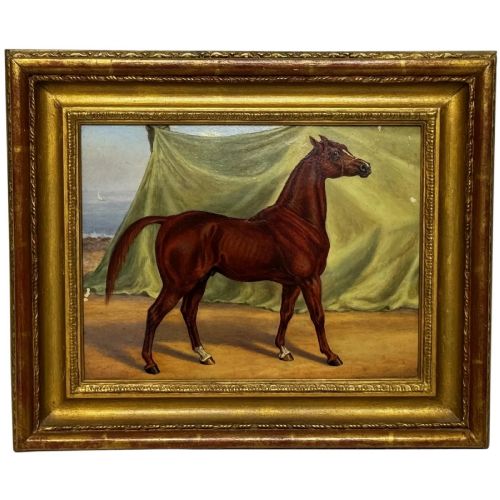
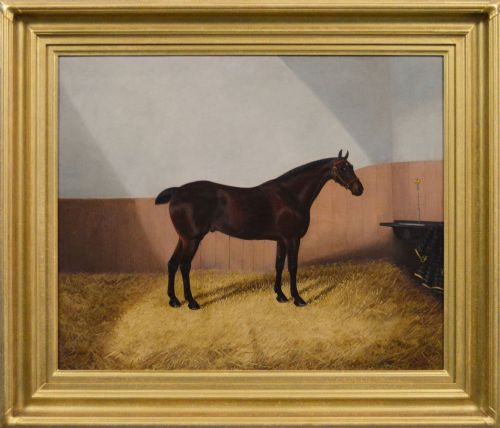
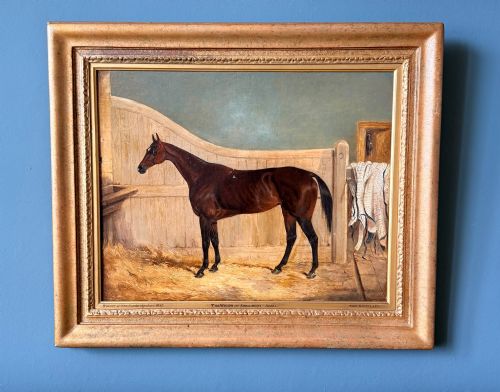
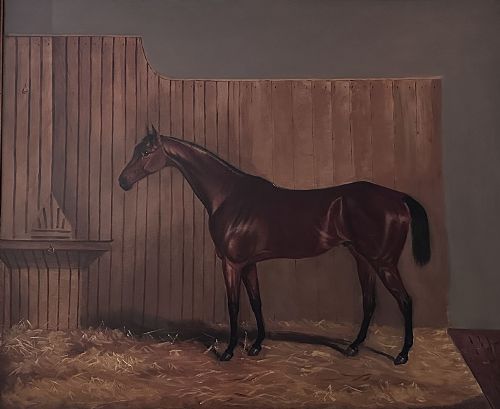
A 19th century equine portrait depicts named racehorses, hunters and prize stallions within stable interiors or open landscapes, reflecting the era's deep fascination with bloodstock. These works range from tightly focused studies of individual animals to broader compositions that include grooms, jockeys or racing fields.
Most examples encountered on this page date from the Victorian period through to the turn of the twentieth century, bridging Regency elegance and late nineteenth-century realism. Painters often recorded specific provenance, noting race victories, owners or estates directly in the title or accompanying documentation.
The subjects serve as historical records of notable equines such as Flying Fox or Cambridgeshire winners, capturing the precise conformation valued by breeders of the time. Buyers acquire these works to connect with British sporting art traditions and celebrate historical equine lineage.
Materials and construction
These paintings rely on oil on canvas as the primary medium, allowing artists to build rich layers of pigment that render the sheen of a bay, chestnut or dappled buckskin coat. Artists applied oil paint with varying brushwork to distinguish between the soft texture of horse hair, the leather of tack and the rugged landscape backgrounds.
Finished canvases sit within wooden frames, frequently enhanced with gold leaf and giltwood mouldings that complement the domestic or estate settings for which the portraits were originally commissioned. Watercolour paintings on paper also appear occasionally, offering a lighter alternative to the heavier oil works.
Several portraits quietly immortalise horses that once outran their rivals for governor's cups and estate wagers.
Evaluating quality and execution
Quality rests in the anatomical accuracy of the horse and the artist's ability to render light across muscle structure, bone and coat texture. Superior works capture the alert expression and correct proportions of a thoroughbred, whereas lesser examples rely on stiff, formulaic representations of animal anatomy.
The reputation of the painter and the documented history of the subject elevate the standing of a canvas within British sporting art. Works by established practitioners such as John Ferneley Senior or Henry Barraud demonstrate a surer command of perspective, background landscape and equine temperament.
Henry Barraud·Albert Clark·Fred Fitzpatrick·Thomas Walker Bretland·John Ferneley Senior·George E Sharpe·Benjamin Cam Norton·Clifton Tomson·Alfred Moginie Bryant·Abraham Cooper RA·Charles Bilger Spalding RA·John Nost Sartorius·James Barenger
The 19th Century Equine Portrait Glossary
- Oil on canvas
- A painting technique where pigments suspended in drying oils are applied to a stretched woven fabric support. This combination allowed artists to achieve rich colour depths and subtle tonal gradations.
- Giltwood
- Wood carved and coated with gold leaf or gold paint to create a decorative frame. These frames protect the edges of the canvas and provide a traditional ornamental border.
- Sporting art
- A genre of painting dedicated to horses, hounds, shooting and rural sports. It flourished in Britain throughout the nineteenth century to document prized animals and field pursuits.
- Provenance
- The documented history of ownership of an antique object from its creation to the present day. In these portraits, provenance often links the horse to specific estates, owners or racing cups.
19th Century Equine Portrait: Frequently Asked Questions
What is a 19th century equine portrait?
A 19th century equine portrait is an oil painting on canvas that depicts a specific horse, often a famous racehorse, hunter or stallion, set in a stable or landscape.
These works were commissioned by owners, breeders and patrons to record the physical attributes and lineage of valued bloodstock during the Victorian and Regency periods.
How were these paintings displayed?
Owners typically hung these large canvases in country houses, estate offices and sporting rooms alongside trophies and hunting memorabilia.
They served as both decorative art and tangible proof of a stable's racing successes or breeding prowess.
How do I identify the subject of the painting?
Many works include inscriptions on the canvas, stretcher or original frame naming the horse, the owner, the race won or the date of the portrait.
Historical racing records and estate provenance notes often help connect the visual depiction to specific nineteenth-century sporting events.
What framing is appropriate for these artworks?
Period works are typically housed in heavy wooden frames finished with giltwood or gold leaf that reflect nineteenth-century interior design tastes.
Maintaining the original frame helps preserve the historical integrity and aesthetic balance of the painting.