



19th Century Equestrian Scene
When you search for a 19th century equestrian scene, you are looking at oil paintings, watercolours, prints and decorative objects centred on horses, riders and rural field sports.
19th Century Equestrian Scene
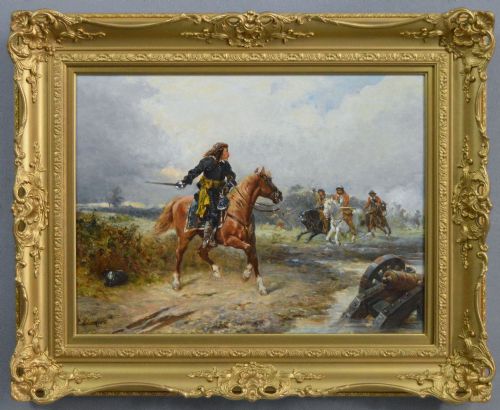
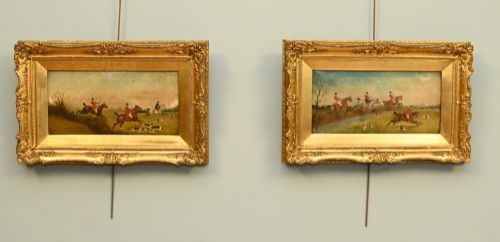
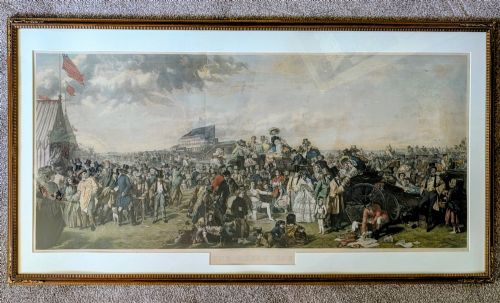
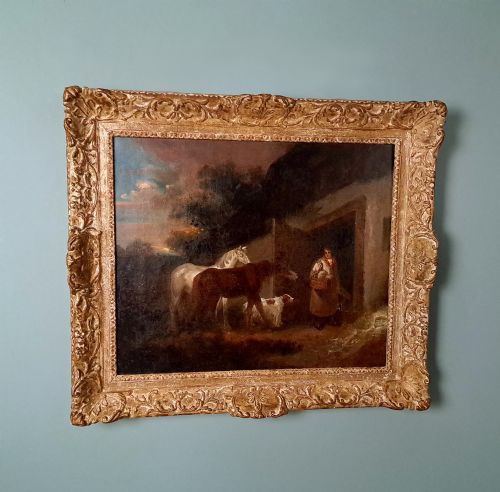
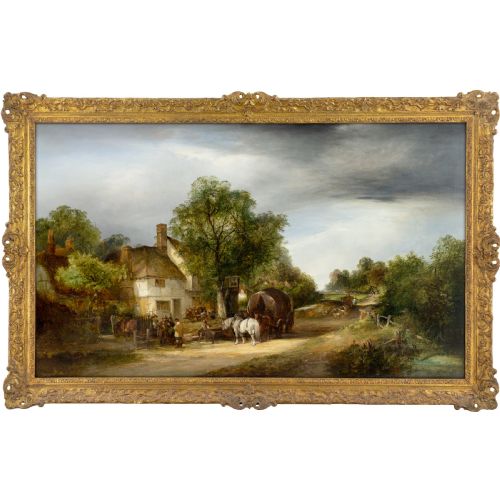
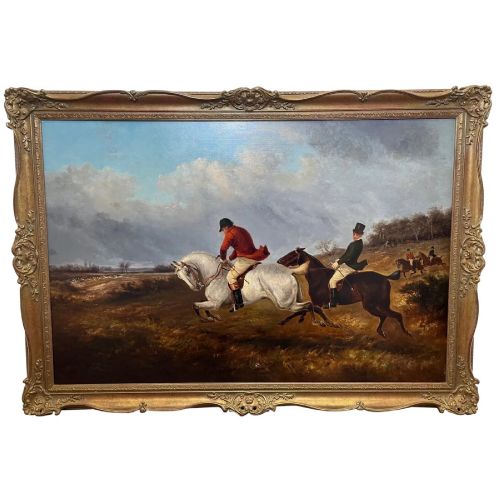
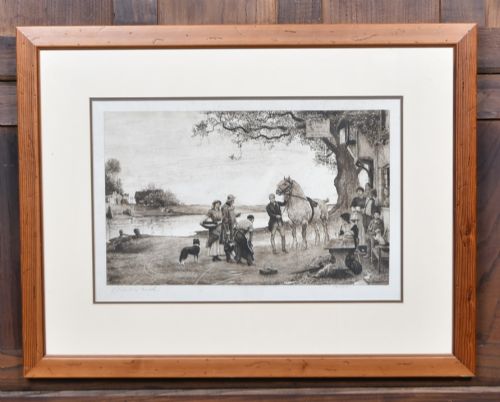
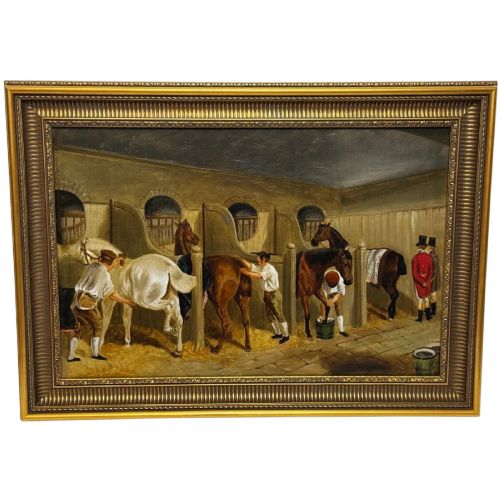
A 19th century equestrian scene typically takes the form of an oil painting on canvas, a framed lithograph or an etching depicting horses, riders, stables, hunt meets and coaching journeys.
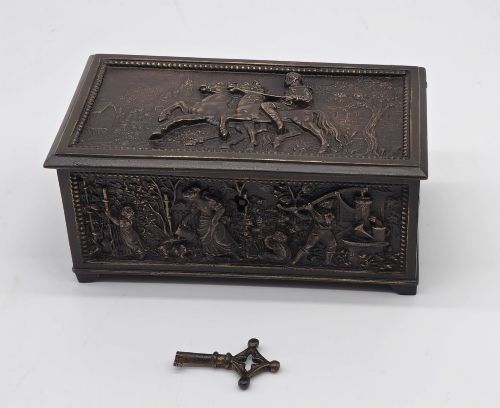
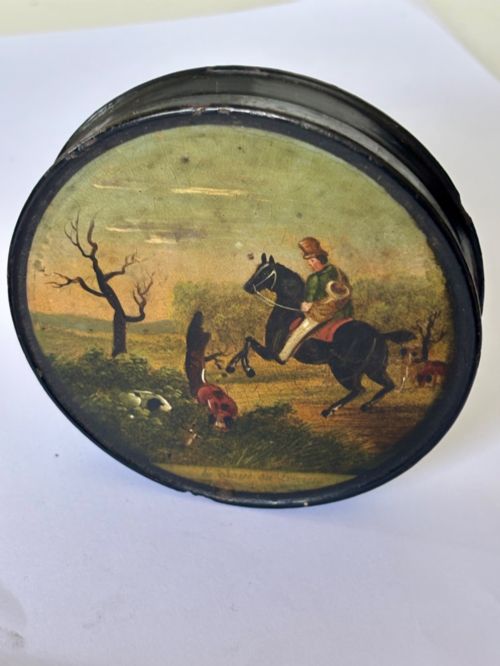
The materials span oil paint, canvas, paper, glass, bronze and ceramic objects such as transfer-printed loving mugs, snuff boxes and jewellery caskets.
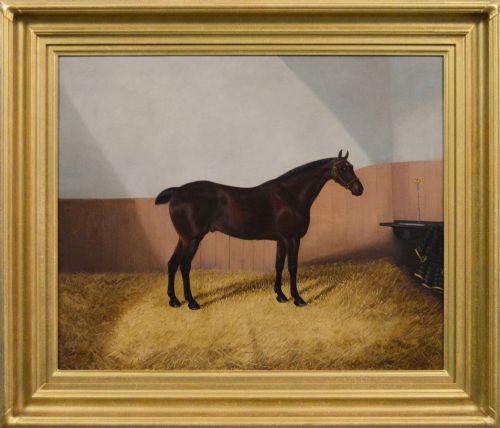
Buyers will encounter works ranging from detailed portraits of named racehorses and hunters in stables to sweeping topographical views of fox hunting packs, coaching inns and farmyard scenes.
How They Were Made
Painters built up oil on canvas or panel using layered pigments to capture the sheen of a horse coat, paired with fine brushwork for leather tack and landscape backgrounds.
Printmakers utilised lithography and etching techniques on paper, sometimes adding hand-colouring to meet the period demand for sporting imagery.
Craftsmen applied surface decoration through transfer printing on ceramics, reverse painting on glass, and relief casting on bronze or papier-mâché boxes.
19th Century Equestrian Scene Retail Price Guide 2026
Typical asking prices for 19th century equestrian scene among the pieces listed under this phrase on Sellingantiques today, from the lower quarter to the upper quarter. They describe what is for sale here now, not the wider market.
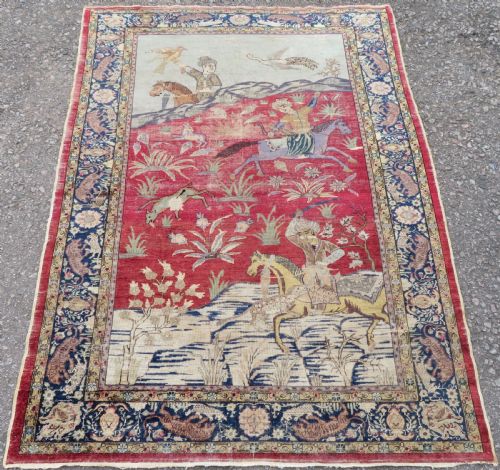
Materials recorded across the archive include oil paint, canvas, paper, glass, giltwood, silk, and papier-mâché.
What Varies in Quality
Anatomical precision and the accurate rendering of equine movement separate skilled animaliers and portraitists from more formulaic practitioners.
The handling of light, depth in the landscape background, and the articulation of human figures relative to the animals determine the artistic standing of a canvas.
The clarity of the print impression, the crispness of ceramic transfer details, and the preservation of original giltwood frames influence the desirability of the piece.
William Joseph Shayer Senior·Thomas Smythe·Thomas Walker Bretland·John Frederick Herring Jnr·Edward Lloyd of Ellesmere·George E Sharpe·Léon Joseph Voirin·John Frederick Herring·Helena Maguire·Edward Brice Stanley Montefiore·Samuel Spode·Charles Faulkner·Edwin Frederic Holt·Alfred Moginie Bryant·Samuel Henry Alken·Henri Schouten
The 19th Century Equestrian Scene Glossary
- Equestrian
- Pertaining to horse riding or the representation of horses. This term covers both formal racing portraits and casual rural hacking scenes.
- Lithograph
- A print made from a design drawn on limestone or a metal plate. It was the primary method for mass-producing coloured sporting prints during the Victorian period.
- Giltwood
- Wood that has been coated with gold leaf or a gold-coloured finish. It is commonly found on the ornate frames housing 19th century oil paintings.
- Transfer Ware
- Pottery decorated by applying a printed design from an engraved copper plate onto the ceramic body. Many 19th century mugs and jars feature hunting motifs applied in this manner.
- Sporting Art
- A genre of painting and illustration dedicated to depicting field sports, racing, shooting and hunting. It flourished in Britain throughout the 19th century.
19th Century Equestrian Scene: Frequently Asked Questions
How do I spot a genuine 19th century horse painting?
Examine the materials, canvas preparation and stretcher construction behind the frame. Older canvases often show characteristic darkening of the oils and craquelure consistent with age.
Look closely at the artist signature style and the specific pigments used, which should align with the palette of the period rather than modern synthetics.
What is the difference between a hunt meet and a sporting portrait?
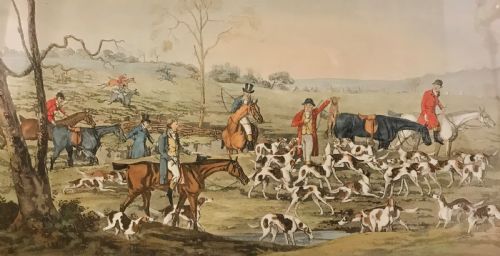
A hunt meet depicts the gathering of riders, hounds and horses before a chase across the countryside, often capturing a crowd of figures and landscape context.
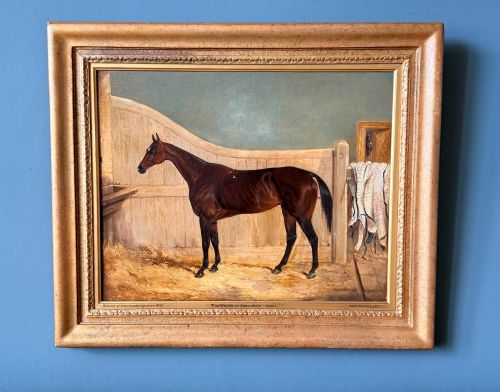
A sporting portrait focuses squarely on a single prize animal, hunter or racehorse, usually posed statically in a stable interior or paddock setting.
How were equestrian prints coloured in the 1800s?
Many published prints began as monochrome lithographs or etchings printed onto paper. Workshops then employed colourists to apply watercolour washes by hand.
This hybrid production method means individual prints within the same edition can exhibit slight variations in tone and tint.
Where should I hang a large framed sporting oil?
These works require wall space away from direct sunlight and strong heat sources, which can dry out oil paint and crack the underlying canvas.
Pair them with traditional room settings that complement giltwood frames and dark wood furniture, ensuring the scale of the painting suits the proportions of the wall.