

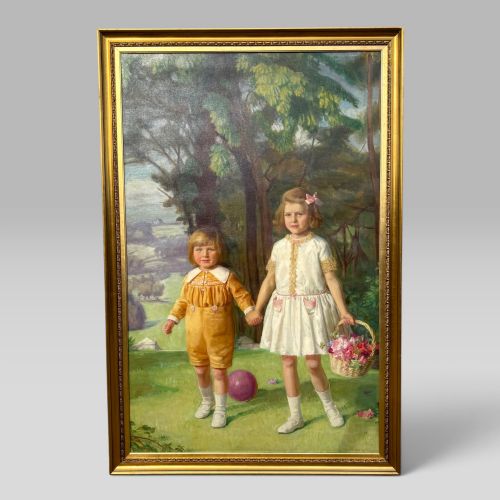
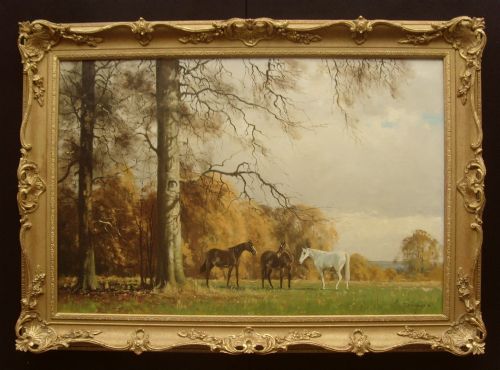

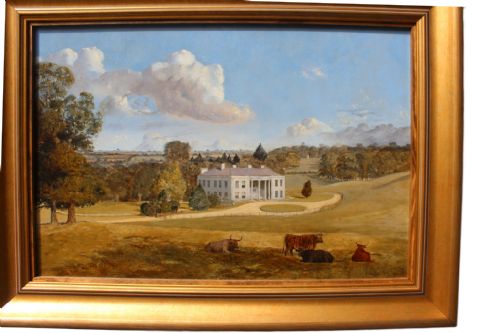


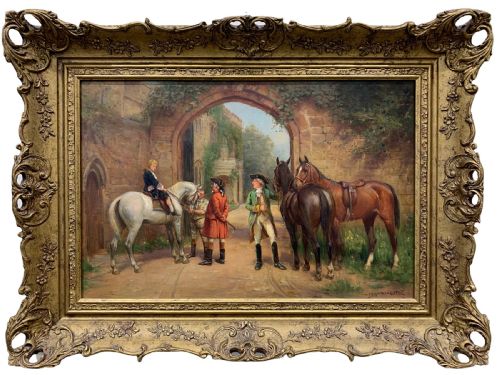


Country Estate Oil Painting
These country estate oil painting works capture grand houses, historic parks and sporting life across centuries on canvas and panel.
Country Estate Oil Painting
A country estate oil painting depicts historic houses, sweeping parklands, castles and landed property from the eighteenth century through to the early twentieth century. These canvases record notable British seats such as Warlies House, Lowther Castle, Arundel Castle and Newstead Abbey alongside pastoral landscapes populated by horses, cattle and estate staff.
The selection on this page spans several distinct periods, including eighteenth-century topographical prospects, Regency sporting scenes, Victorian castle views and nineteen-twenties equestrian works. Buyers encounter both grand architectural portraits and intimate records of stables, hunts and park landscapes framed in wood or giltwood.
Materials and methods
Artists painted these works primarily with oil paint on prepared canvas supports, though wood panel surfaces also appear in the record. Pigments were applied in layers to build depth in architecture, foliage and skies, capturing the play of light across masonry and parkland.
Frames form an integral part of these works, constructed from wood and finished with gold leaf or giltwood. These surrounds range from simple wooden mouldings to ornate gilded frames that complement the scale and period of the painting.
Country Estate Oil Painting Retail Price Guide 2026
Typical asking prices for country estate oil painting among the pieces listed under this phrase on Sellingantiques today, from the lower quarter to the upper quarter. They describe what is for sale here now, not the wider market.
Listings feature works spanning the eighteenth century, Regency period, Victorian era and nineteen-twenties.
Variations in quality
Quality in a country estate oil painting rests upon the precision of the architectural draughtsmanship and the artist's ability to render light, atmosphere and topography convincingly. Finer works demonstrate a confident handling of perspective in historic houses and natural movement in figures and animals.
The distinction between standard decorative works and superior examples also depends on provenance and attribution, as signed pieces or those linked to documented schools and named artists command greater attention. The condition of the original canvas, paint layers and period giltwood frame further influences the standing of each piece.
Clifton Tomson·Samuel Sidley·James Canter·John Sanderson Wells·Robert Thomas Buttery·Fred Merriman·Martin Pierre Denis·Henri Harpignies
The Country Estate Oil Painting Glossary
- Giltwood
- Wood carved and covered with a thin layer of gold leaf or metallic powder. This finish provides a bright, reflective border popular for framing substantial oil paintings.
- Oil on canvas
- A traditional painting technique where pigments bound in drying oils are applied to stretched woven fabric. This method allows for subtle blending and rich surface texture.
- Sporting art
- Genre of painting dedicated to horses, hounds, shooting, racing and rural pursuits. These works often document specific animals, stables and hunts associated with landed estates.
- Topographical painting
- An accurate visual record of a specific place, building or landscape. Eighteenth and nineteenth-century artists frequently recorded country houses and their surrounding parks in this manner.
Country Estate Oil Painting: Frequently Asked Questions
What is a country estate painting?
These works are oil paintings on canvas or wood panel that portray historic British houses, castles, parks and rural scenes from the eighteenth to the early twentieth century. They often document specific landed seats alongside horses, cattle and estate life.
Buyers acquire them to bring historical landscape and architectural heritage into domestic interiors. They serve as windows into the past appearance of notable estates.
How do I date an estate painting?
Dating relies on stylistic clues within the architecture, clothing of figures, painting technique and framing materials. Evidence ranges from eighteenth-century topographical prospects to nineteen-twenties equestrian scenes.
Signatures, inscriptions on the reverse and artist biographies provide further chronological markers. Comparing the depicted house with historical records also helps establish the era.
Where should I hang these paintings?
These works suit principal reception rooms, hallways or libraries where their scale and subject matter can be appreciated. Traditional spaces with natural light complement the tones of oil paint and giltwood frames.
Protection from direct sunlight and damp environments ensures the preservation of both canvas and frame. Hanging them securely away from heat sources maintains the stability of the wood and paint.