





19th Century Elm Console
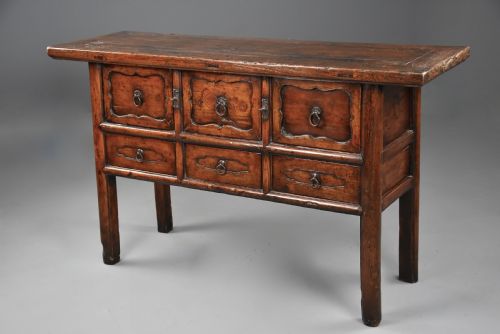
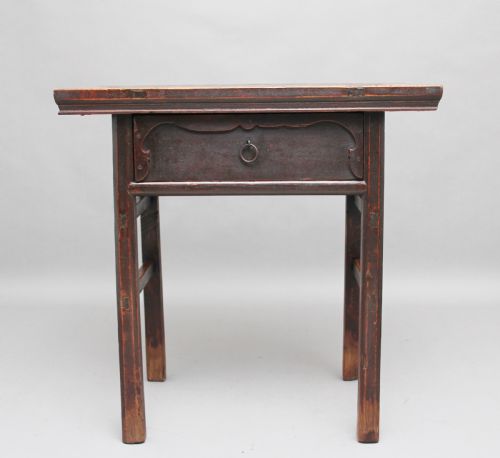
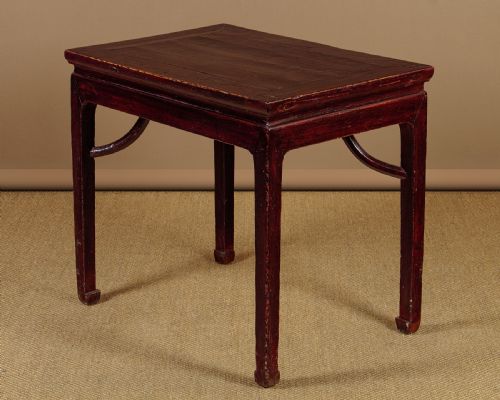
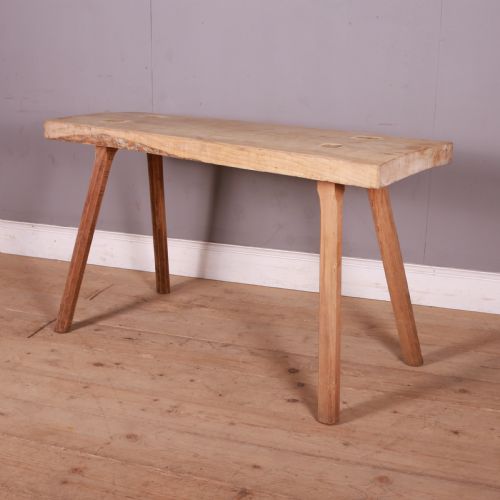
These 19th century elm console tables bring heavy timber and warm grain to a room.
19th Century Elm Console
When you search for a 19th century elm console, you are looking at side tables, console tables, and writing desks built from robust timber. These pieces range from rustic British and French provincial forms to Qing Dynasty Chinese tables and sideboards.
You are most likely to meet Chinese elm side tables and console tables on this page, alongside occasional trestle tables and desks. The selection also spans occasional Swedish and French country pieces incorporating sycamore, oak, or yew alongside the primary elm.
How they were made
These tables rely on solid elm timbers, often paired with secondary woods like oak, sycamore, or yew. Artisans constructed plank tops and sturdy frames using traditional joinery suited to heavy, characterful grain.
Surface treatments vary from scrubbed natural finishes and fine patinas to occasional lacquer and brass fittings. The construction reflects provincial and workshop traditions across diverse regions rather than uniform factory methods.
Object types span side tables, console tables, trestle tables, sideboards, buffets, desks, sofa tables, and side cabinets.
What varies in quality
Quality rests in the character of the timber grain, the depth of the patina, and the integrity of the original construction. Figured timbers and untouched surfaces elevate a piece far above standard utilitarian examples.
Proportion and the handling of structural joints determine the visual weight of the console. Tables that retain their original scrubbed surfaces or deep patinas display superior presence in an interior.
The 19th Century Elm Console Glossary
- Console table
- A table designed to stand against a wall, frequently supported by brackets or legs at the front. These pieces serve as display surfaces in hallways and living spaces.
- Trestle table
- A table featuring a horizontal beam supported by two vertical legs or frames. This form appears across both French provincial and Chinese provincial furniture.
- Patina
- The surface sheen and colour developed through age, handling, and use. A fine patina shows the natural depth of the elm timber.
- Burr elm
- Elm wood marked by swirling knot formations and distorted grain patterns. This sought-after material creates highly decorative surfaces on tables and writing desks.
- Side table
- A small table intended to sit against a wall or beside seating. These functional items form a large portion of the regional tables seen here.
19th Century Elm Console: Frequently Asked Questions
How do I style a console table?
Place your console against a prominent wall in a hallway, dining room, or living space to anchor the room. The linear shape suits narrow areas where bulkier furniture would obstruct movement.
Pair the surface with simple lamps, ceramics, or mirrors, allowing the natural grain of the elm timber to remain the focal point.
Are these tables solid elm?
Most examples utilise solid elm for their primary surfaces and structural frames. Some pieces incorporate secondary timbers such as oak, sycamore, or yew in subsidiary parts.
The heavy nature of the timber gives these tables substantial weight and durability, distinguishing them from lighter veneered furniture.
How do I identify Chinese elm furniture?
Chinese elm pieces often display distinct joinery, recessed panel construction, and minimalist forms characteristic of Qing Dynasty craftsmanship. The timber exhibits a pronounced, open-pored grain pattern.
These tables frequently serve as side tables, small sideboards, or writing desks with subtle carved details rather than heavy ornamentation.
What maintenance does elm require?
Protect the timber by avoiding direct heat sources and excessive moisture that can cause the wood to warp or split. Regular dusting with a dry cloth preserves the finish.
Occasional application of appropriate wax maintains the natural lustre of the patina without creating an artificial shine.