
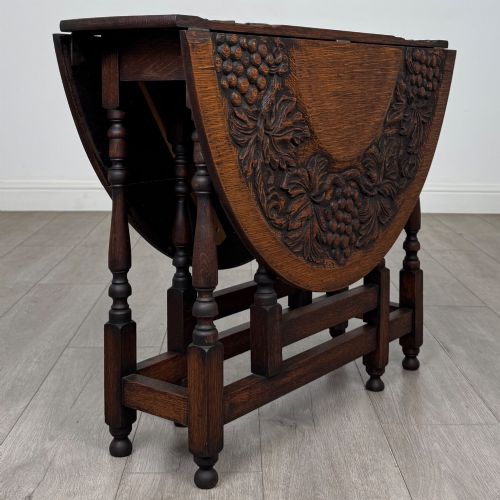
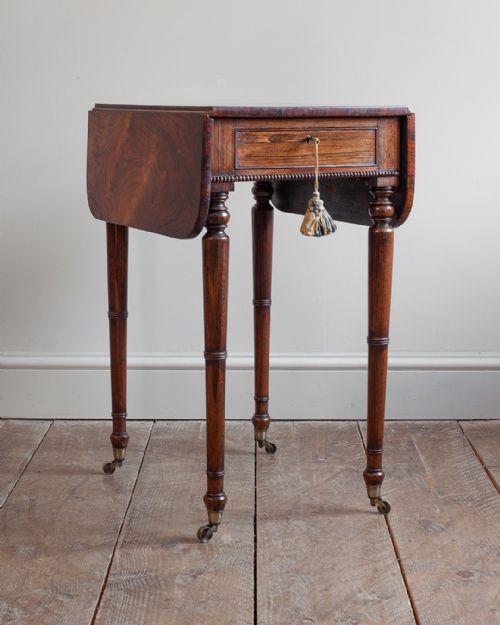
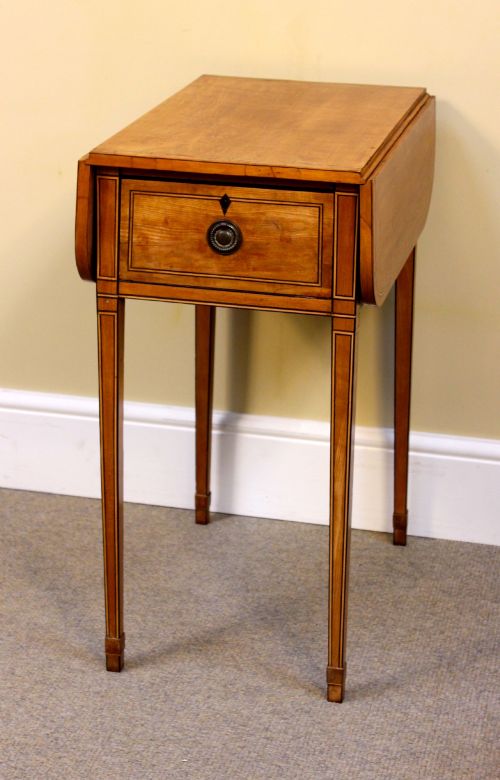
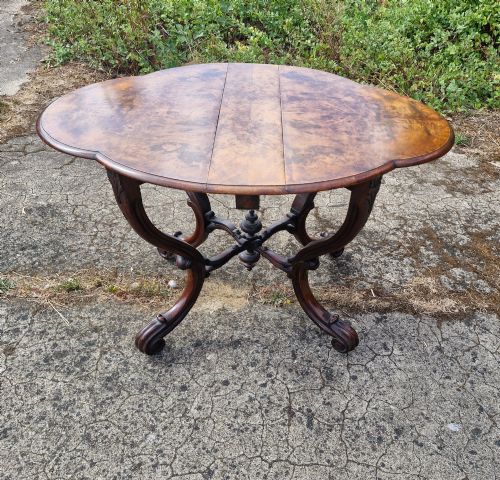
19th Century Drop Leaf
When you search for 19th century drop leaf, you are looking at clever timber tables built with folding flaps to save space.
19th Century Drop Leaf
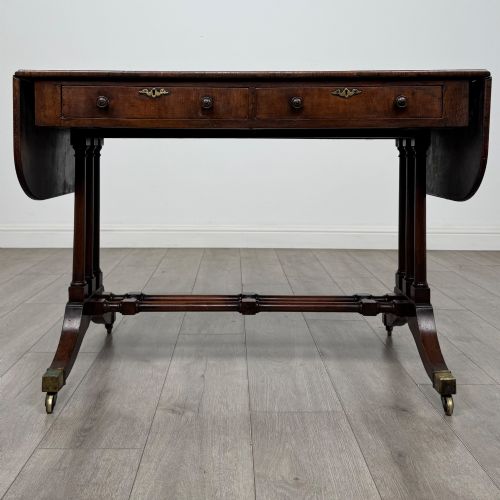
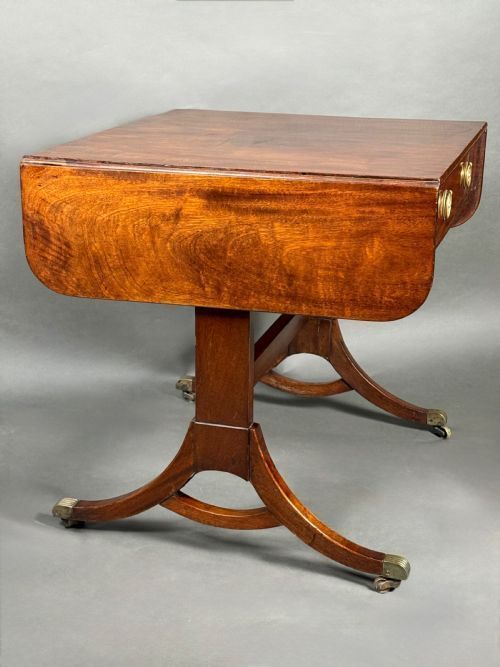
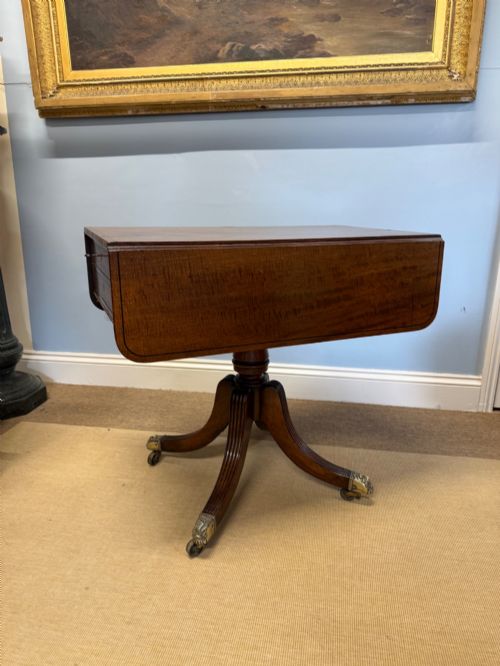
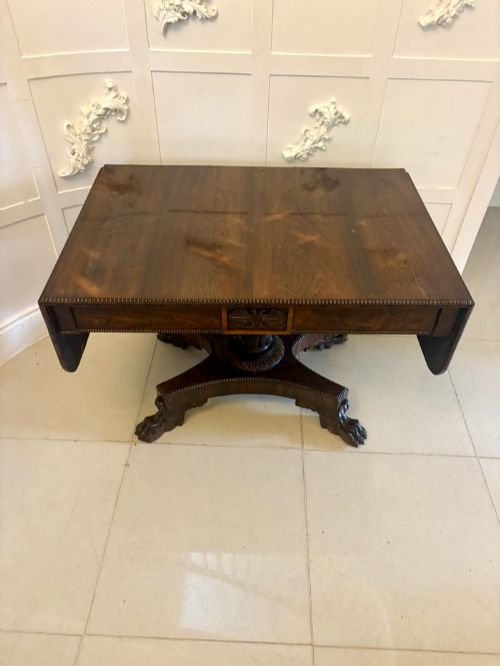
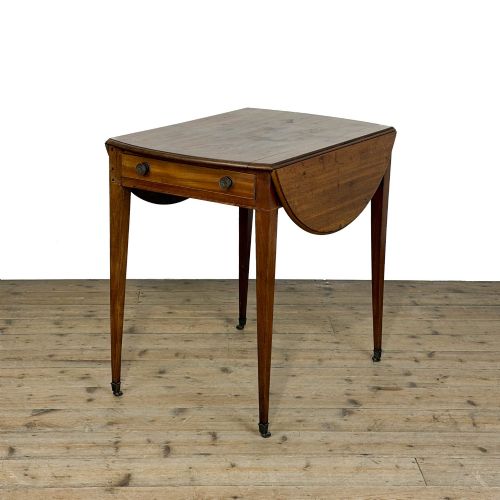
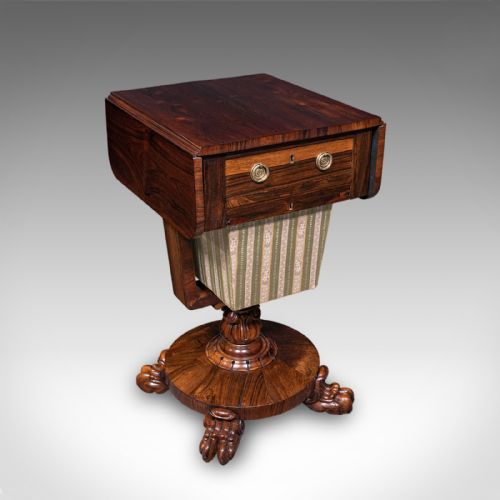
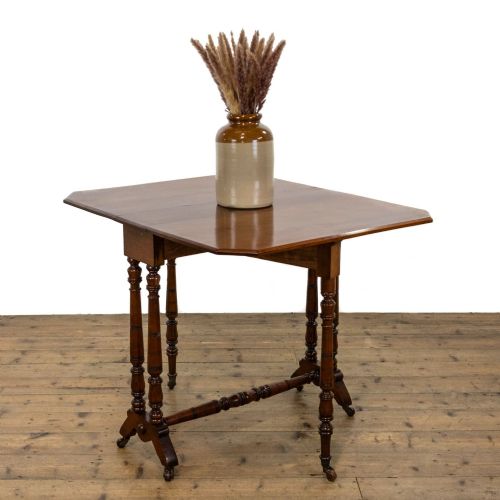
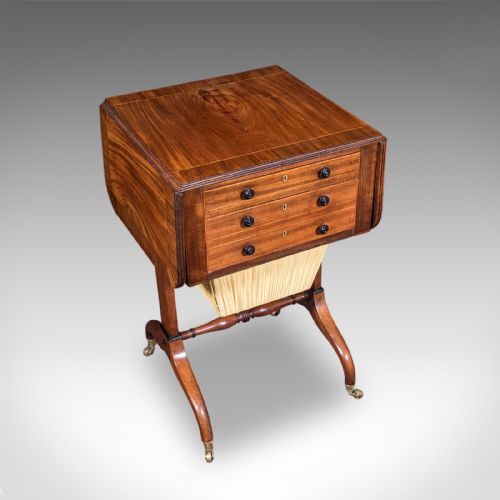
A 19th century drop leaf table is a piece of furniture designed with hinged flaps that fold down when not in use. These tables come in forms ranging from compact Pembroke and sewing tables to large dining and sofa tables.
The pieces on this page span the Regency, Victorian, and William IV periods, constructed in timber formats like mahogany, oak, rosewood, and walnut. They serve as adaptable furniture that shifts from narrow consoles to extended dining surfaces.
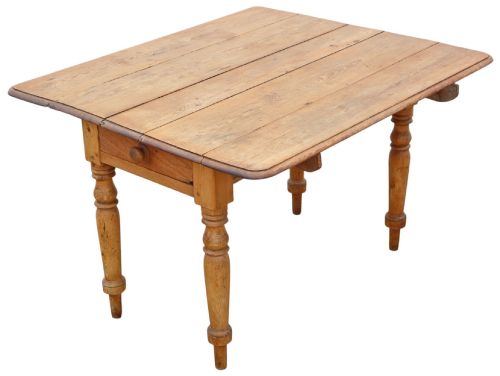
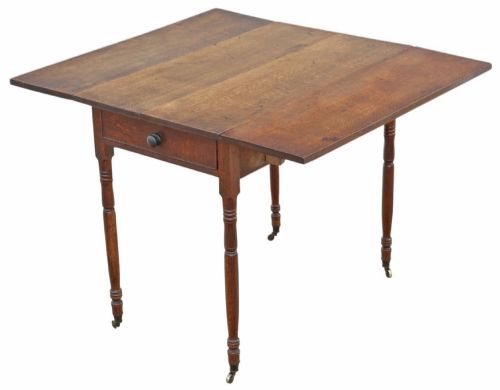
Common variations include kitchen tables in pine, library and writing tables with drawers, and delicate Sutherland tables with narrow leaves. Buyers encounter everything from simple oak gateleg designs to highly decorated inlaid walnut examples.
How they were made
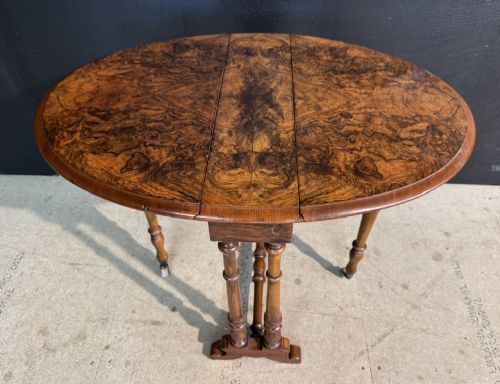
Cabinet makers relied on solid timbers like mahogany, oak, and walnut, frequently applying veneers such as flame mahogany, burr walnut, and rosewood to visible surfaces. Crossbanding, marquetry inlay, and satinwood stringing added decorative contrast to table tops.
Drop leaves required sturdy hinges and folding wooden brackets, gatelegs, or scissor actions to support the flaps when raised. Brass castors, pivoting drawers, and clever compartments were built into sofa tables and work tables for everyday utility.
Form variations range from Pembroke and Sutherland tables to kitchen prep tables and sofa tables.
What varies in quality
Quality rests in the selection of timber grain, such as figured mahogany or rich burr walnut, and the precision of inlaid marquetry and crossbanding. Finer examples show careful matching of veneers across the folding flaps and the main body.
Construction details dictate daily endurance, from the smooth movement of writing drawers and scissor actions to the stability of the folding leg supports. Tables retaining their original brass hardware, castors, and patinated finish command greater interest.
Johnstone and Jeanes
The 19th Century Drop Leaf Glossary
- Pembroke table
- A small rectangular table with two hinged drop leaves on opposing sides, often featuring a single drawer.
- Sofa table
- A long, narrow table designed to stand in front of a sofa, equipped with drop leaves and twin drawers.
- Sutherland table
- A narrow table with exceptionally slender drop leaves that fold down almost vertically, supported by swinging legs.
- Gateleg table
- A table with hinged legs that swing out like a gate to support the raised drop leaves.
- Marquetry
- Decorative patterns formed by fitting together small pieces of tinted wood veneer into complex designs.
- Crossbanding
- A border of veneer laid around the edge of a table top with the grain running perpendicular to the central panel.
19th Century Drop Leaf: Frequently Asked Questions
What is a Pembroke table?
A Pembroke table is a compact form featuring folding side leaves and usually one or two small drawers. It was originally designed for breakfasting or writing in small rooms.
These tables move easily and can stand against a wall with their leaves dropped until extra surface space is needed.
How do Sutherland tables work?
Sutherland tables use a distinct pivoting leg structure that swings outward to hold up exceptionally narrow drop leaves. When closed, the entire piece takes up very little floor space.
Victorian makers favoured this slim format in burr walnut and rosewood for drawing rooms.
Were drop leaf tables used for dining?
Larger examples in mahogany and oak served as dining tables in period homes. The folding leaves allowed families to clear floor space after meals.
Gateleg and wake tables provided sturdy support across wide spans when fully opened.
How do I identify a Regency drop leaf table?
Regency pieces often display restrained lines, rosewood or figured mahogany veneers, and brass inlaid details. They frequently incorporate pillar bases or sabre legs with castors.
Cabinets and sofa tables from this era emphasise classical proportion and balanced wood grain.