




19th Century Dog Print
These 19th century dog print examples bring Victorian sporting art, etchings and chromolithographs directly to your walls.
19th Century Dog Print
A 19th century dog print encompasses framed engravings, chromolithographs, and etchings depicting hounds, terriers, and gun dogs. These works record the Victorian fascination with sporting art, rural life, and domestic animal portraits.
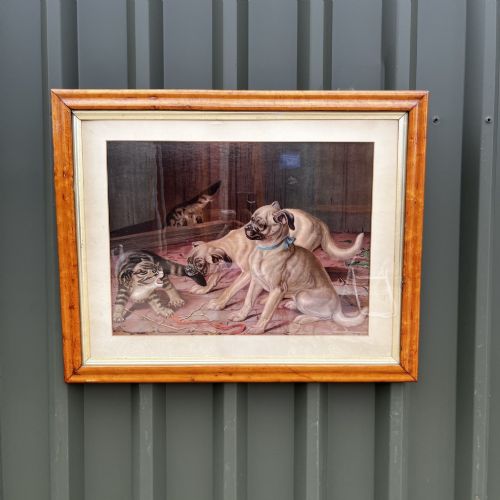
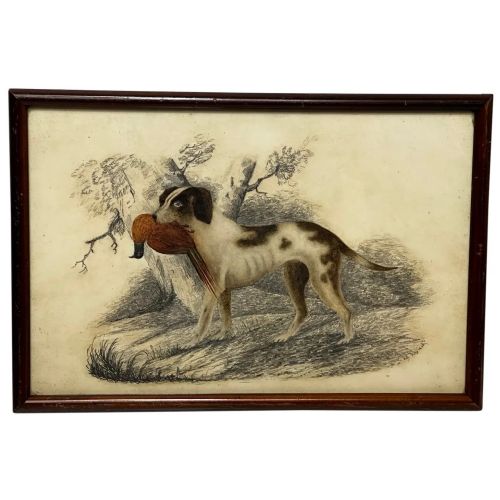
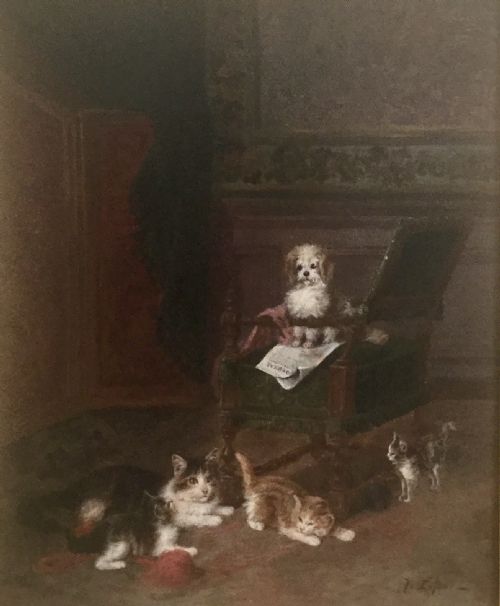
You are most likely to encounter Victorian framed engravings and etchings on paper, alongside occasional watercolours and oil paintings. The subjects range from hunting pointers and coursing greyhounds to pugs, bulldogs, and pastoral scenes.
The selection reflects both English country house sporting traditions and French genre works. Pieces often arrive framed in wood, giltwood, or glass-fronted presentations that preserve the delicate paper surfaces.
Methods and materials
Printmakers utilised paper, ink, and specialised plates to produce drypoint etchings, engravings, and chromolithographs. Artists also worked in watercolour and oil on canvas to capture fine animal details and textured coats.
Framing involved wood and gilded wood, frequently paired with glass to protect works on paper from environmental damage. Printers and publishers layered inks carefully to achieve depth in black-and-white engravings and multi-coloured chromolithographs.
Several dogs immortalised in these prints bear proper Victorian titles, including Lucy a celebrated bull bitch and a canine named The Judge.
Assessing quality
Quality rests in the precision of the plate impression and the artist's ability to render the anatomy and expression of the animal. Finer etchings and engravings display crisp lines and tonal depth that weaker impressions lose.
The choice of medium and the preservation of the original paper or canvas influence the visual impact. Strong works balance the subject within the composition, supported by appropriate period framing materials like giltwood or wood.
David Bates·Horatio Henry Couldrey·Herbert Dicksee
The 19th Century Dog Print Glossary
- Chromolithography
- A colour lithographic printing technique used to produce multi-coloured images. This method allowed publishers to recreate the rich palettes of oil paintings on paper.
- Drypoint
- A printmaking process where an image is scratched directly into a metal plate with a sharp needle. This technique creates a distinctive velvety burr in the printed lines.
- Engraving
- A method of cutting a design into a hard surface, traditionally a metal plate, using a burin. Ink is held in the grooves to transfer the image onto paper.
- Etching
- A technique where acid is used to cut into the unprotected parts of a metal plate to create a design. It yields fine, fluid lines favoured by Victorian printmakers.
19th Century Dog Print: Frequently Asked Questions
What subjects do these prints show?
The works depict hunting dogs, pointers, greyhounds, bulldogs, and pugs in various sporting and domestic settings. Artists captured both working gun dogs in the field and companion animals indoors.
Scenes range from formal portraits of named animals to broader pastoral and genre compositions reflecting Victorian life and country pursuits.
How were these works originally displayed?
Victorian households typically displayed framed engravings and etchings in parlours, studies, and country houses. They served as expressions of sporting interests and affection for specific breeds.
Many survive in period wood, giltwood, or glass-fronted frames that reflect the framing tastes of the nineteenth century.
How do I date a print?
Dating relies on stylistic clues, publishing details, and known working dates of the artists and engravers involved. Victorian pieces often carry specific publication lines or signatures from the late nineteenth century.
The materials, such as the type of paper and framing construction, also provide evidence of the period of production.
Are these works original or copies?
The selection includes original period printmaking techniques such as etchings, engravings, and chromolithographs produced in the nineteenth and early twentieth centuries. Each print medium involves direct plate impressions rather than modern mechanical reproduction.
Signatures, plate marks, and paper characteristics help distinguish these historical impressions from later copies.