


19th Century Dog Artwork
When you seek 19th century dog artwork, you encounter oil paintings, watercolours and needlework capturing canine companions through portraits, sporting scenes and folk art.
19th Century Dog Artwork
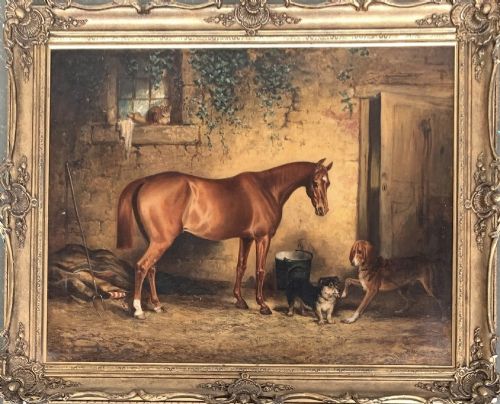
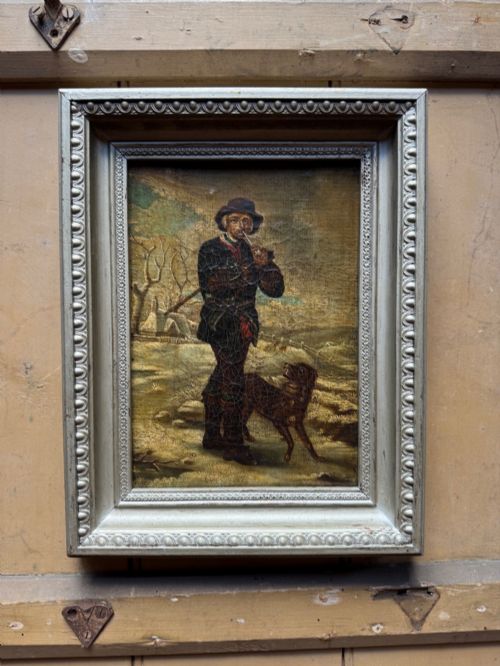
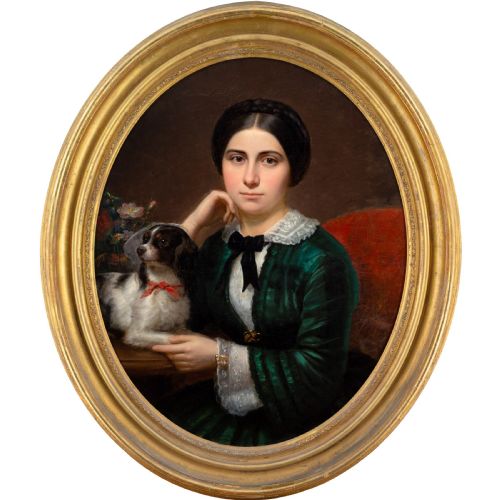
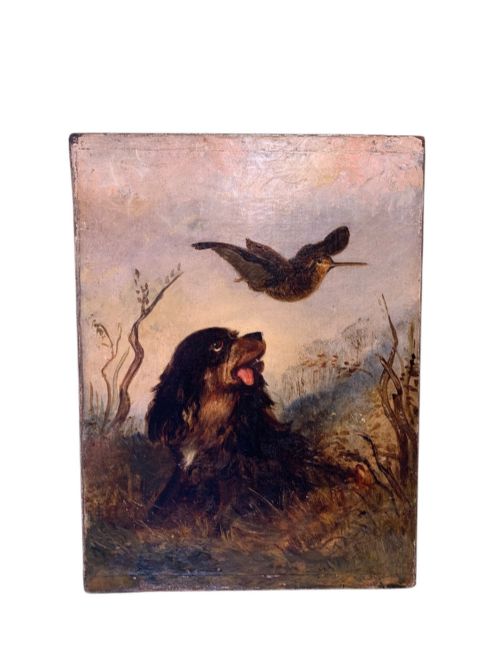
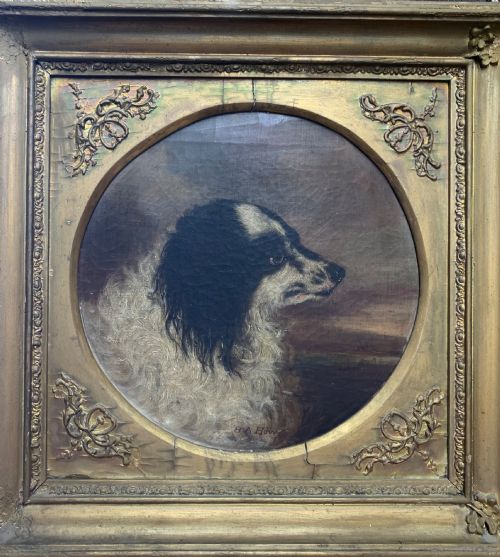
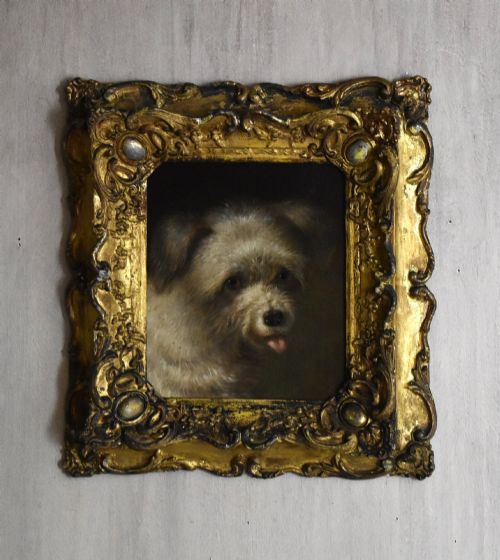
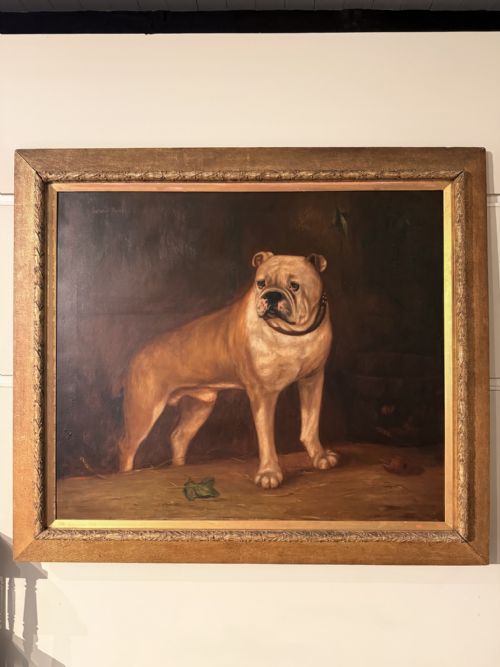
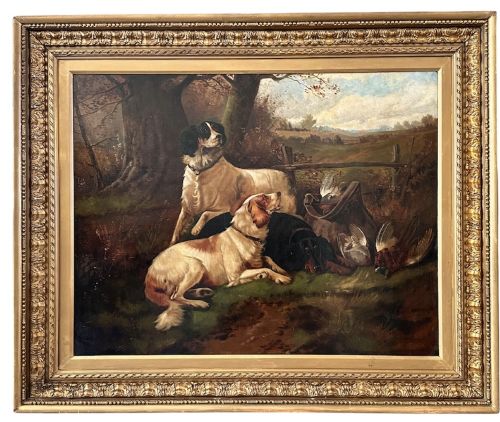
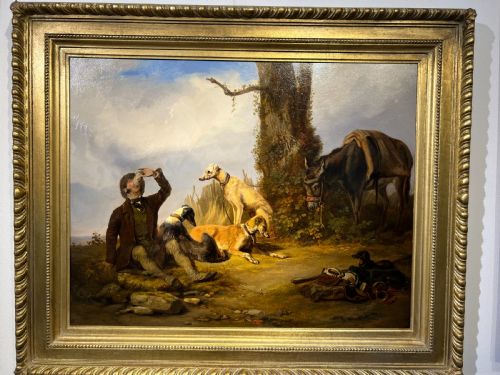
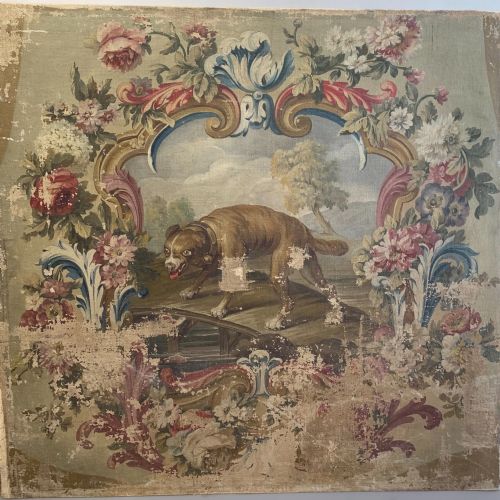
When exploring 19th century dog artwork, you encounter a diverse range of visual forms spanning portraits of individual pets, working gun dogs in the field, and hounds depicted alongside horses or figures. The most frequent iteration on this page is the oil painting on canvas, capturing breeds such as spaniels, collies and terriers through Victorian fine art and sporting traditions.
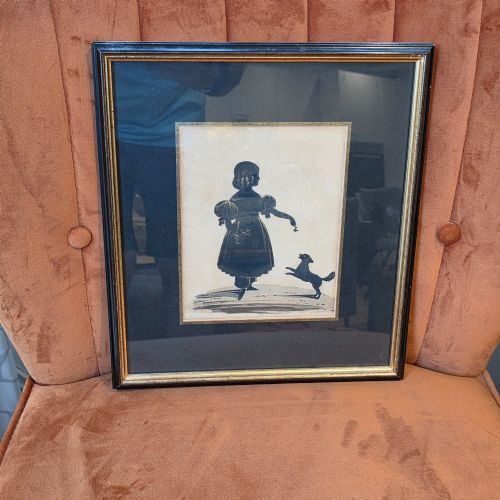
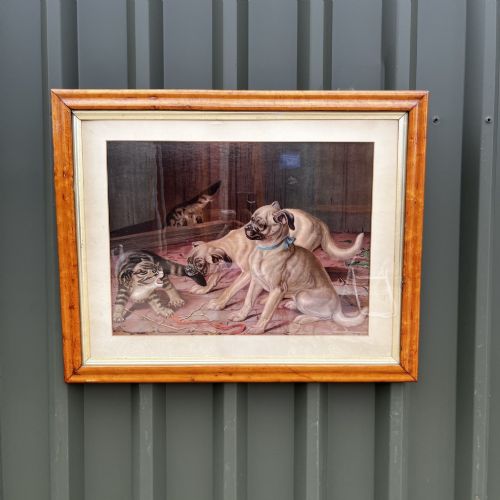
These pieces stretch across the entire century, moving from Regency depictions through to late Victorian and 1900 works. Alongside oils, you find framed textiles such as Berlin work needlework, cut paper silhouettes, pencil drawings and chromolithographs representing the breadth of animal imagery from the period.
Materials and Construction
The physical foundation of these pieces relies predominantly on oil paint applied to canvas or wood panels, framed in period materials such as giltwood and burr maple. Artists utilised fine brushes to capture the texture of canine coats, whether rendering the curls of a retriever or the smooth lines of a hound.
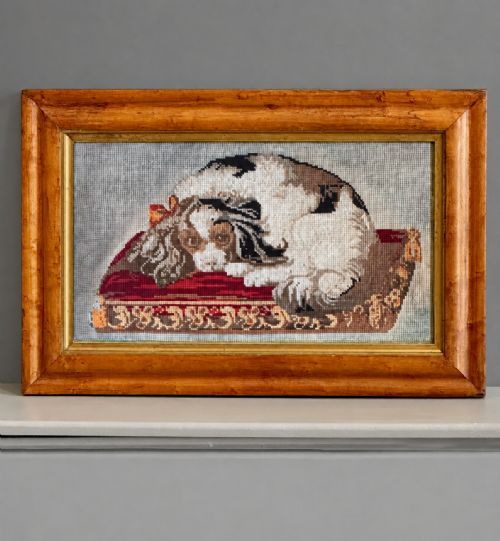
Alternative techniques recorded in the evidence include cut paper and watercolour silhouettes, pencil drawings, watercolours and Berlin work needlework executed on canvas. These works are frequently preserved within their original frames, maintaining the integrity of the period presentation.
Pugs, spaniels and hunting hounds stare down the decades with identical expressions of haughty indifference.
Distinctions in Quality
The distinction between tiers of work rests upon anatomical precision, the liveliness of the brushwork and the expressive capability of the artist. Master practitioners render the intelligence and individual character of the animal with anatomical conviction, whereas lesser examples rely on stiff repetition and formulaic compositions.
Provenance and attribution also elevate certain pieces, particularly those bearing the signatures of noted animal painters or originating from recognised schools of Victorian sporting art. The preservation of original frames, such as burr maple or ornate giltwood, further influences the standing of a piece.
Henry Barraud·William James Hubard·Valentine T Garland·David Bates·Martin Theodore Ward·John Sargent Noble·Sir Edwin Henry Landseer·C R Breytle·Horatio Henry Couldrey·John Emms·Thomas Hicks·William Barraud·Samuel Raven·George E Sharpe·Colin Graeme Roe·John Trivett Nettleship·Fannie Moody·Edwin Frederic Holt·John Alfred Wheeler
The 19th Century Dog Artwork Glossary
- Berlin work
- A type of needlework popular in the 19th century, typically worked in wool on canvas using charted patterns. This technique produced detailed depictions of animals, such as King Charles Spaniels, often mounted in burr maple frames.
- Chromolithograph
- A multicoloured print produced through a lithographic process using multiple stones or plates. This method allowed for the faithful reproduction of fine art images on paper.
- Sporting art
- A genre of painting dedicated to depicting field sports, horses, and hunting hounds. Works in this category often record specific breeds and hunting expeditions across rural landscapes.
- Giltwood
- Wood that has been coated with a thin layer of gold leaf or gold paint. This finish is frequently found on the ornate frames enclosing 19th century oil paintings.
- Needlework
- Textile art created by using a needle to apply yarn or thread to a fabric ground. In 19th century pieces, this often took the form of woolwork pictures featuring domestic pets.
19th Century Dog Artwork: Frequently Asked Questions
What subjects appear in 19th century dog artwork?
These works display a wide array of canine subjects, ranging from solitary portraits of beloved pets to working gun dogs participating in field sports. You also find hounds accompanying horses and riders, as well as narrative scenes involving children and animals.
Breeds represented include spaniels, collies, setters, terriers and pugs, reflecting both domestic companionship and rural working life during the period.
How do I identify the period of a dog painting?
Dating relies upon stylistic markers, costume details of any human figures present, and framing materials. Earlier 19th century pieces often display Regency characteristics, while mid-century works align with Victorian realism and sporting traditions.
Signatures, dates inscribed on the canvas or stretcher, and biographical details of documented artists provide further confirmation of the era in which the piece was created.
Are these pieces original works or reproductions?
The majority of the listings consist of original 19th century oil paintings, watercolours and handmade needlework pieces created by contemporary artists. You also encounter period copies after prominent painters, alongside chromolithographs which served as printed reproductions of popular artworks.
Each listing specifies the medium, indicating whether a piece is a hand-painted canvas, a drawing, or a printed work on paper.
How should I display antique dog artwork at home?
These artworks suit traditional interiors, studies and living spaces where period character is desired. Ensuring they are hung away from direct sunlight protects the pigments in oil paintings and the threads in needlework pieces.
Many pieces retain their original frames, such as giltwood or burr maple, which complement the aesthetic of the artwork and dictate how the piece is mounted on a wall.