
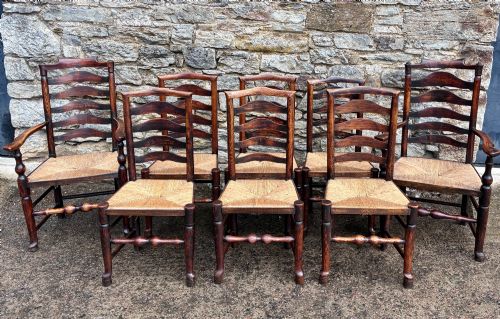
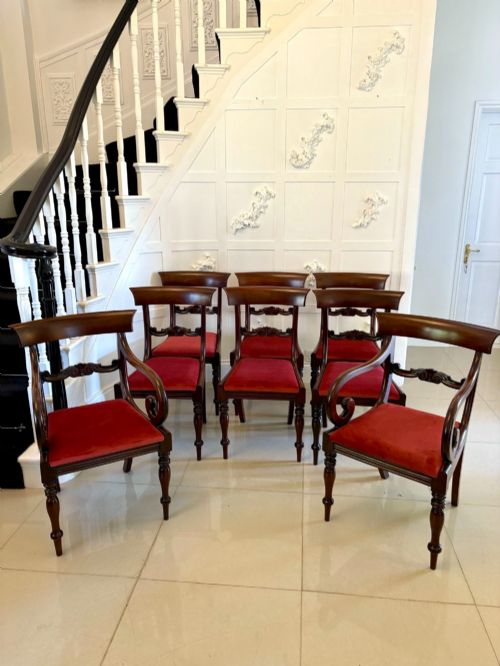
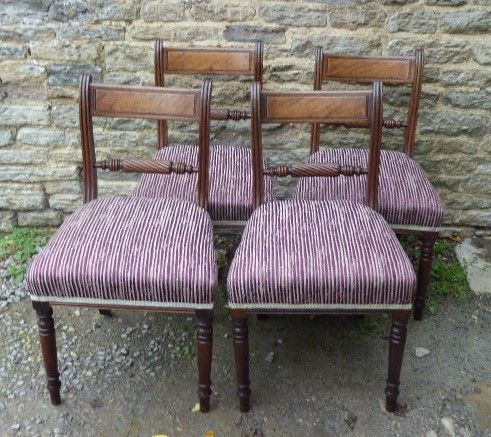
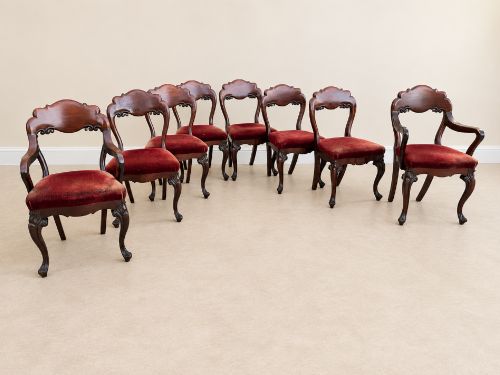
19th Century Dining Set
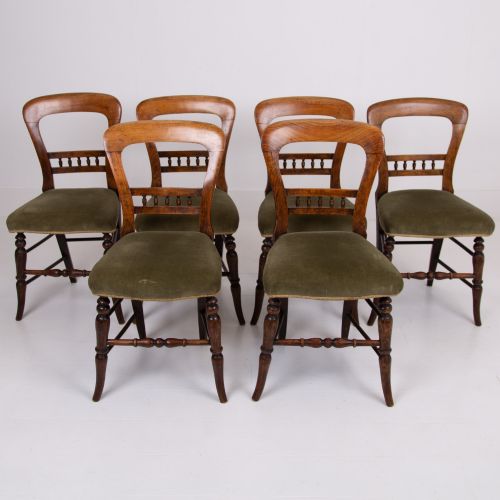
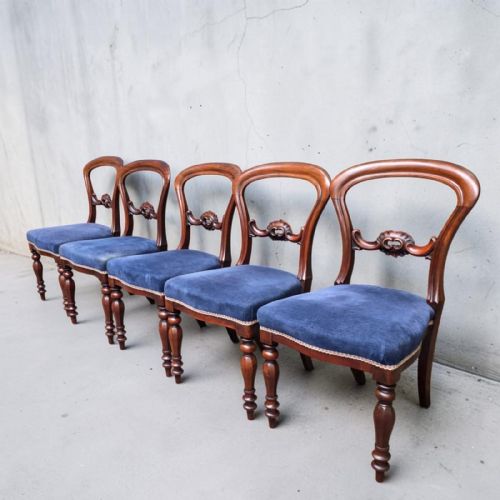
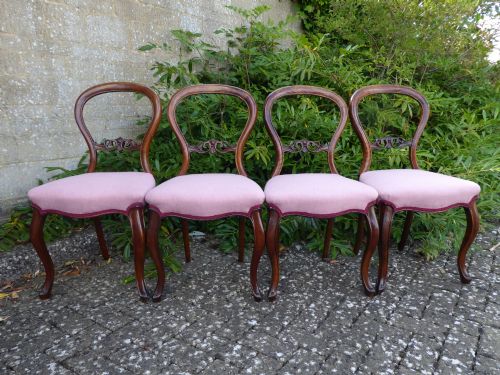
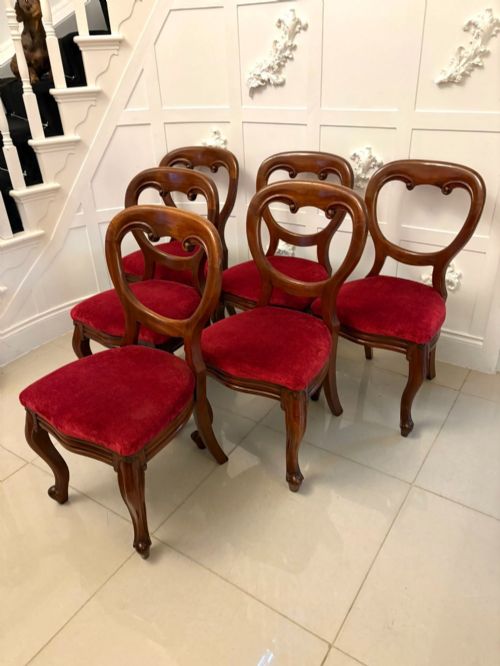
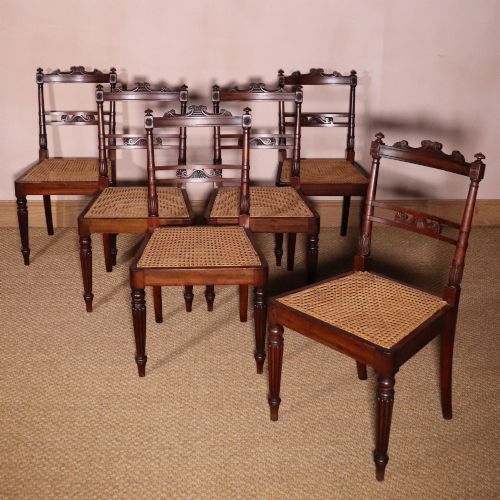
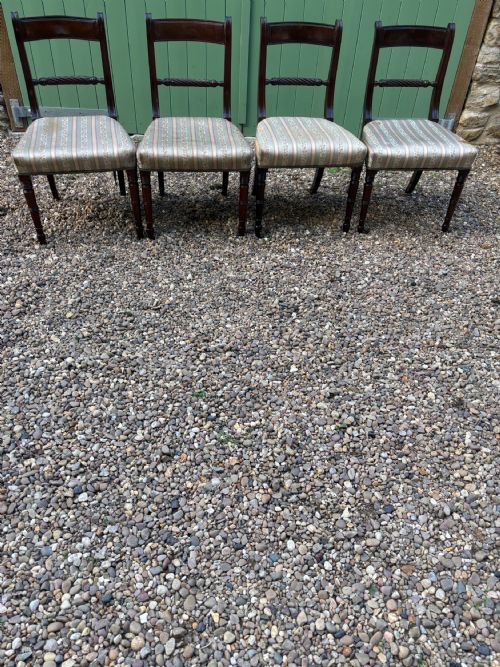
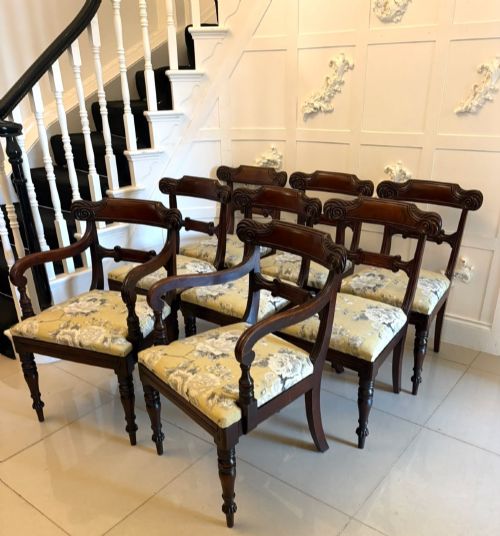
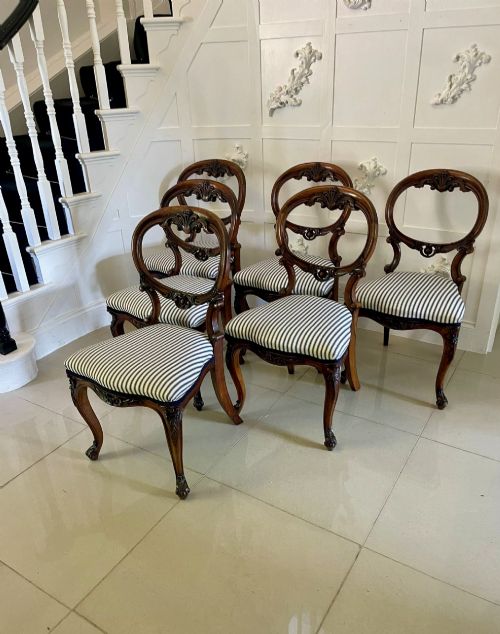
A 19th century dining set brings together matching chairs from the Georgian, Regency and Victorian periods to anchor a room.
19th Century Dining Set
A 19th century dining set typically comprises multiple matching chairs formed around a central table, though many groupings consist solely of seating suites rather than complete dining table combinations. Buyers searching this phrase will most frequently encounter sets of four, six, eight or ten chairs spanning the Regency, William IV and Victorian eras.
The materials reflect the domestic timber preferences of the British Isles and continental workshops, with solid mahogany dominating alongside oak, walnut, elm and occasional beech. Many sets survive in true matched formats, while others are assembled as harlequin groupings gathered from the same period.
Materials and construction methods
Cabinetmakers and joiners relied heavily on dense hardwoods like mahogany and oak, turning and carving the timber for stiles, splats and legs. Frame joints commonly utilised traditional mortise and tenon construction to withstand the daily weight of formal and country dining.
Upholstered elements feature drop-in or padded seats covered in leather, horsehair fabric, velvet or modern reproduction textiles fastened with brass tacks. Spindle backs, wheelbacks and ladderbacks were shaped on lathes and steam-bent to achieve curved supports.
Separating standard sets from exceptional suites
The distinction between ordinary utility seating and exhibition quality suites rests on the depth of hand-carving, the selection of figured timber veneers, and the integrity of the original frame joints. Master workshops executed crisp reeding, scroll arms and detailed crest rails that ordinary provincial sets omitted.
Proportion and matching also dictate standing, as sets that retain their full complement of matching carvers and singles without timber replacement command greater architectural harmony around a dining table.
Gillows·Norwich Maker
The 19th Century Dining Set Glossary
- Harlequin set
- A collection of chairs assembled from the same period that share similar stylistic traits without originating from a single workshop batch. These groups offer a gathered domestic character.
- Balloon back
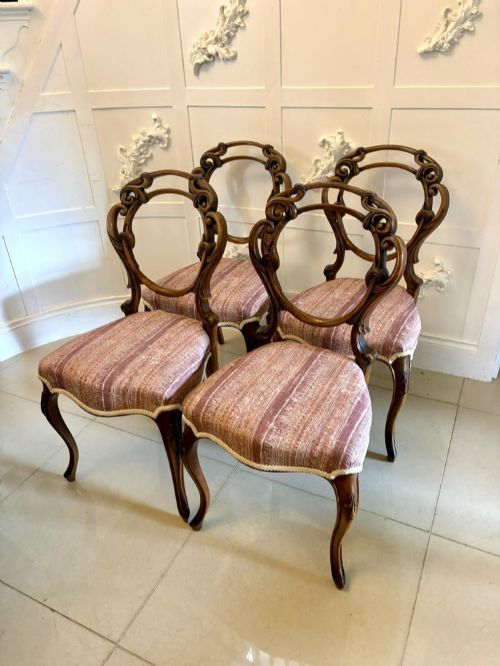
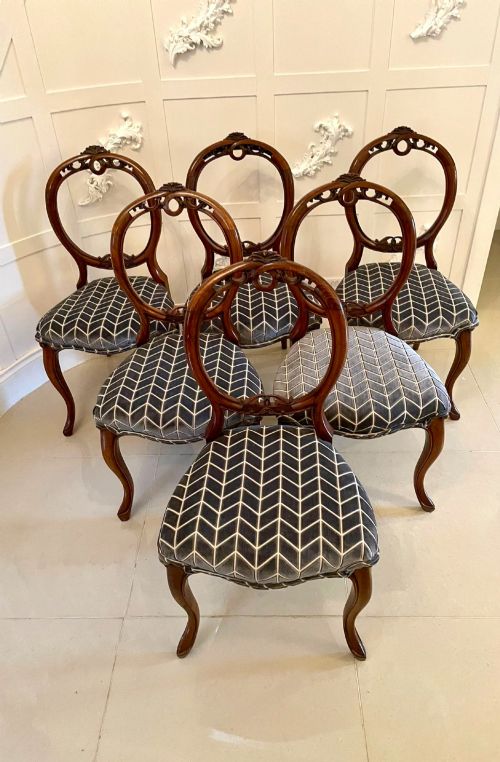
- A rounded, oval-shaped upholstered or open timber backrest popular during the Victorian era. This form mimics the curved profile of a hot air balloon.
- Carver
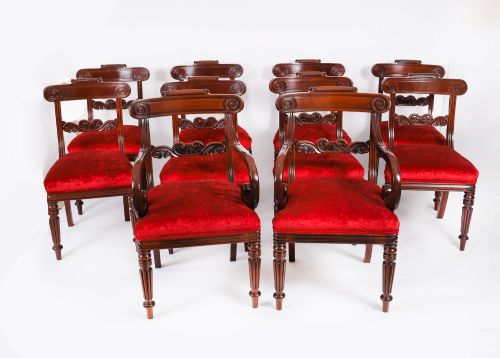
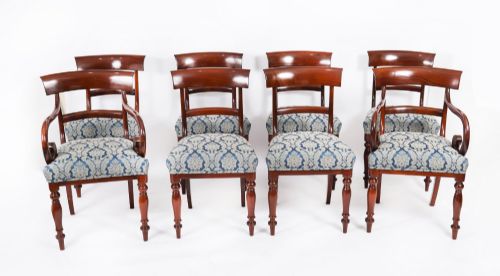
- An armchair designed to sit at the head or foot of a dining table, featuring supportive armrests. Matched sets often paired six single chairs with two carvers.
- Regency
- A classical British design period spanning the early decades of the 19th century influenced by Greco-Roman archaeology. Furniture from this era displays clean lines, sabre legs and rosewood or mahogany grains.
19th Century Dining Set: Frequently Asked Questions
How many chairs come in a typical set?
Sets generally range from four to twelve chairs, with groupings of six or eight appearing most frequently in the historical record. Larger numbers often include a combination of single chairs and arm-bearing carvers.
Buyers with expansive dining rooms look for sets of ten or twelve to accommodate guests. Smaller rooms naturally suit sets of four or six.
What is a harlequin dining set?
A harlequin set is a collection of chairs gathered from the same era that match in general style, timber or maker idiom rather than starting life as a single workshop order. They provide visual harmony while reflecting how country houses acquired seating over time.
Such sets often combine elm, beech or painted pine variants. They offer an accessible entry point to period dining arrangements.
Can I mix these chairs with a modern table?
These antique chairs pair effectively with contemporary dining tables to create a striking contrast of old and new materials. The warm patina of 19th-century mahogany or oak grounds a modern dining space.
Ensuring the seat height matches the apron of the table is the main consideration. Standard Victorian chair heights generally suit modern dining surfaces without issue.