


19th Century Dessert Service
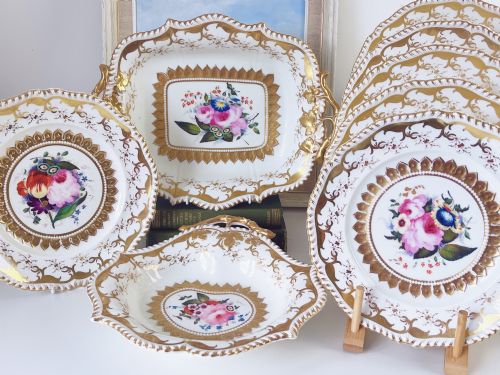
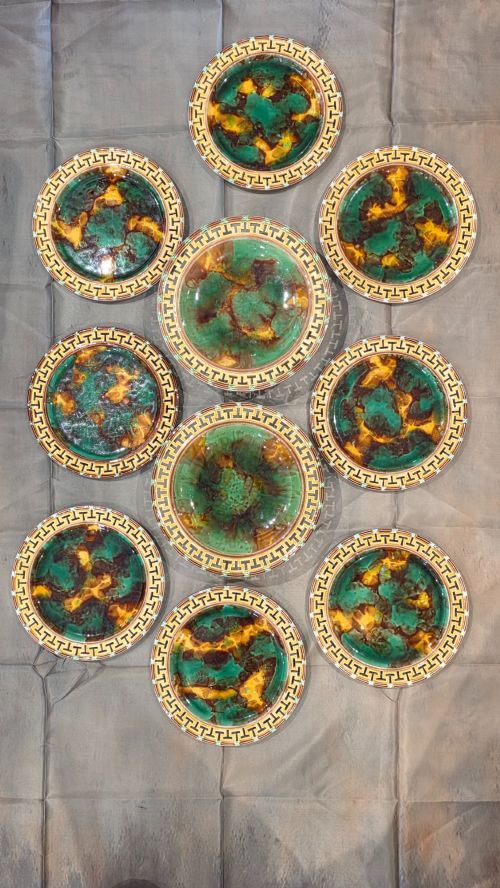
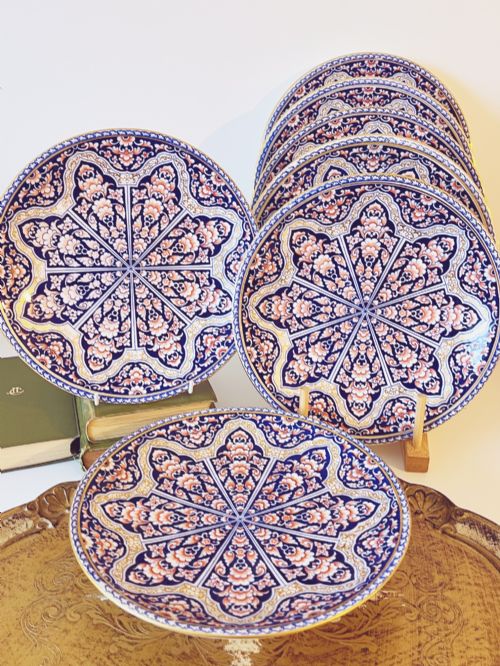
A 19th century dessert service brings the decorative focus of the Victorian, Regency, and Georgian periods straight to the dining table.
19th Century Dessert Service
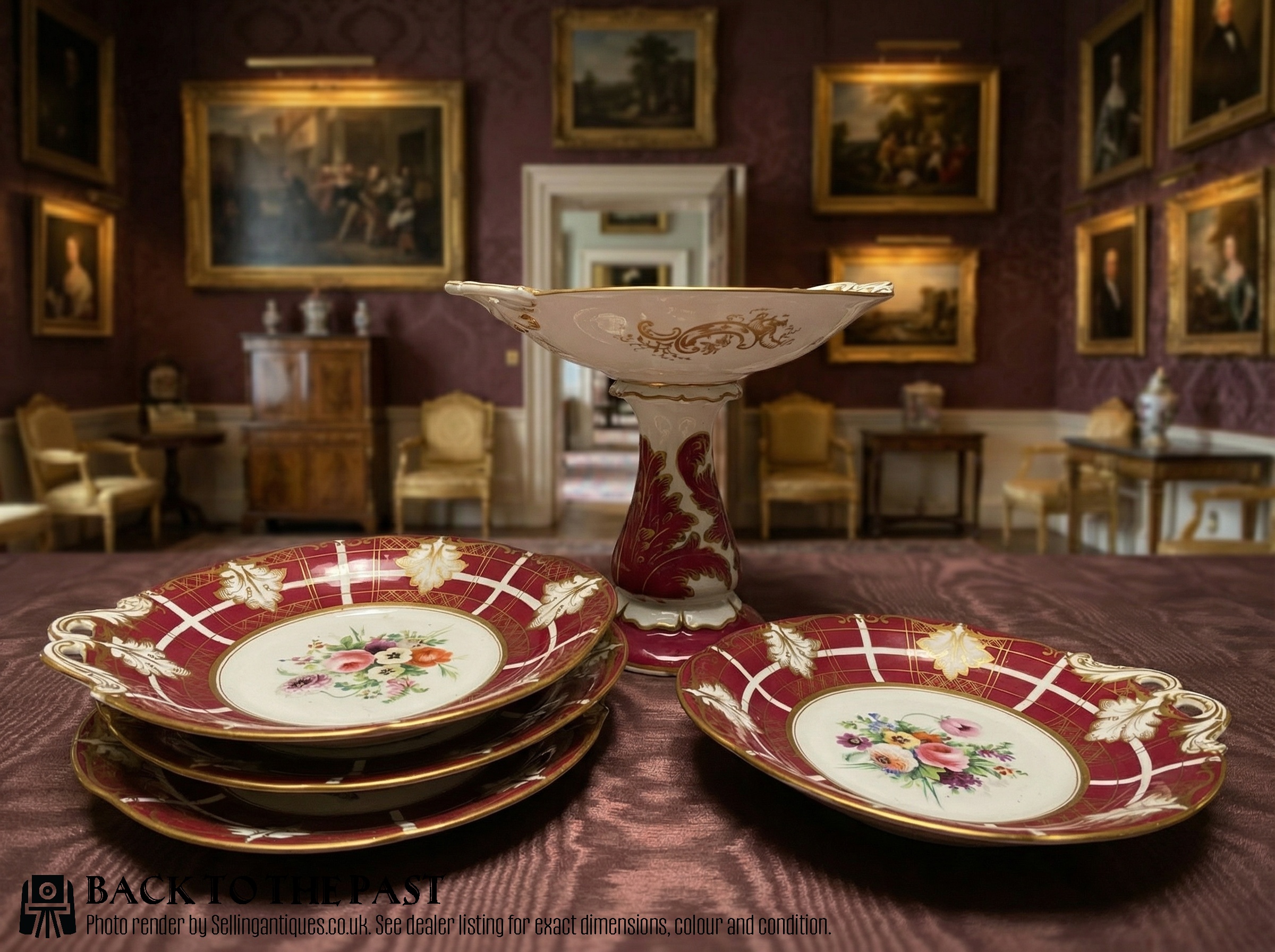
A 19th century dessert service comprises matching sets of plates, comports, and serving dishes designed specifically for the final course of a formal meal. These collections frequently include ironstone, earthenware, and bone china pieces intended to display fruit, sweetmeats, and confections.
The pieces appearing on this page span the 19th century, Georgian, Victorian, and Regency periods, reflecting changing dining fashions from botanical motifs to elaborate Rococo Revival styling. Buyers encounter full services alongside part sets, individual cabinet plates, and fitted cutlery canteens with mother of pearl handles.
Origins range across English potteries and Continental workshops, with forms varying from standard dessert plates to specialised custard sets and ice cream services. Each service captures the social rituals of nineteenth-century dining through coordinated ceramic and metalware design.
Assessing quality and execution
Quality in a 19th century dessert service rests upon the precision of the handpainted decoration and the crispness of moulded or petal-carved details. Services featuring named ceramic artists or originating from documented potteries demonstrate superior craftsmanship compared to unmarked commercial output.
The integrity of the glaze, the uniformity of the porcelain body, and the presence of original fitted boxes or canteens elevate the status of a set. Completeness of the service and the condition of delicate elements like gold leaf determine its standing within the period.
The inventory spans the Georgian, Regency, and Victorian periods with items dated from 1820 to 1882.
Grainger Lee & Co·Wedgwood·Royal Crown Derby·Rockingham Pottery·Spode·Derby Porcelain·Minton·Tonquin China·Flight Barr & Barr·Mason·Davenport Longport·Emile Puiforcat
The 19th Century Dessert Service Glossary
- Comport
- A raised dish or pedestal bowl used for serving fruit or sweet dishes as the centrepiece of a dessert course. These elevated vessels give height and balance to the table arrangement.
- Ironstone
- A heavy, durable type of earthenware patented in the nineteenth century to imitate Chinese porcelain. It provides a sturdy ceramic body suitable for everyday dining use.
- Bone china
- A soft-paste porcelain incorporating animal bone ash, resulting in a strong, milky-white body. It allows for thinner walls and delicate translucency in fine plates.
- Felspar porcelain
- A ceramic body developed in the nineteenth century using felspar as a flux. This material creates a particularly hard and durable porcelain suited to detailed painting.
- Custard set
- A specialised tableware grouping designed for serving individual portions of custard during the dessert course. These sets include matching cups or bowls.
19th Century Dessert Service: Frequently Asked Questions
What pieces comprise a full service?
A complete nineteenth-century dessert service typically includes a combination of dessert plates, comports, and larger serving dishes for fruit and sweetmeats.
Some services also incorporate specialised items like custard sets, berry spoons, or matched fruit and cheese cutlery canteens.
How do I date a service?
Dating relies on factory marks, ceramic bodies, stylistic cues, and registration dates stamped or painted on the reverse of the plates.
Georgian and Regency sets often display handpainted botanical motifs and lighter porcelain bodies, while Victorian pieces lean towards bolder enamels and heavy ironstone.
Can these sets be used today?
Many nineteenth-century ceramic services remain structurally sound enough for careful occasional use during formal dining or special dinners.
Handwash delicate porcelain and ironstone pieces by hand, avoiding dishwashers to protect the handpainted enamel details and gold leaf.
What is ironstone china?
Ironstone is a robust nineteenth-century earthenware developed to resist chipping while offering the refined appearance of imported Chinese porcelain.
It forms a heavy and durable base for the vibrant transfer-printed or handpainted patterns seen on many service plates.
How are fitted boxes significant?
Original fitted wooden cases or leather boxes protect silver-plated and mother-of-pearl cutlery sets from tarnish and physical damage over time.
Finding a service complete with its original fitted case adds significant historical context and ensures the set stays organised.