
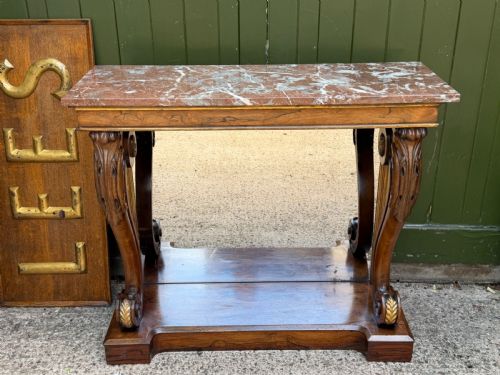


19th Century Console Mirrors
These 19th century console mirrors combine heavy timber frames or gilded wood with reflective glass to anchor a room.
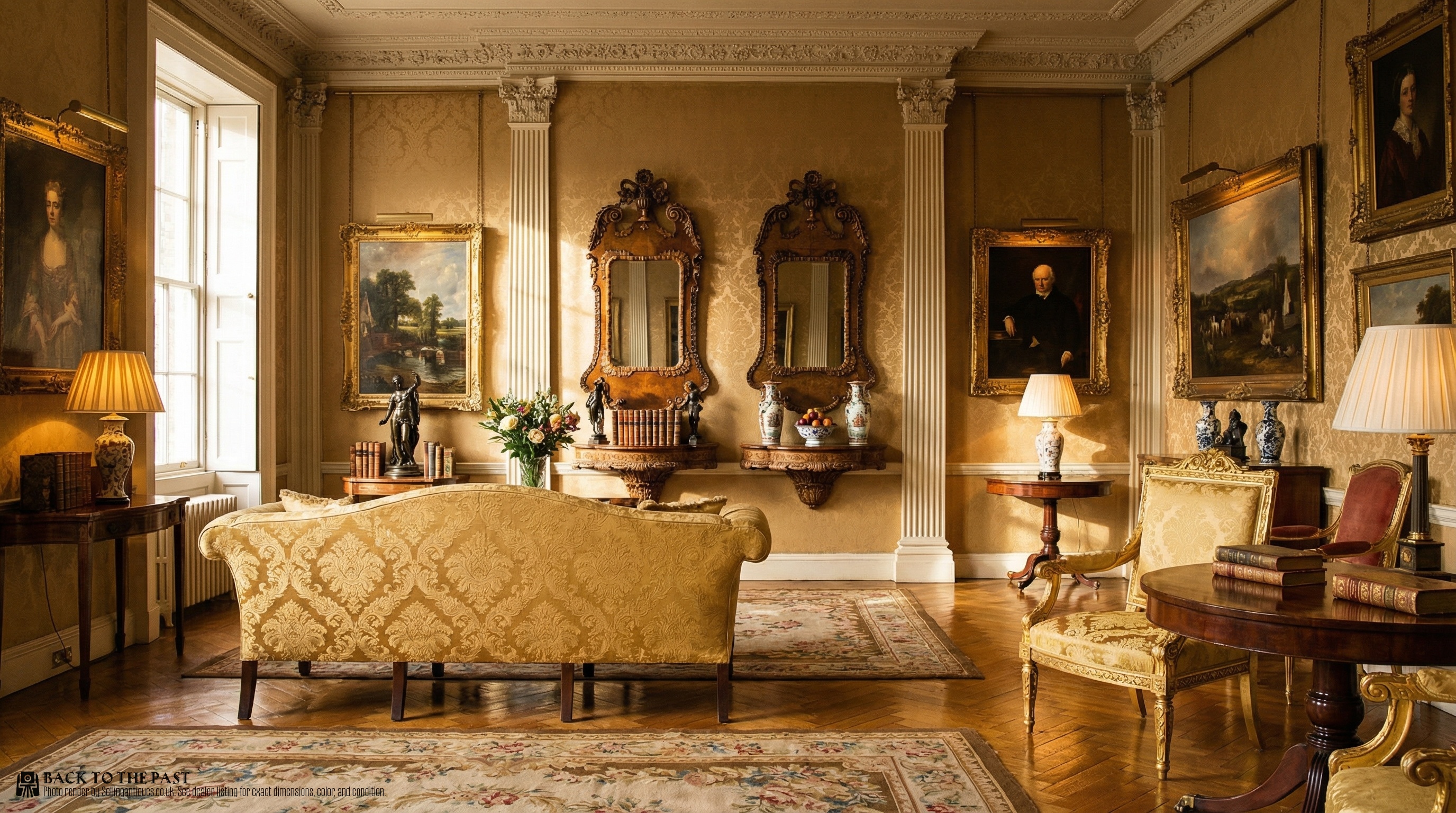
19th Century Console Mirrors
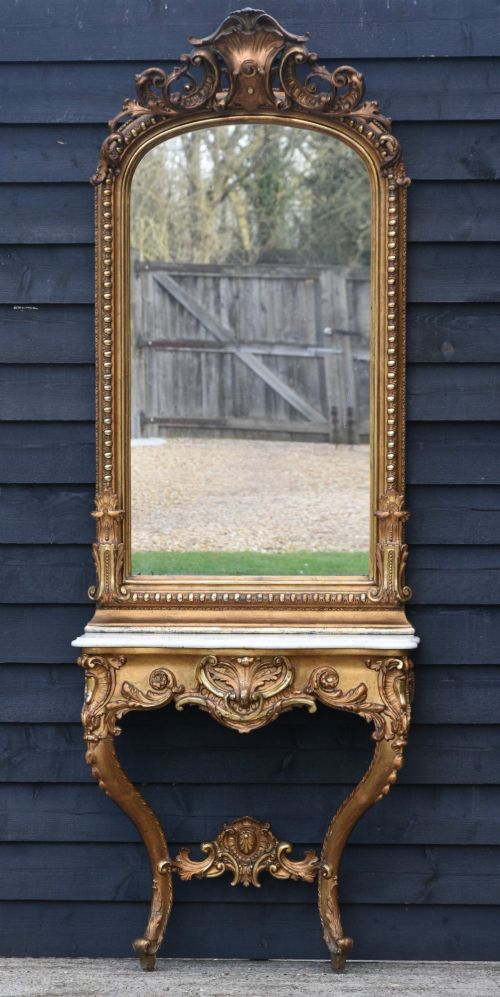
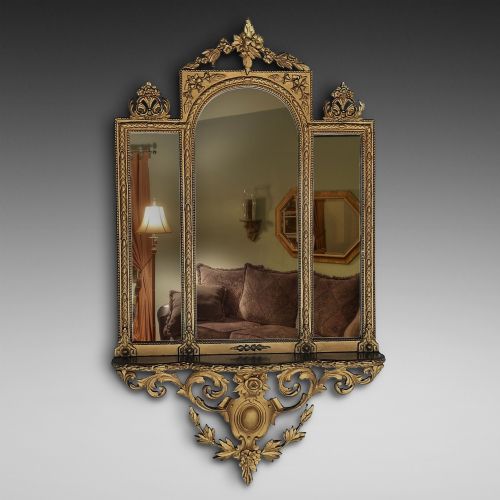
When searching for 19th century console mirrors, collectors find pieces designed to sit above a matching console table, pier table, or sideboard. These assemblies often combine a wall-mounted or pier mirror with a marble-topped base piece.
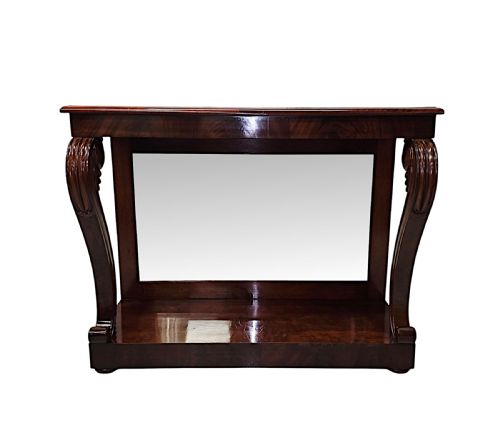
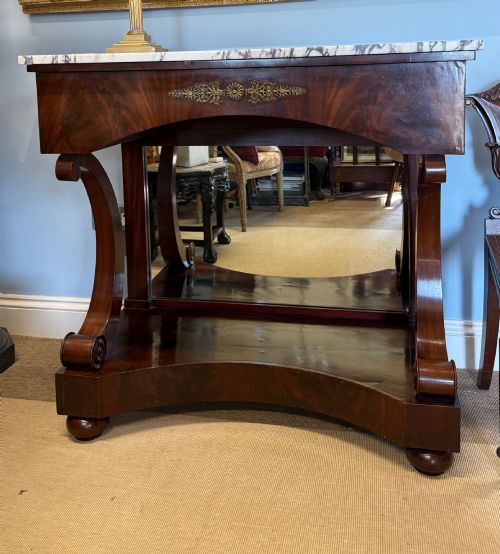
The most common versions met on this page include French giltwood pairs, mahogany mirror-back tables, and rosewood pieces from the Victorian and Regency periods. Makers frequently paired walnut, ebonised timber, and burr walnut with tall mirror glass to bounce light around nineteenth-century rooms.
Beyond standard console tables with integrated or matching mirrors, the selections span related forms such as hall stands, chiffoniers, and trumeau mirrors. These items reflect diverse stylistic revivals, including French Rococo, Egyptian revival, and Biedermeier designs.
How they were made
Cabinet makers constructed the foundational frames from dense timbers like mahogany, rosewood, walnut, and maserbirch, often incorporating flame veneer or marquetry patterns. Giltwood and gesso pieces received layers of gold leaf over carved wooden structures.
Marble tops, particularly carrara and figured varieties, were fitted directly to the supporting console or pier tables to provide a durable and cool surface. Mirror glass was set into rebated frames, sometimes accompanied by parcel-gilt details or brass mounts.
Period styles span the Regency, William IV, French Empire, Biedermeier, and various Victorian Rococo revivals.
What varies in quality
The distinction between standard examples and top-tier pieces rests on the depth of the carving and the cohesion of the matched sets. Items designed as unified console and mirror combinations demonstrate superior design harmony compared to assembled pairs.
Material selection dictates the upper range, with finely figured flame mahogany, heavy cast bronze or brass elements, and original mercury mirror glass elevating a piece. The crispness of the gesso work on giltwood frames similarly marks the skill of the original workshop.
Gillingtons of Dublin·Donald Ross
The 19th Century Console Mirrors Glossary
- Console table
- A table designed to stand against a wall, frequently supported by brackets or front legs. These tables often carry heavy marble slabs on top.
- Pier mirror
- A tall mirror specifically made to hang on the pier, the wall space between two windows. They frequently match a console or pier table placed directly below.
- Trumeau mirror
- A decorative wall mirror featuring an upper glass plate and a lower painted or carved panel. French makers often integrated these into matching console arrangements.
- Giltwood
- Timber coated with gold leaf or gold paint over a prepared gesso ground. This finish defined many French and English formal reception rooms.
- Gesso
- A plaster-like mixture applied to wood surfaces and carved before gilding. The substance allowed artisans to create sharp, elaborate relief ornamentation.
19th Century Console Mirrors: Frequently Asked Questions
How were console mirrors used?
These mirrors served both a practical and decorative purpose in nineteenth-century interiors. Placed above console tables between windows, they amplified natural daylight and made reception rooms appear larger.
Homeowners also used the integrated marble-top tables beneath the mirrors for displaying decorative objects or lighting candles in heavy brass holders.
Where should I place a console mirror?
Console mirrors find a natural home in entrance halls, formal living rooms, and dining spaces. Placing one above a suitable console table or sideboard creates a balanced focal point on a blank wall.
Because many of these pieces are tall or heavy, secure wall fixings are essential to support the weight of the timber and mirror glass safely.
How do I identify a Regency piece?
Regency items typically date from the early nineteenth century and feature classical architectural motifs. Look for dark timbers such as rosewood and mahogany, often accented with parcel-gilt details or brass inlay.
Proportions during this era remained restrained and balanced, drawing inspiration from ancient Greek and Roman design rather than later ornate revivals.
What is a pier table?
A pier table is a specific type of side table constructed to fit against the wall space between windows. These tables frequently appeared paired with tall pier mirrors fixed to the wall above.
Surviving examples often feature heavy marble tops and rich wood veneers like burr walnut, mahogany, or rosewood.