

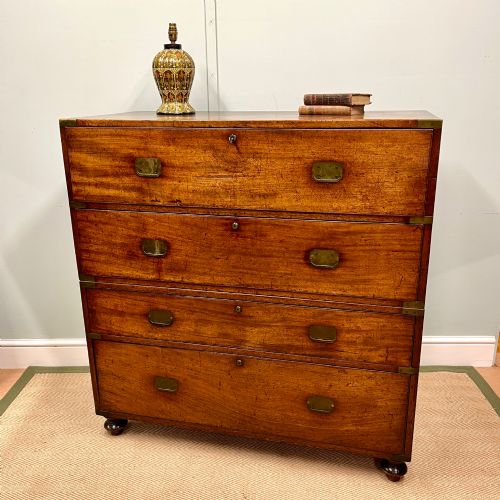
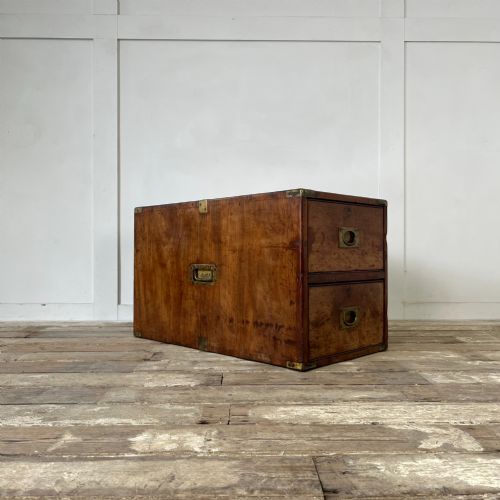

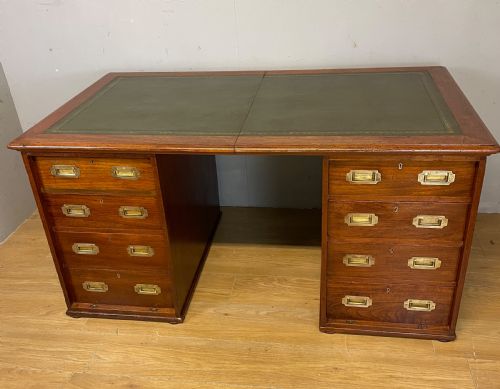


19th Century Colonial Desk
A 19th century colonial desk brings heavy timber and campaign practicality into a study, built for distant postings and long-term travel.
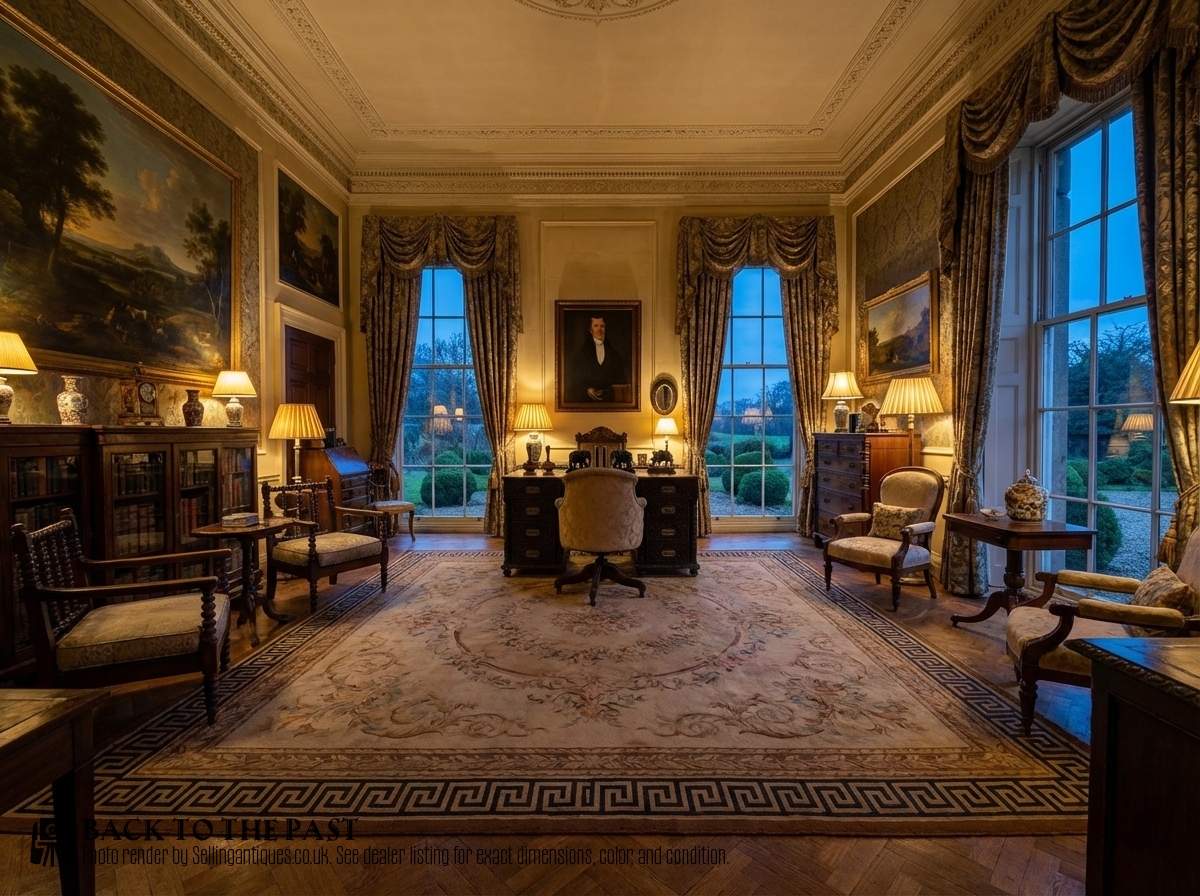
19th Century Colonial Desk
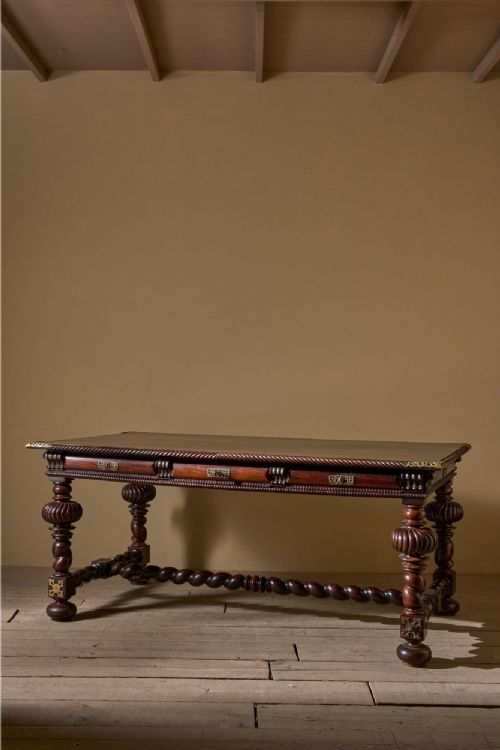
A 19th century colonial desk encompasses campaign furniture built for travel, partners desks, writing boxes, and Davenport desks shaped by British, Portuguese, and Chinese export traditions. These pieces originate from locations such as India, Ceylon, Burma, and Jamaica during the 19th century, spanning the Regency and Victorian periods.
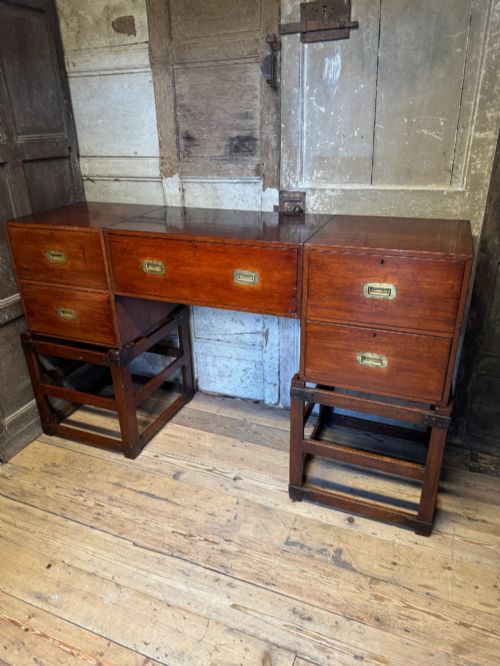
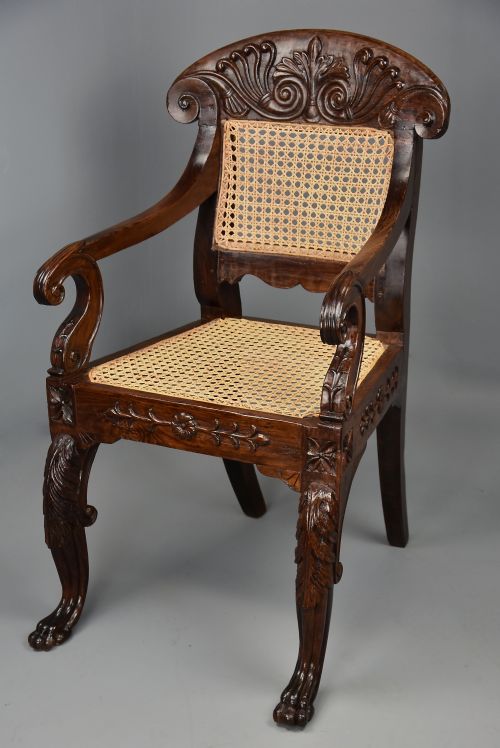
The version most commonly met on this page is the Anglo-Indian carved padouk or teak desk, alongside campaign secretaire chests designed to split into modular sections for transport.
Distinctions in manufacture
Quality rests on the selection of solid timber versus veneered surfaces, the crispness of the hand-carved relief work, and the structural integrity of internal mechanisms in writing slopes and secretaire drawers. Superior examples retain original brass hardware, fitted pigeonholes, and integrated locking systems that operate smoothly.
The complexity of the timber preparation and the precision of modular joints in campaign furniture separate standard utilitarian pieces from highly ornate, finely carved scholarly desks.
Currie And Co
The 19th Century Colonial Desk Glossary
- Campaign furniture
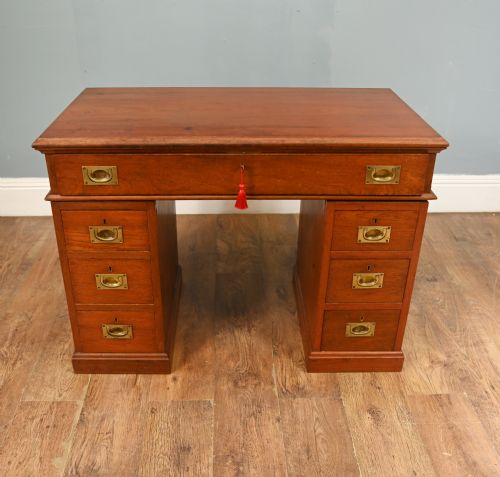
- Portable furnishings designed to dismantle or fold for military officers and administrators on the move. These pieces utilise brass corners and flush handles to prevent snagging during transport.
- Secretaire chest
- A chest of drawers featuring a fitted pull-out writing drawer with a drop front. This reveals small drawers and pigeonholes for correspondence.
- Sadeli work
- A form of micro-mosaic craft originating in western India, utilising intricate geometric patterns made from horn, bone, ivory, and metal fitted into ebony boxes.
- Padouk
- A heavy, durable reddish-brown tropical hardwood native to Asia and Africa. It was frequently utilised for carved Anglo-Indian desks and tables.
19th Century Colonial Desk: Frequently Asked Questions
What is a 19th century colonial desk?
A 19th century colonial desk is a writing surface or portable chest produced in European colonies or for export markets, utilising local tropical hardwoods and traditional joinery.
These pieces range from massive partners desks carved with floral motifs to modular campaign chests designed for military officers.
How do I identify a campaign desk?
Campaign desks feature recessed brass handles, reinforced brass corners, and often split into two or three modular sections for easy transport.
Many incorporate folding legs or hidden compartments to maximise utility in temporary quarters.
What woods were used for colonial desks?
Carpenters utilised dense, durable timbers native to the regions of manufacture, predominantly teak, padouk, rosewood, ebony, and mahogany.
These materials resisted humidity and insect damage better than European softwoods.
Where were Anglo-Indian desks made?
Anglo-Indian desks were produced across the Indian subcontinent and Ceylon, drawing on local carving traditions and European furniture forms.
Workshops in regions such as Bombay, Madras, and Galle combined British tastes with indigenous craftsmanship.