



19th Century Chromolithograph
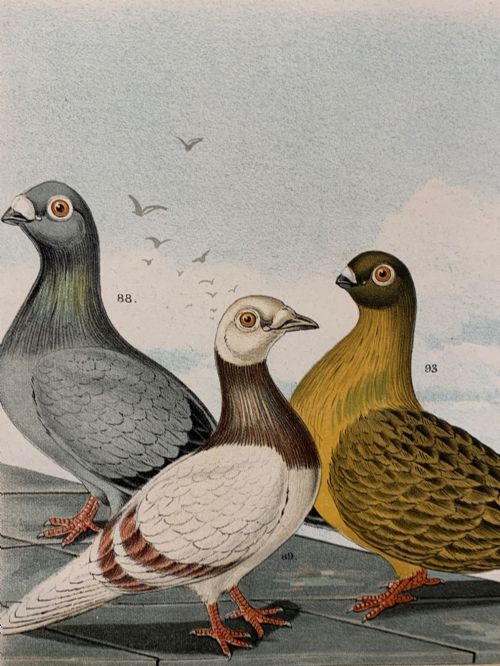
These 19th century chromolithograph examples bring rich multi-coloured printing from the past directly onto your walls.
19th Century Chromolithograph
A 19th century chromolithograph represents a multi-coloured printing technique that produced vibrant plates for framing and wall display. You will most frequently encounter framed prints and framed art on paper from the Victorian period.
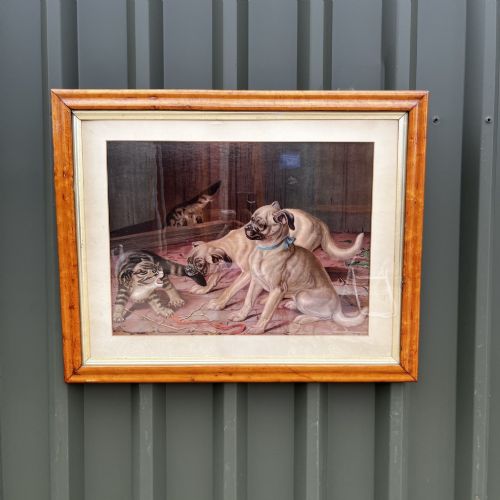
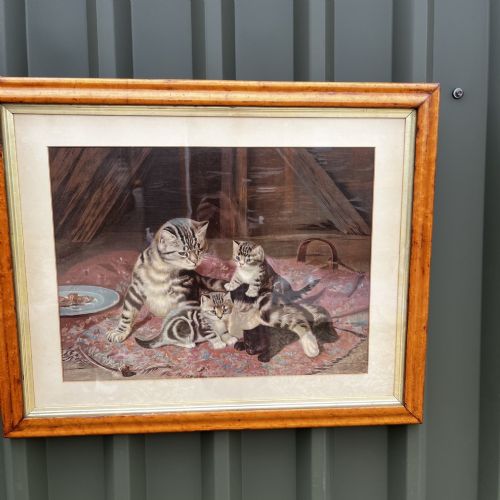
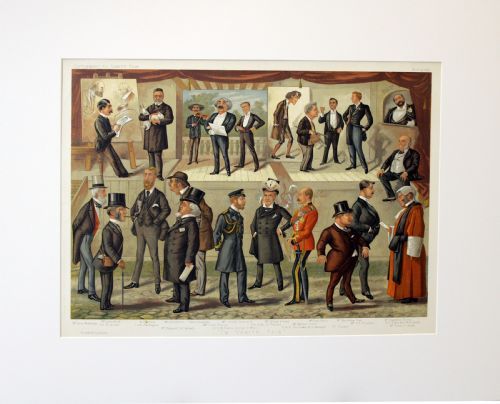
The subjects span animal studies of cats and pugs, botanical subjects, religious iconography, and satirical portraits from publications like Vanity Fair. Many examples survive within period frames of wood, gilt wood, or oak.
Continental scenes and botanical engravings also appear alongside the primary print offerings, showing the wide range of subjects produced during the era.
Materials and production methods
Production relied on paper supports bearing multiple layers of coloured ink applied through lithographic stone processes. Many plates incorporate gold leaf details to enhance specific areas of the design.
Framing materials commonly include wood, gilt wood, and oak, often paired with mount board to protect the paper surface. Some works utilise glass fronting to shield the ink and paper from environmental damage.
Pugs, cats, and mischievous cherubs gaze out from these Victorian walls with the exact same stubborn expressions they wore in the eighteen-eighties.
Assessing quality in colour prints
Quality rests heavily on the registration precision of the multiple ink stones used during printing, which determines the crispness of the lines and the alignment of the colours. Finer examples retain deep colour saturation without bleeding or muddy transitions.
The condition of the paper support and the originality of the framing materials also define the overall standard of the piece. Works retaining their original mount board and period gilt wood frames command greater interest.
Horatio Henry Couldrey·The Arundel Society
The 19th Century Chromolithograph Glossary
- Chromolithograph
- A multi-coloured print produced by applying a separate lithographic stone for each colour used in the image. This technique allowed for faithful reproductions of paintings and detailed illustrations.
- Vanity Fair
- A weekly magazine known for its coloured caricatures and lithographic plates of notable figures. These double-page plates remain popular collector items.
- Chrystoleum
- A method of applying a hand-coloured print to glass, clearing the paper, and painting the reverse to create a three-dimensional effect. Examples from the nineteenth century are frequently encountered.
- Arundel Society
- An organisation established to promote knowledge of art by publishing accurate chromolithographic reproductions of old master paintings. Their prints are notable for their ambitious scale and religious subjects.
19th Century Chromolithograph: Frequently Asked Questions
Are these prints original to the nineteenth century?
The listings comprise period examples produced during the nineteenth century, including works by the Arundel Society and plates from Vanity Fair. Each piece reflects the printing standards and materials of that specific era.
Examine the paper texture, ink application, and framing elements to verify the period origin of the item.
What is the difference between a lithograph and an engraving?
A lithograph uses a flat stone or metal plate treated to repel or accept ink based on chemical affinity. An engraving involves cutting lines directly into a metal plate with a sharp tool.
Lithographs can produce rich, multi-coloured results like chromolithographs, while engravings rely primarily on inked lines.
How should I hang my print safely?
Use secure picture hooks rated for the weight of the wood, gilt wood, or oak frame. Hang the piece on an interior wall away from heat sources and moisture.
Ensure the hanging wire and fixings on the reverse of the frame remain sturdy and stable before mounting.