


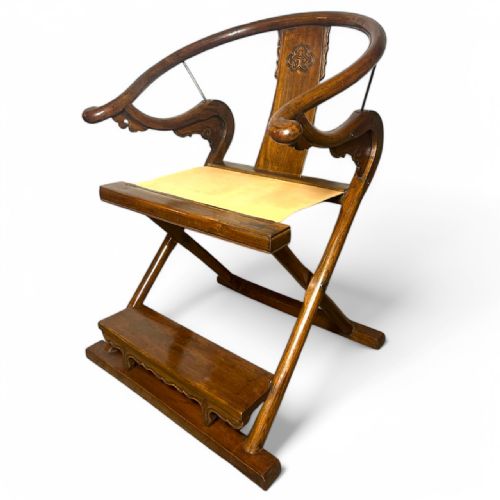


19th Century Chinese Chair
A 19th century chinese chair brings centuries of refined seating traditions into a modern room through striking timber and sculptural joinery.
Forms and Origins
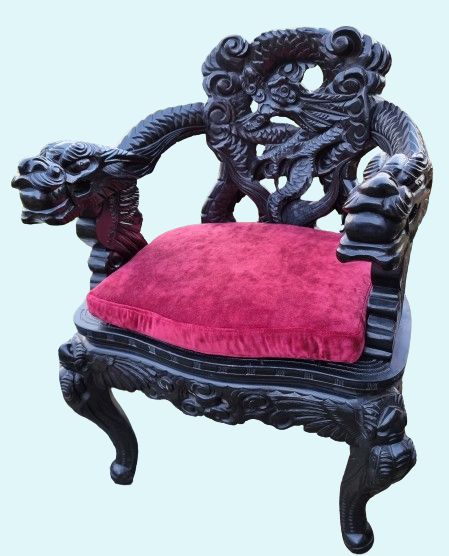
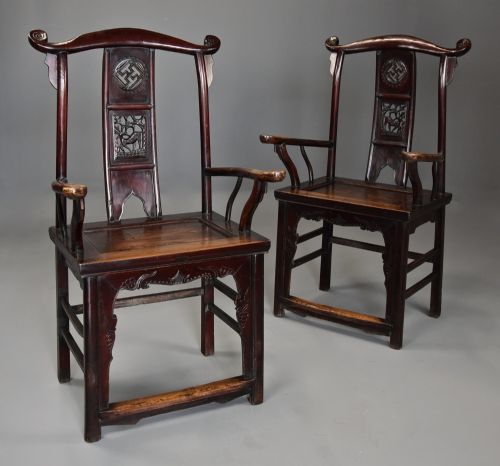
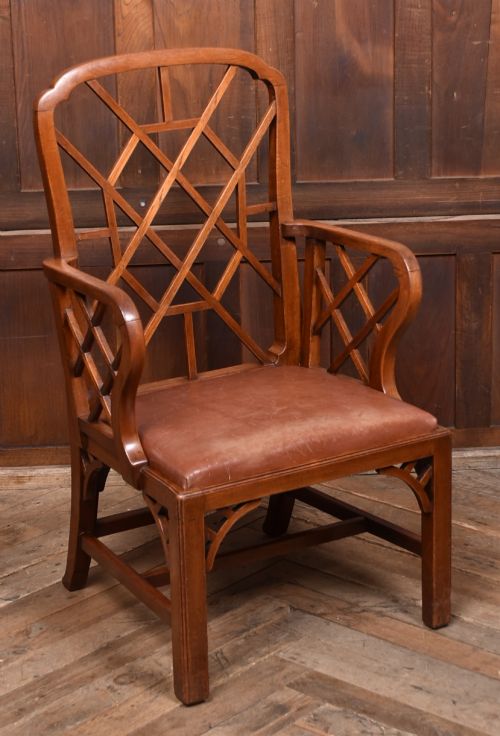
A 19th century chinese chair encompasses a distinct group of seating furniture originating from the Qing Dynasty, spanning armchairs, side chairs, and folding throne chairs. Buyers frequently encounter elm and hardwood versions designed as yoke-back, horseshoe, or hall chairs.
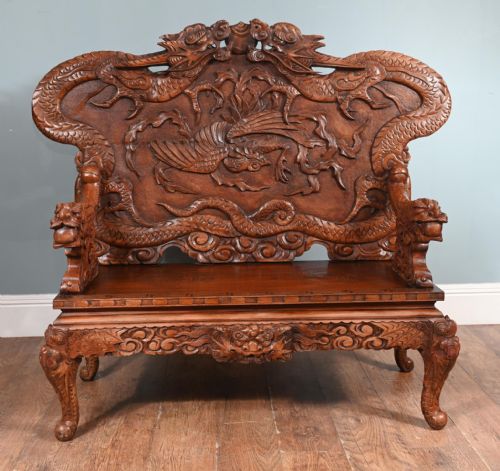
The archive records numerous pairs alongside single pieces, reflecting domestic and export markets. Regional workshop traditions produced variations including carved hall chairs and mother-of-pearl inlaid designs.
Materials and Technique
Cabinetmakers utilised indigenous timbers, primarily elm and dense hardwoods such as hongmu and rosewood, supplemented by softwood for secondary parts. Structural integrity relied on complex joinery without metal fasteners.
Surfaces received various treatments, including clear polishing to reveal the grain, carved relief decoration, or applications of red lacquer and paint. Brass fittings and leather occasionally augmented the timber framework.
Retail Price Guide 2026
Typical UK retail prices for 19th century chinese chair, calculated from the Sellingantiques database of over a million retail prices indexed since 2003. This retail price guide relies exclusively on Sellingantiques data; no external sources or auction records are used, so the figures do not describe the wider market.
Several pieces include child's chairs, proving that miniature seating mattered just as much in nineteenth-century Beijing workshops.
Distinctions in Execution
The calibre of a 19th century chinese chair rests upon the crispness of the woodcarving and the depth of the natural patina built up over generations. Superior examples demonstrate balanced proportions and fluid lines, particularly in curved horseshoe backs and yoke terminals.
Material selection dictates durability, with dense hardwoods holding intricate relief work far sharper than softer timbers. Original lacquer surfaces and intact inlay work preserve historical integrity better than stripped or heavily restored pieces.
The 19th Century Chinese Chair Glossary
- Yoke-back
- A chair style featuring a crest rail shaped like a traditional ox yoke, curving upwards at the ends. This ergonomic design supported the sitter's shoulders comfortably.
- Horseshoe-back
- A continuous curved top rail and armrest forming a horseshoe shape, often seen on folding throne chairs. It provided wrap-around support for formal seating.
- Hongmu
- A translation meaning red wood, referring to a category of dense, dark tropical hardwoods utilised in fine Qing Dynasty furniture. Its heavy weight and rich colour made it highly prized.
- Lacquer
- A natural resin applied in multiple thin layers to wood surfaces, producing a durable, glossy finish. Red lacquer variants appear frequently on elm armchairs.
- Qing Dynasty
- The imperial dynasty ruling China from the seventeenth to the early twentieth century. Furniture from this period is characterised by regional diversity and traditional forms.
Frequently Asked Questions
How do I identify elm furniture?
Elm displays a distinct prominent grain pattern with wavy growth rings and a warm honey or brown tone.
Cabinetmakers valued it for its toughness and flexibility in bending into curved chair components.
Where were these chairs used?
These pieces served practical and formal functions within traditional homes, halls, and studies.
Export pieces also found places in Western domestic interiors during the nineteenth century.
What is a yoke-back design?
A yoke-back design incorporates a top rail resembling an agricultural ox yoke with upturned ends.
This shape offered comfortable head and shoulder support during prolonged periods of sitting.