
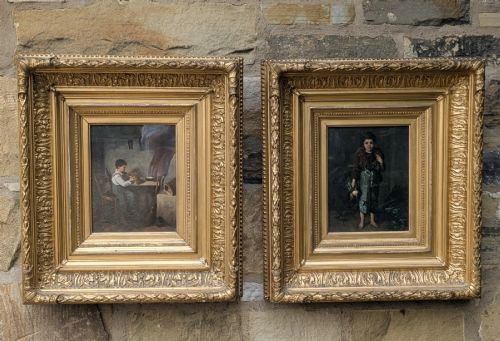
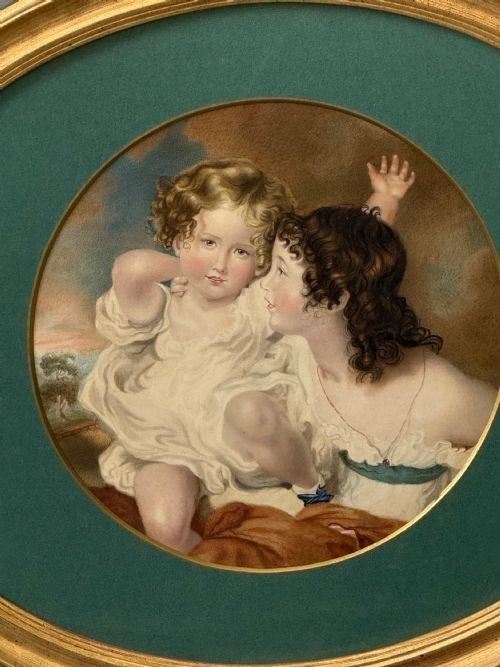
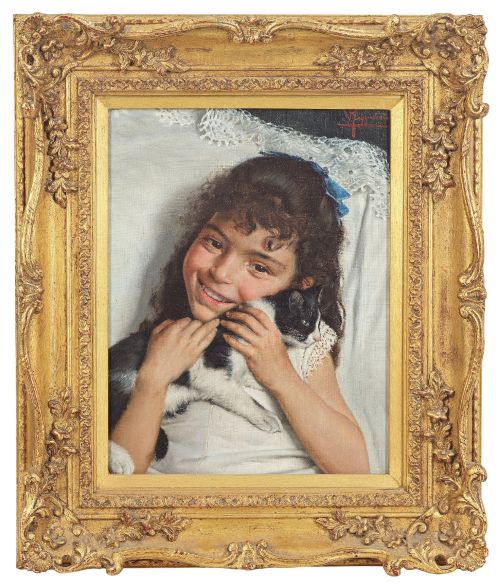
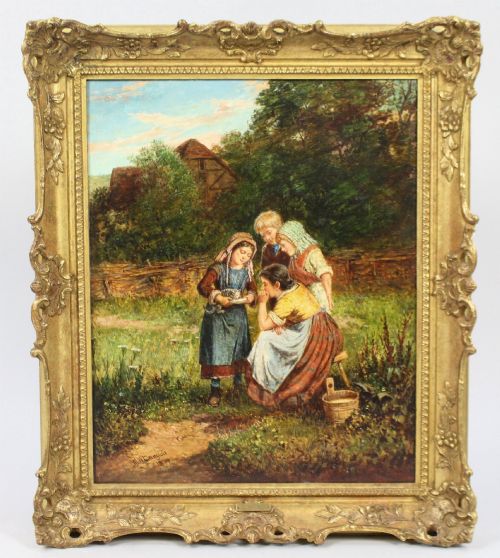
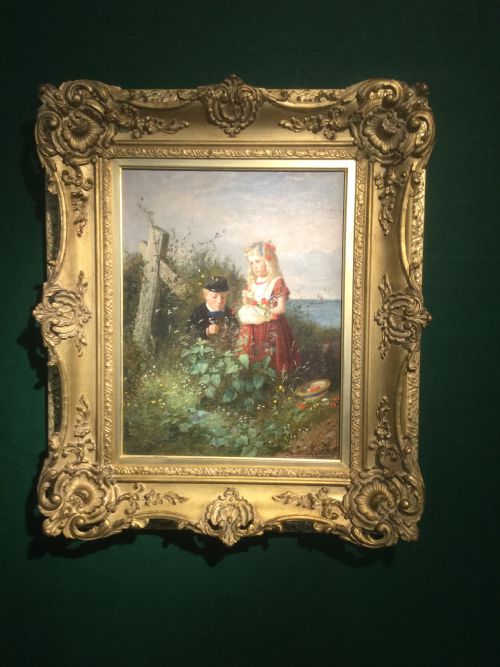
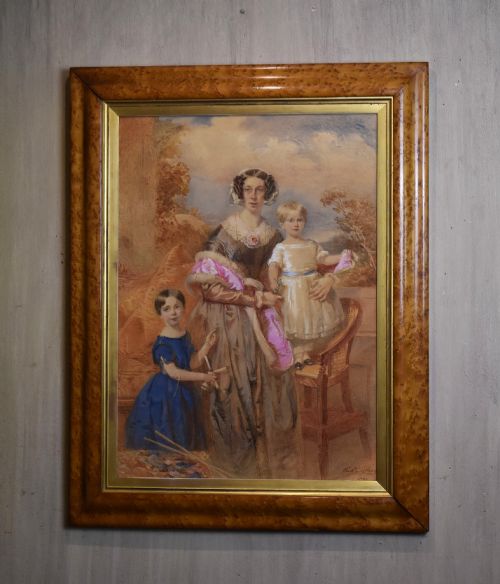


19th Century Child Painting
Selecting a 19th century child painting brings domestic history and character into a room through portraiture and genre scenes.
19th Century Child Painting
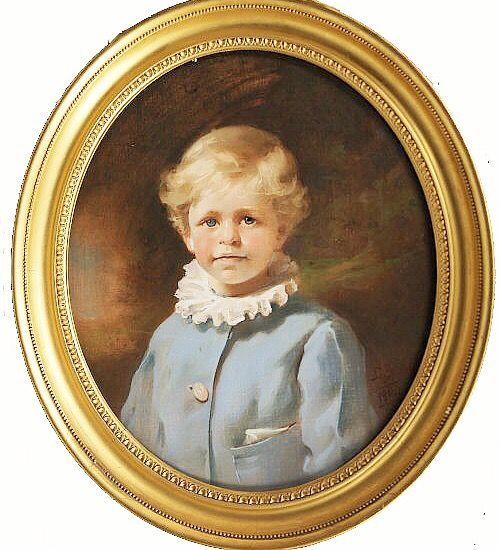
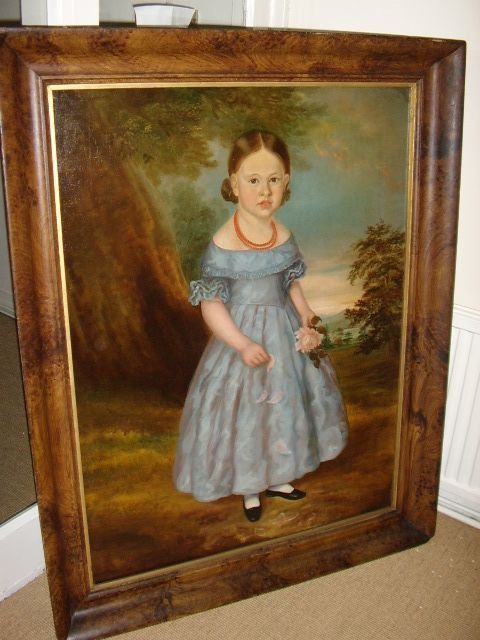
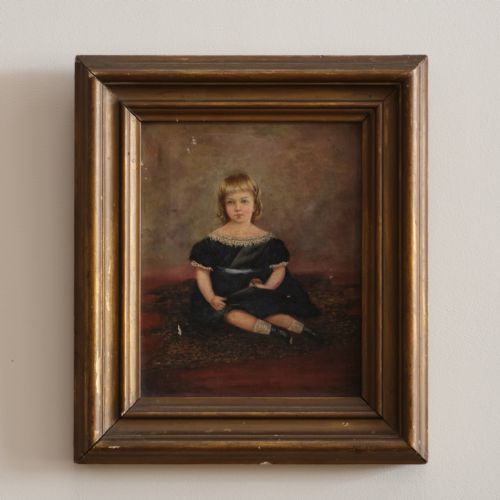
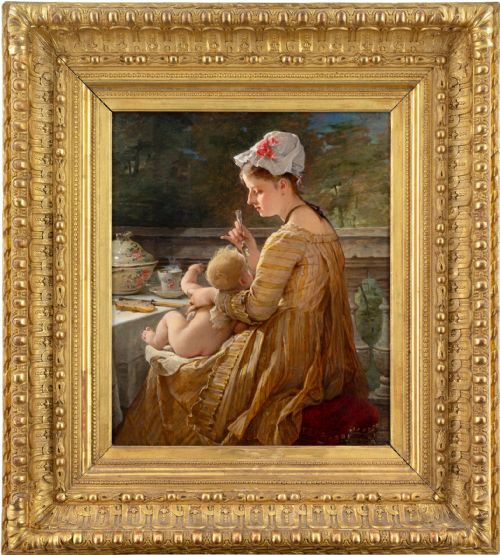
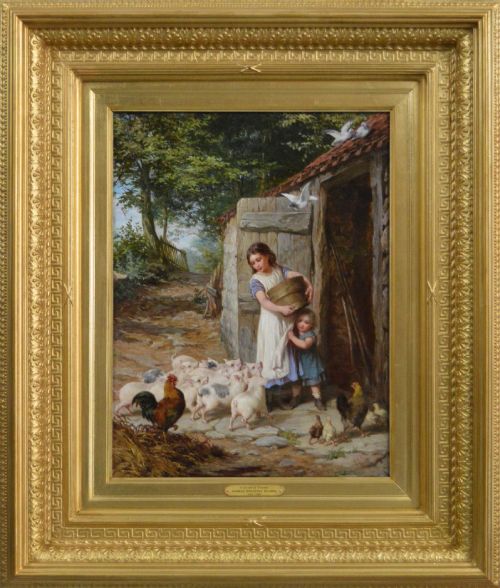
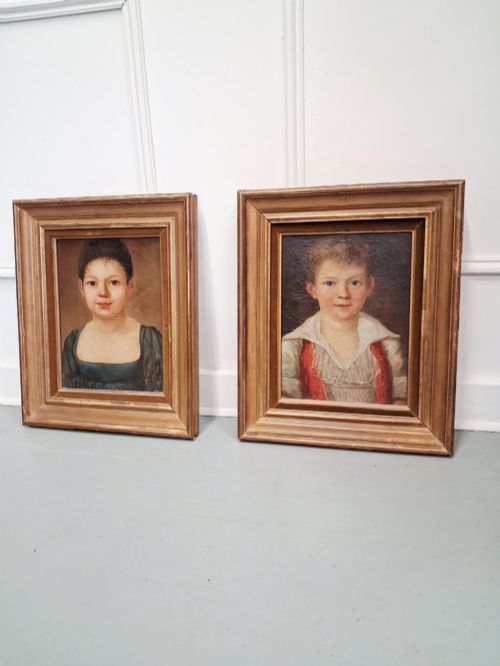
A 19th century child painting captures the evolving social view of youth through formal portraiture, religious subjects, and everyday genre scenes. Buyers encounter individual likenesses, family groups, and narrative compositions showing children at play, learning, or working.
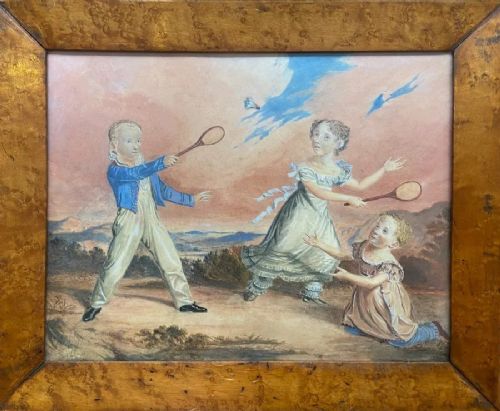
The selections range from academic works and signed artist oils to provincial folk art, miniatures, and watercolours. Many pieces record domestic life within British, European, and American domestic settings during the Georgian, Regency, and Victorian periods.
Beyond straightforward portraits, the category embraces pastoral scenes, literary illustrations, and devotional depictions of the Madonna and child. These diverse formats reflect both the high art of the academy and the personal commissions of middle-class homes.
How They Were Made
Artists utilised oil on canvas or wood panel for durable compositions, applying pigment in layers to build depth in clothing and flesh tones. Watercolours on paper offered a lighter medium for intimate family sketches and detailed miniatures.
Frames form an integral part of the construction, with giltwood, gesso, and ebonised wood housing the artwork. Many surviving examples retain their original decorative surrounds, which often date from the same period as the painting.
19th Century Child Painting Retail Price Guide 2026
Typical asking prices for 19th century child painting among the pieces listed under this phrase on Sellingantiques today, from the lower quarter to the upper quarter. They describe what is for sale here now, not the wider market.
Listings feature oil on canvas, watercolour, and porcelain plaques spanning the Georgian, Regency, and Victorian periods.
What Varies in Quality
Quality rests upon the artist's command of anatomy, expression, and narrative atmosphere. Skilled hands capture the subtle lighting of an interior and the individual psychology of a child, whereas provincial or naive works prioritise direct charm over technical accuracy.
The preservation of the original surface, the stability of the canvas or panel, and the integrity of the period frame influence the standing of a piece. Works exhibited at major institutions or bearing a documented signature carry greater historical weight.
Vittorio Reggianini·Mark William Langlois·George Augustus Holmes·Frederick Tatham·James Mallard Bromley
The 19th Century Child Painting Glossary
- Genre painting
- A representation of everyday subjects and ordinary people engaged in domestic activities. These scenes often depict children playing, reading, or interacting with animals.
- Folk art
- Artistic work produced by self-taught or provincial painters working outside academic traditions. These pieces rely on flat perspective and direct expression rather than classical proportion.
- Giltwood
- Timber carved and coated with a thin layer of gold leaf or metallic powder. It provides the decorative, reflective finish seen on many period frames.
- Miniature portrait
- A small-scale painting executed with fine detail, frequently created on paper, ivory, or vellum. Such items were designed to be held or worn.
- Provenance
- The documented history of a painting's ownership and exhibition record. A clear lineage helps confirm an attribution to a specific artist or school.
19th Century Child Painting: Frequently Asked Questions
How do I date a child painting?
Dating relies on costume details, hairstyles, and the specific framing materials used during the period. Stylistic markers such as Regency waistlines or Victorian decorative elements offer reliable chronological clues.
Signatures, exhibition labels on the reverse, and stretcher construction provide additional evidence to narrow down the decade of production.
What is naive folk art?
Naive folk art refers to pieces created outside formal academic training, often by regional portraitists or family members. These works are characterised by flat perspectives and direct charm rather than anatomical precision.
Collectors prize them for their honesty and the unvarnished view they provide of historical domestic life.
How should I care for an old oil painting?
Oil paintings require stable environmental conditions away from direct sunlight and dramatic humidity changes. Keep the canvas or panel in a well-ventilated room to prevent warping and paint cracking.
Dust the surface gently with a soft, dry brush and avoid using liquid cleaners or commercial polishes on the paint or frame.
Why do some watercolours fade?
Early watercolours used organic pigments that are sensitive to ultraviolet light and atmospheric pollutants. Prolonged exposure to direct daylight causes these delicate colours to wash out over time.
Displaying works behind UV-filtering glass and away from sunny windows helps preserve the original tonal range.