
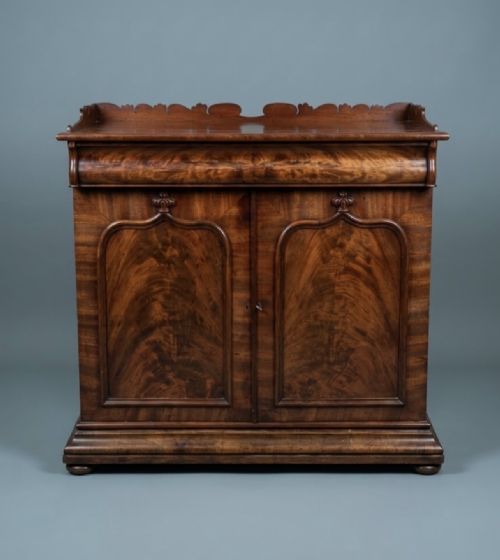
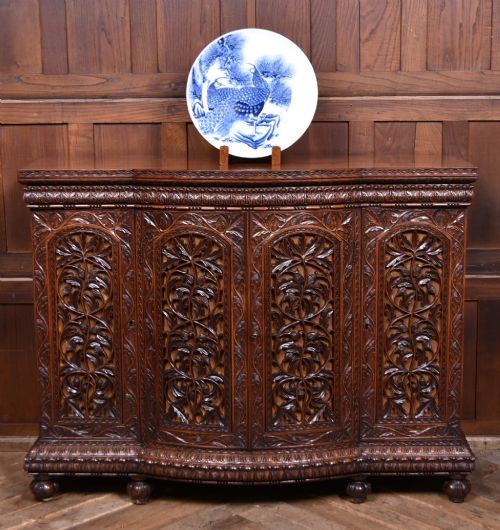
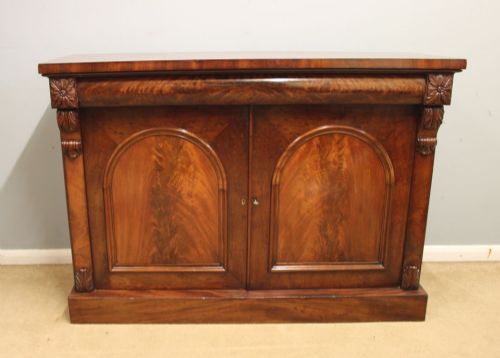

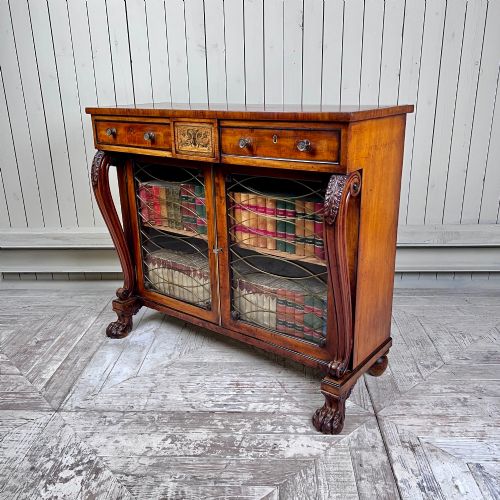
19th Century Chiffonier Cabinet
A 19th century chiffonier cabinet is a compact, low sideboard designed for the dining room or parlour to store silver, linen, and books.
19th Century Chiffonier Cabinet
A 19th century chiffonier cabinet combines a low enclosed cupboard base with a useful upper stage, often taking the form of a shelved tier, mirrored back, or bookcase superstructure. These versatile low sideboards emerged to serve changing domestic habits in dining rooms and drawing rooms during the Georgian, Regency, and Victorian eras.
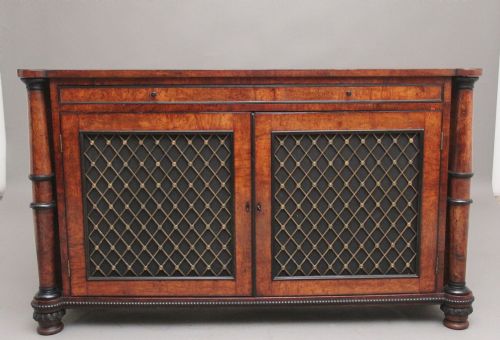
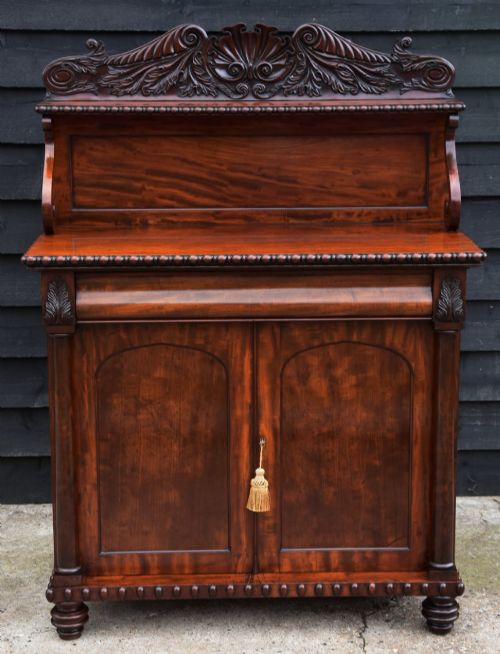
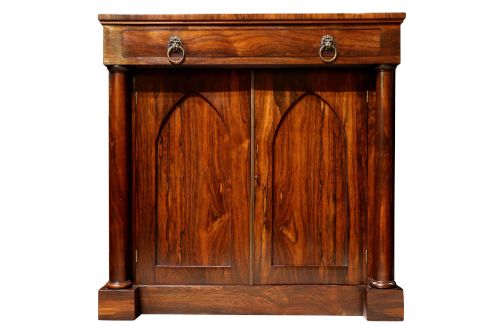
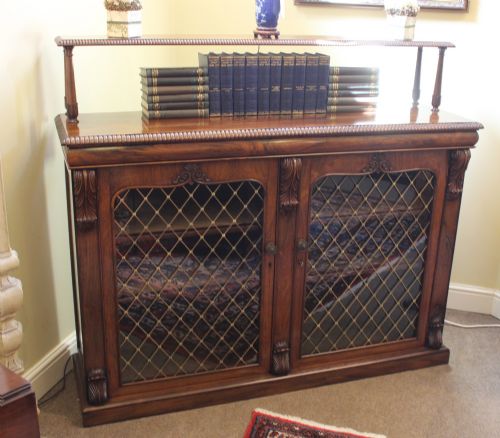
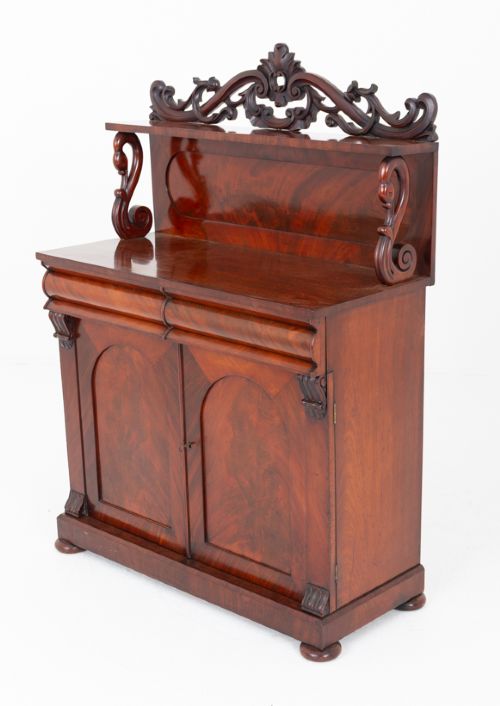
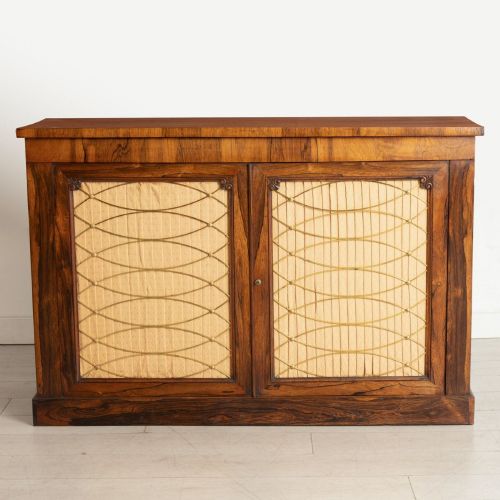
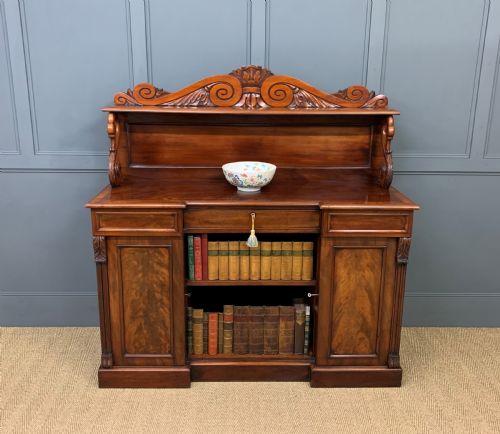
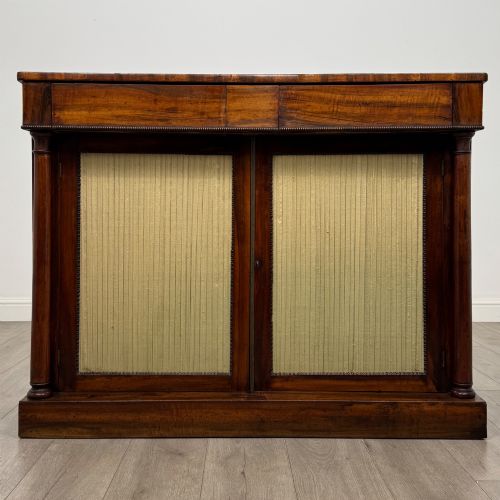
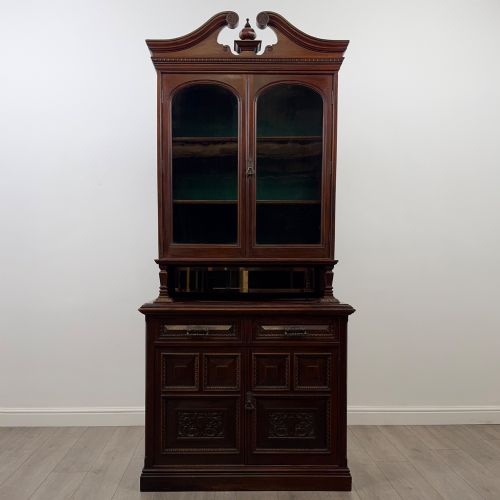
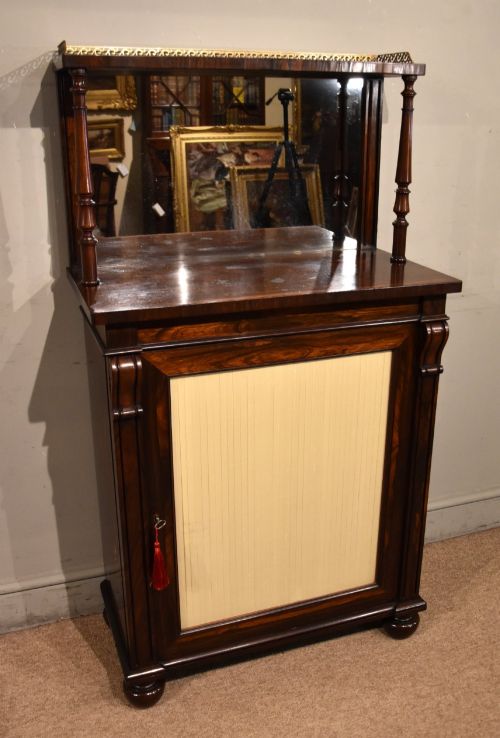
The most common examples encountered on this page date from the Regency and Victorian periods, constructed in rich timbers like mahogany and rosewood. Formats range from simple single-door cupboards with scroll corbels to elaborate bookcases with Gothic panelled doors or brass inlay.
Materials and construction
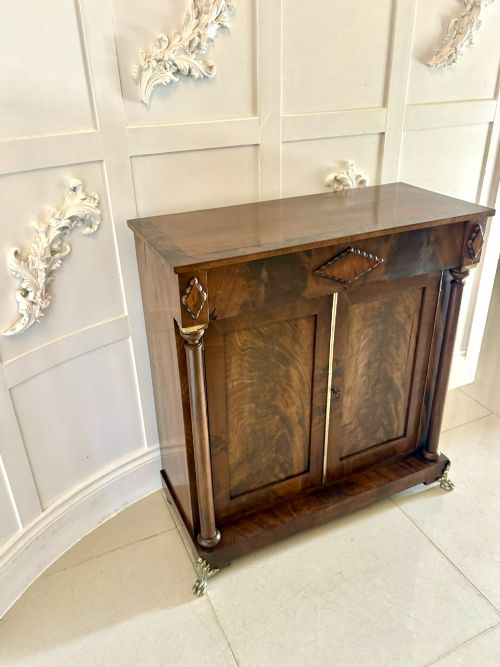
Cabinet makers utilised dense native hardwoods such as mahogany and oak alongside exotic imports including rosewood, padouk, and pollard oak. Flame mahogany veneer and burr walnut provided striking decorative grain patterns across primary surfaces, often enhanced by contrasting ebony stringing or brass inlay.
Structural integrity relied on traditional joinery paired with fine decorative hardware, including cast ormolu mounts, marble tops, and glazed doors. Simulated rosewood paint appears on alternative timbers like pine, offering the fashionable dark look of the period through skilled finishing techniques.
Listings feature extensive use of rosewood and mahogany, frequently complemented by brass inlay, marble tops, and flame mahogany veneer.
Distinctions in craftsmanship
Quality separates through the selection of timber and the precision of decorative detail, such as finely carved scroll brackets, crisp brass inlay, and matched flame veneers. Workshops of higher repute invested greater care in internal secondary woods and the fluid execution of architectural mouldings.
Proportion and architectural balance dictate the standing of a piece, where restrained classical lines or well-integrated upper bookcases elevate a side cabinet above standard utilitarian storage. The integration of specialty materials like white marble tops and gilt mounts further marks out finer examples.
Gillows
The 19th Century Chiffonier Cabinet Glossary
- Chiffonier
- A low sideboard or cupboard developed in the early nineteenth century, typically featuring enclosed lower doors and a shelf or superstructure above.
- Flame mahogany veneer
- A highly figured wood veneer sliced from the point where branches join the main trunk, creating a characteristic flickering flame pattern.
- Ormolu
- Gilt bronze mounts applied to furniture for decorative enrichment, frequently seen on Regency and Victorian cabinetwork.
- Scroll corbel
- A carved console bracket in the shape of a scroll, supporting the overhang of the chiffonier top or framing the cabinet doors.
- Stringing
- Thin inlaid lines of contrasting timber, such as ebony or boxwood, used to outline panels and drawers on finer cabinets.
19th Century Chiffonier Cabinet: Frequently Asked Questions
What is a chiffonier cabinet?
A chiffonier is a low nineteenth-century side cabinet equipped with lower cupboard doors and frequently an upper shelf or bookcase tier. It served as functional storage for dining rooms and parlours.
These pieces bridge the gap between a sideboard and a bookcase, offering surface display space alongside enclosed storage for china, linen, or books.
How do I date a chiffonier?
Dating relies on stylistic shifts, timber choices, and construction methods spanning the Georgian, Regency, and Victorian eras. Regency examples often feature brass inlay and rosewood, while Victorian pieces lean towards heavier carved mahogany and walnut.
Examining secondary woods inside drawers and the profile of feet or backboards helps narrow the decade of manufacture within the nineteenth century.
Where were chiffoniers used?
Chiffoniers were principally placed in dining rooms and drawing rooms to hold serving items, cutlery, and reading material. Their compact height made them ideal for walls where tall bookcases would not fit.
They functioned both as practical sideboards for serving food and as decorative display stands for ornaments and books in principal reception rooms.
Are these pieces made of solid wood?
Most pieces combine solid timber frames with high-quality veneers applied to stable secondary woods to prevent warping. Woods like mahogany, rosewood, and pollard oak frequently appear as decorative face veneers.
Solid construction is typically found on structural elements like legs, framing, and interior shelves, while decorative surfaces utilise matched veneers to display striking grain figures.