



19th Century Chevet
A 19th century chevet brings French bedside elegance to a room, offering compact storage topped with fine marble.
19th Century Chevet
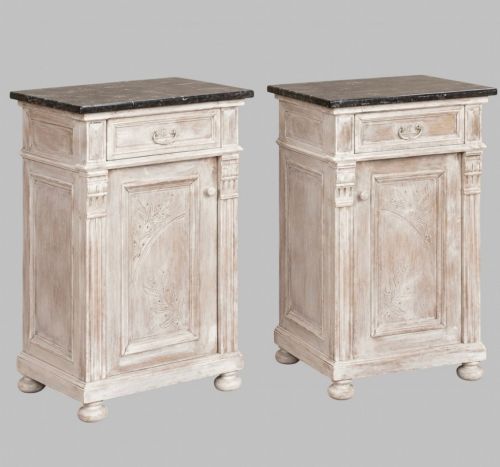
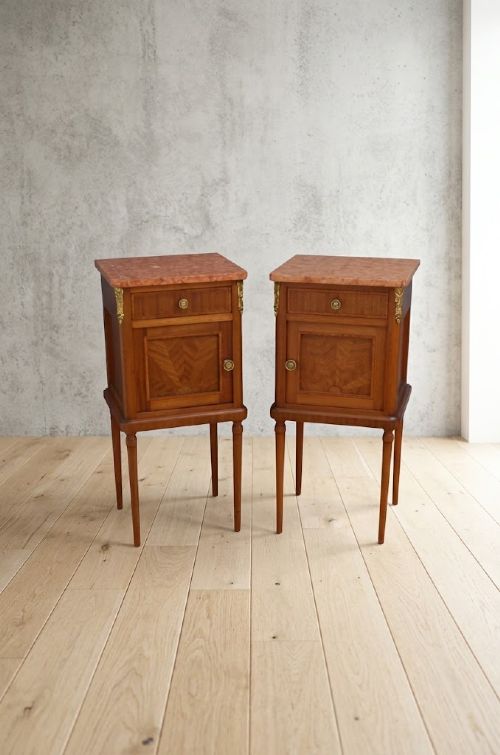
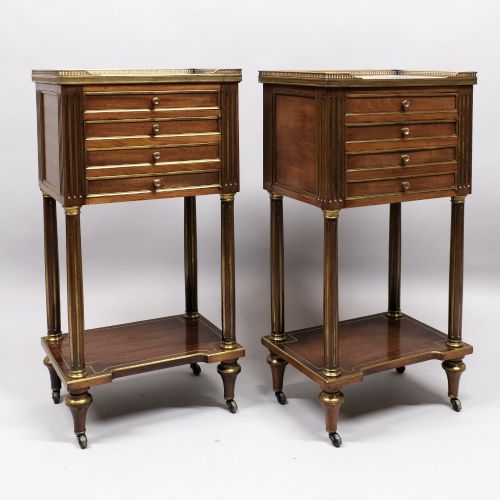
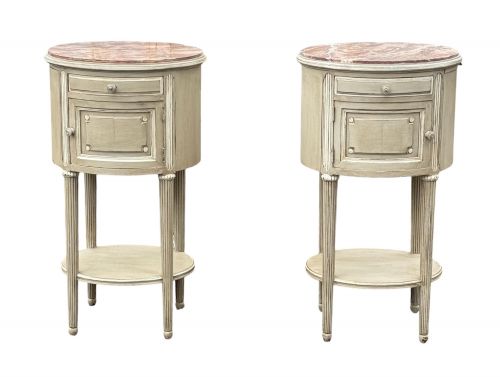
A 19th century chevet is a small bedside table or cabinet designed in France, functioning as a practical nightstand with cupboards or drawers. Buyers seeking a 19th century chevet will find mostly French walnut, mahogany, and rosewood pieces equipped with marble tops.
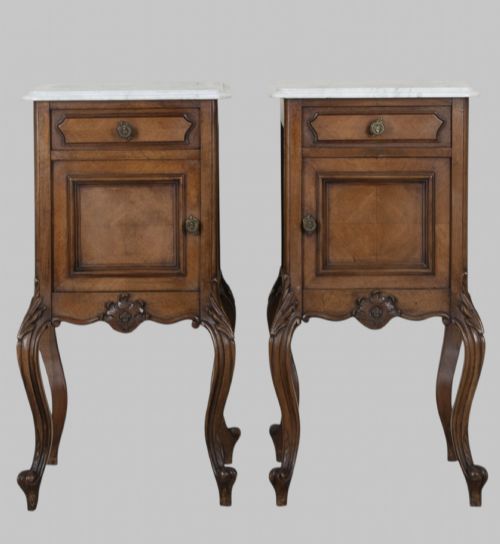
The selections available here span from Regency and First Empire models to Louis XV, Louis XVI Revival, and Louis Philippe styles. Cabinets frequently appear as matched pairs, though single bedside tables also emerge across the inventory.
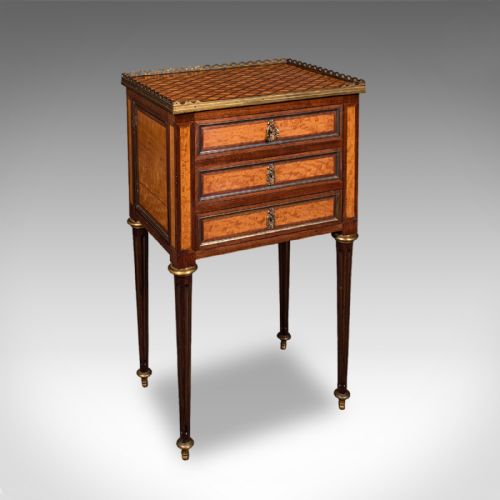
Forms range from simple single-door cupboards and three-drawer chests to serpentine bombe shapes and tambour tables. Most examples incorporate wood veneers, parquetry, or marquetry inlay alongside brass mounts.
How they were made
Cabinetmakers constructed these pieces using solid woods and decorative veneers such as walnut, mahogany, kingwood, rosewood, and satinwood over sturdy carcases. Marquetry and parquetry techniques created intricate geometric or floral patterns across the surfaces of the finest tables.
Heavy inset marble tops, usually in shades of white or grey, were fitted directly to the upper section of the bedside cabinets to provide a durable and water-resistant surface. Cast and chased brass details, mounts, and gallery rails completed the hardware of the period.
19th Century Chevet Retail Price Guide 2026
Typical asking prices for 19th century chevet among the pieces listed under this phrase on Sellingantiques today, from the lower quarter to the upper quarter. They describe what is for sale here now, not the wider market.
Several tables feature hidden sliding tambour doors that conceal midnight reading matter with satisfying mechanical discretion.
What varies in quality
The degree of refinement in the parquetry and marquetry inlay distinguishes standard production from exceptional cabinetmaking. Precision in the matching of wood grain and the complexity of floral or geometric motifs elevate a piece considerably.
The quality of the cast brass mounts and the thickness of the fitted marble slab dictate the overall substance of the table. Cabinetmakers who utilised dense hardwoods and executed tight dovetailing in the drawer construction produced items that endure with greater stability.
The 19th Century Chevet Glossary
- Chevet
- A French term for a bedside table or small nightstand. These pieces typically include enclosed cupboard space or drawers.
- Bombe
- A swelling, outward-curving furniture shape characteristic of Louis XV style pieces. This contour requires skilled veneer work over curved wooden carcases.
- Marquetry
- The art of applying pieces of veneer to a structure to form decorative patterns and pictorial designs. Cabinetmakers used various exotic woods to create contrast.
- Tambour
- A flexible shutter door made of narrow strips of wood glued to a canvas backing. This mechanism slides horizontally along tracks to close a cabinet opening.
- Parquetry
- A geometric mosaic of wood pieces used for surface decoration. It differs from marquetry through its strict reliance on angular or repeating patterns.
19th Century Chevet: Frequently Asked Questions
What is the difference between a chevet and a nightstand?
A chevet is simply the French terminology for a bedside table or small cabinet, often carrying more decorative marquetry and marble tops than standard English nightstands.
These pieces were traditionally manufactured in France throughout the nineteenth century to sit beside a bed and hold personal items.
Are 19th century chevets usually sold in pairs?
They appear both as matched pairs and as single tables depending on the original commission and survival rate. Pairs are particularly common among the Louis Philippe and Louis XVI Revival groupings.
Single tables often emerge from different periods like the Regency or First Empire eras where production methods varied.
How do I identify a Louis XVI revival chevet?
Louis XVI revival pieces typically display straighter lines, symmetrical marquetry, and neoclassical brass mounts compared to the more curved and flowing shapes of the Louis XV style.
Look for fluted column details and restrained geometric parquetry patterns across the walnut or mahogany surfaces.
What materials were used for the tops?
Most nineteenth-century French bedside cabinets utilise fitted marble slabs on their upper surfaces. These stone tops provided a practical, wipe-clean area for water jugs and candle holders.
Some examples rely entirely on polished hardwood tops featuring flame mahogany or walnut veneers instead of marble.
How do I fit a French bedside table into a modern bedroom?
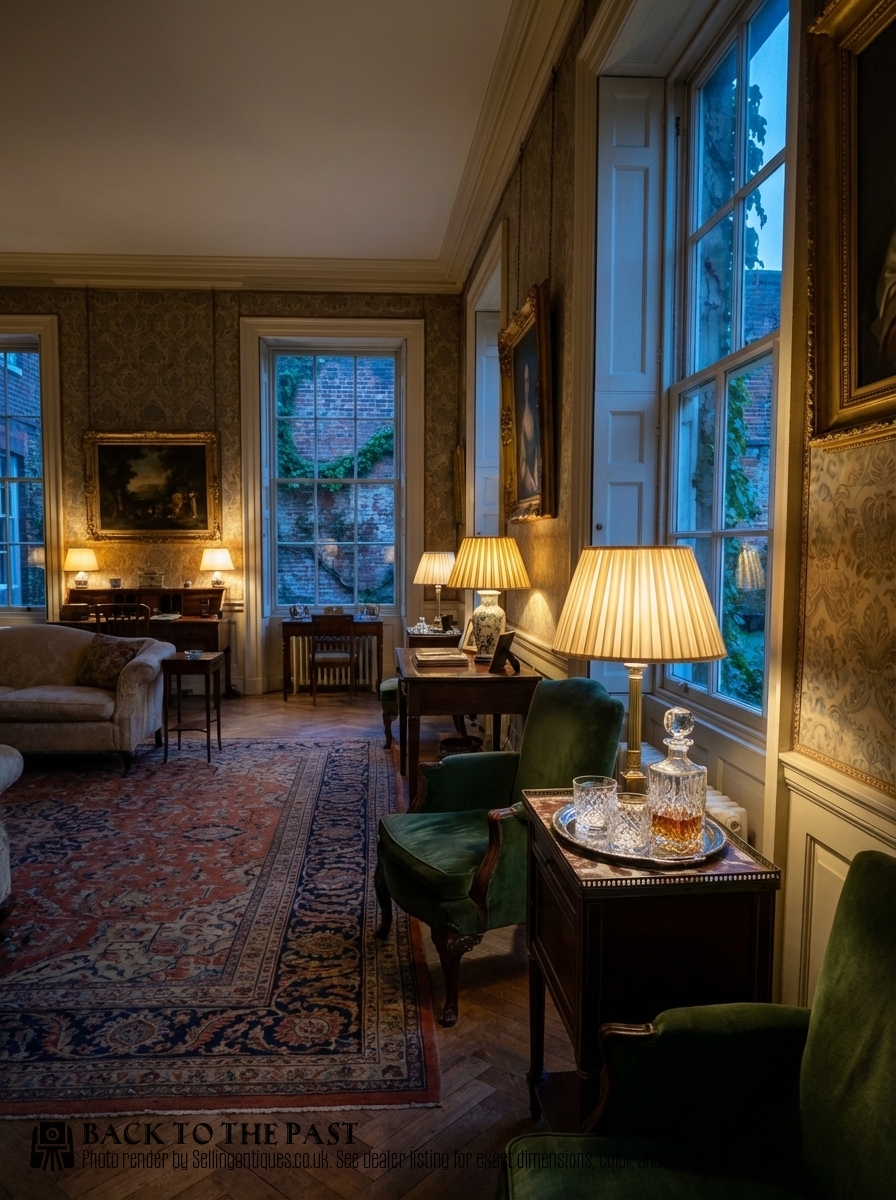
The compact proportions of these nineteenth-century cabinets make them ideal as bedside surfaces or small accent tables in contemporary spaces. Their marble tops and inlaid wood fronts add distinct texture beside modern upholstery.
Ensure you measure the height of your mattress, as these historic tables can sit lower than modern standard bedframes.