

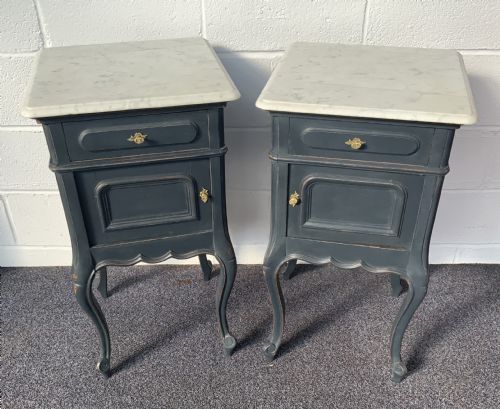
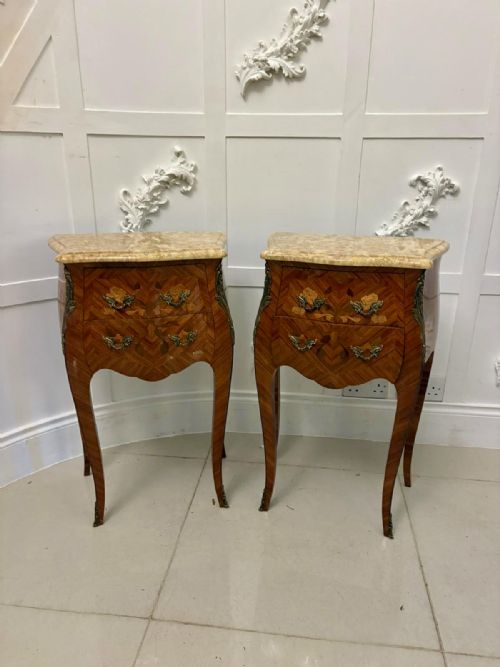


Vintage Marble Chevet
A vintage marble chevet provides a compact bedside surface topped in stone, bringing French continental elegance to smaller spaces.
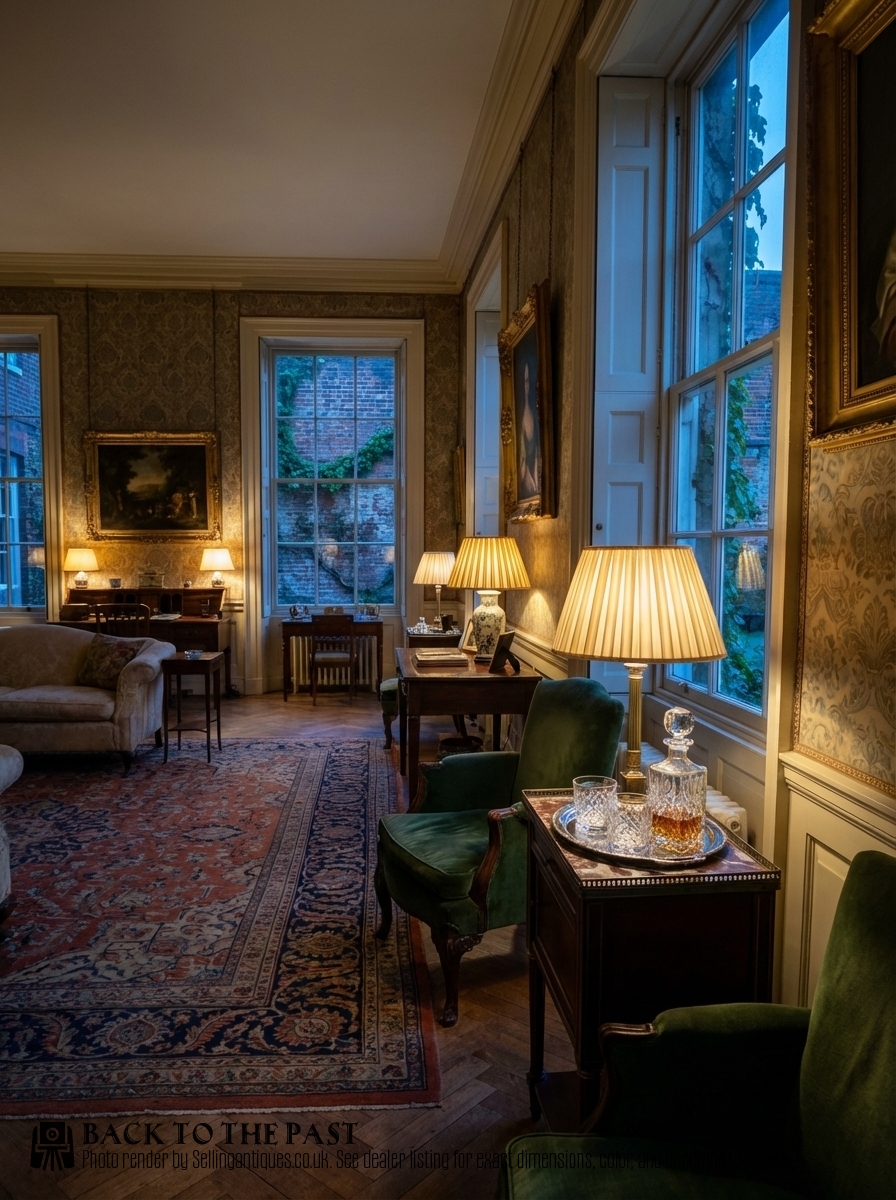
Vintage Marble Chevet
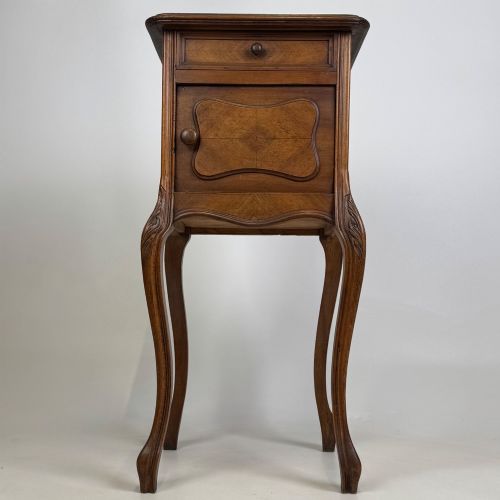
A vintage marble chevet is a small bedside table or cabinet designed to sit beside a bed, frequently topped with fitted stone. These pieces originate largely from French traditions spanning the nineteenth and early twentieth centuries, encompassing periods from the Victorian and Edwardian eras up to the 1930s.
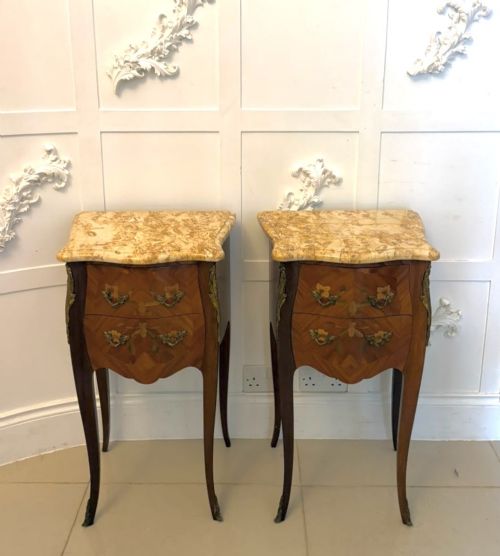
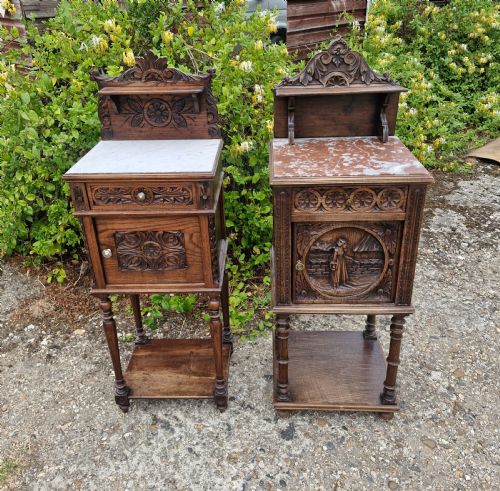
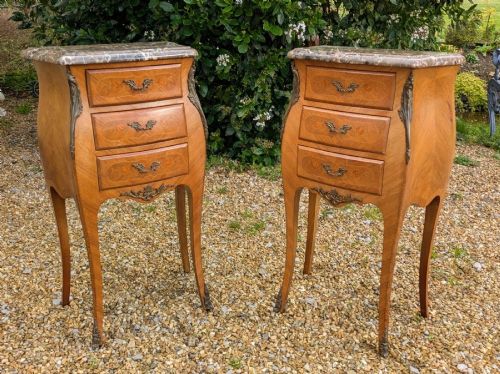
The version most commonly met on this page is a French bedside cabinet constructed from walnut, mahogany, oak, or kingwood, featuring a stone top and enclosed by doors or drawers. Many examples appear in pairs, demonstrating styles ranging from Louis XV revival to plain provincial forms.
Materials and construction
These pieces combine timber carcases of walnut, mahogany, oak, or kingwood with fitted marble tops, sometimes utilising brass or ormolu mounts for decorative accents. Cabinetmakers employed marquetry inlay, quarter-veneering, and carved detailing on wood surfaces to achieve the French chateau or provincial aesthetic.
Stonemasons shaped the marble inserts, including specific varieties such as Belgian Sainte-Anne marble, to sit flush within the timber framework of the bedside table or chest.
The listings span from the early nineteenth century through to the 1930s, showcasing materials such as marble, brass, walnut, mahogany, and painted wood.
Separating quality across the range
Quality rests upon the selection of timber veneers, the crispness of hand-carved details, and the precision with which marquetry patterns align across drawers and doors. Higher grade examples display sophisticated wood selection, such as flame mahogany or intricate floral marquetry, paired with heavy, well-cast ormolu mounts.
Simpler provincial pieces rely on plain solid oak, walnut, or painted wood finishes, where value is determined by structural proportion and clean joinery rather than ornate decorative flourishes.
The Vintage Marble Chevet Glossary
- Chevet
- A French term for a bedside table or small cabinet. It typically denotes pieces designed to hold nighttime necessities within arm's reach of a bed.
- Marquetry
- Decorative veneer work arranged in geometric or pictorial patterns on furniture surfaces. Craftsmen assemble thin slices of contrasting woods to create detailed imagery.
- Ormolu
- Gilt bronze mounts applied to furniture for decorative effect. This technique was widely utilised in French cabinetmaking during revival periods.
- Sainte-Anne marble
- A distinctive dark grey or black limestone marble quarried in Belgium, featuring white fossil inclusions. It frequently tops continental cabinets.
- Tambour
- A flexible shutter made from narrow strips of wood glued to canvas, allowing curved cabinet doors to slide smoothly along tracks.
Vintage Marble Chevet: Frequently Asked Questions
What is a chevet?
A chevet is a French bedside table or small cabinet designed for use next to a bed. These compact pieces provide surface area for lamps and enclosed storage for personal items.
They appear in various timber finishes and are frequently topped with marble to protect the wood from liquid spills.
Are these tables sold in pairs?
Many of these bedside cabinets and tables are offered as matched pairs, though single examples also appear. Pairs suit larger bed frames where symmetry on both sides of the bed is desired.
Single pieces function well in smaller guest bedrooms or as standalone accent tables in a hallway.
How do I identify the period?
Dating relies on stylistic clues, timber choice, and construction methods. Pieces showing heavy carving and Louis XV revival lines often date to the late nineteenth or early twentieth century.
Simpler oak or painted versions frequently point toward Edwardian or 1930s production, while flame mahogany examples connect to earlier nineteenth-century traditions.
What woods were used?
Cabinetmakers utilised a range of timbers including walnut, mahogany, oak, and kingwood. Exotic veneers and marquetry inlay appear on more decorative continental models.
Painted wood finishes also occur, offering a softer aesthetic suited to provincial interiors.