

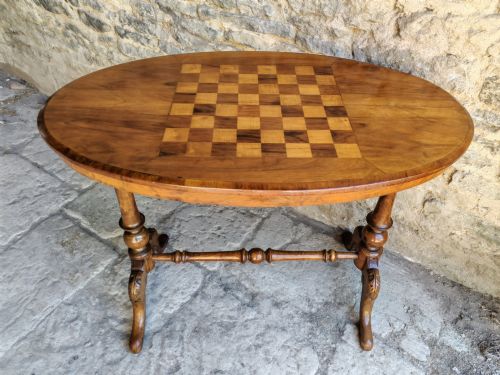
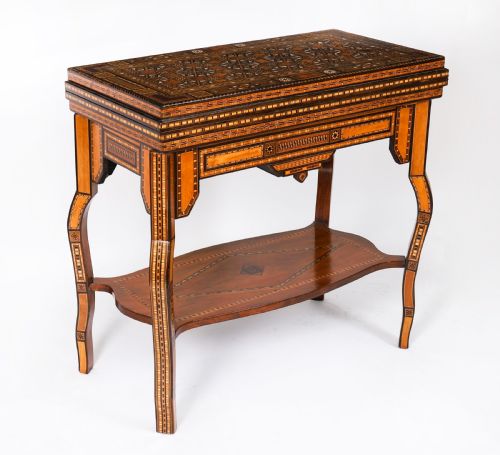
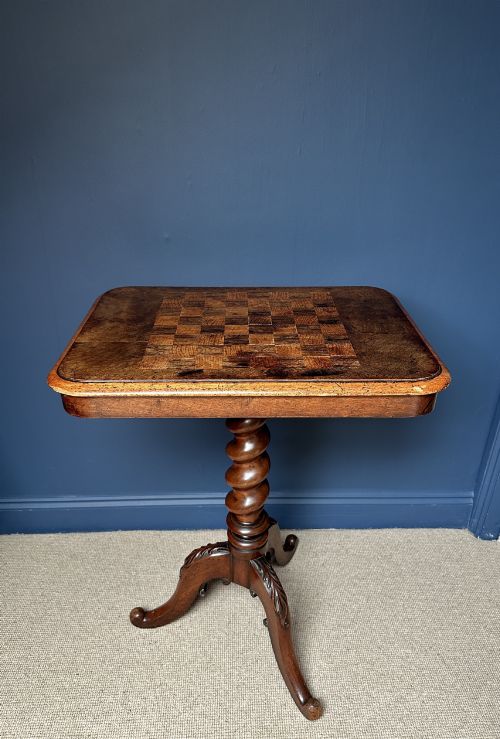
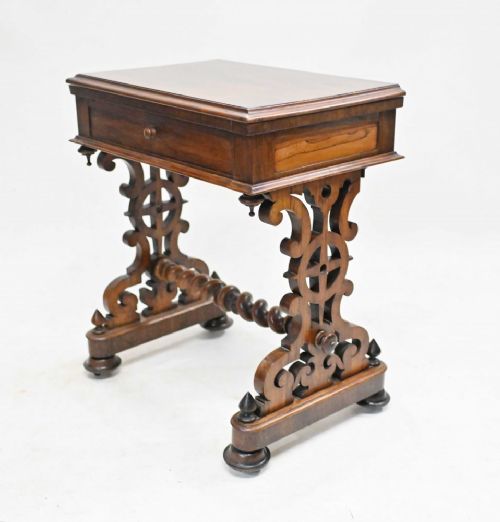


19th Century Chess Table
A 19th century chess table brings domestic strategy into the parlour, offering dual use as a handsome occasional surface.
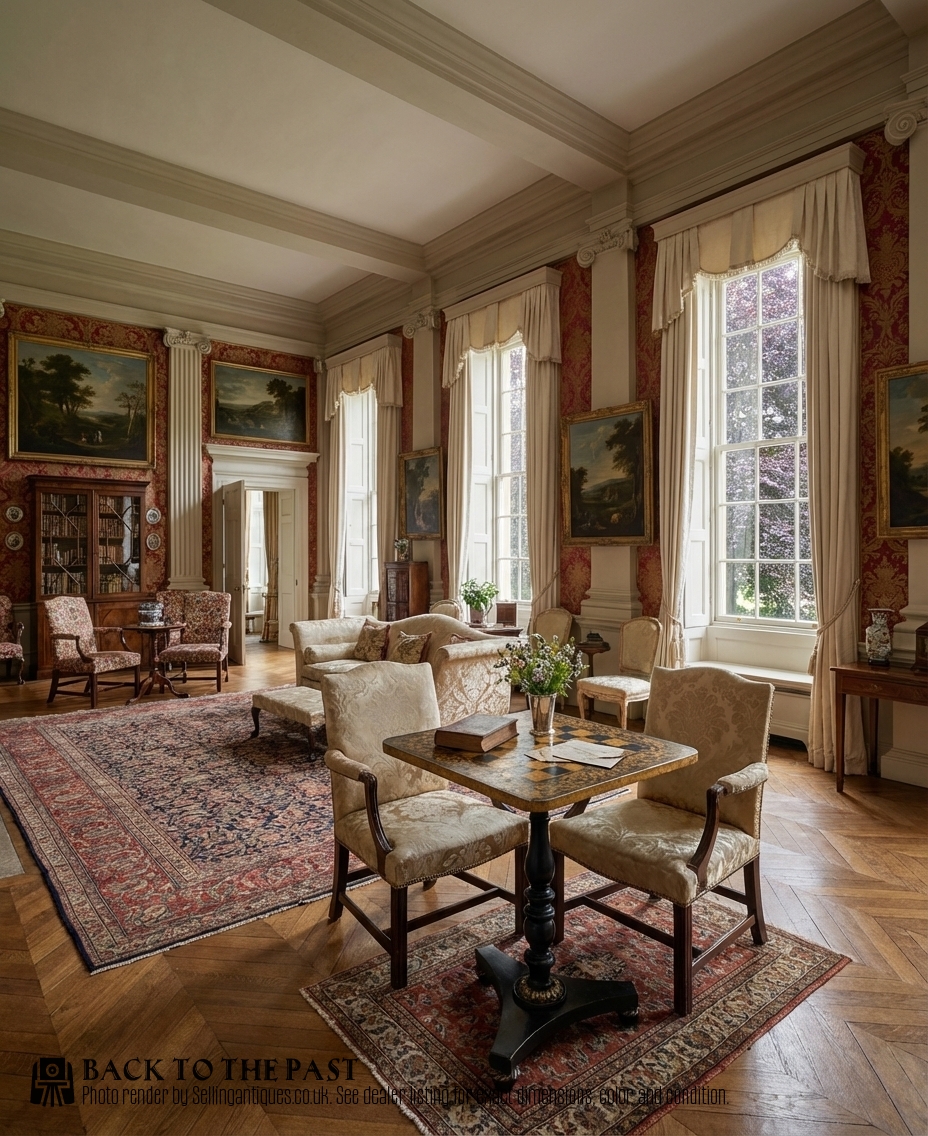
Understanding the 19th century chess table
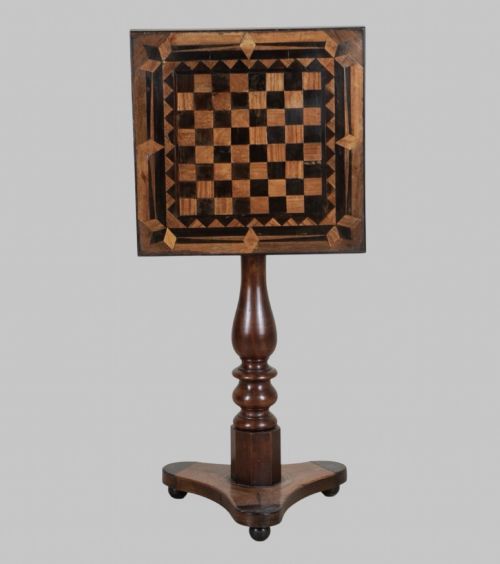
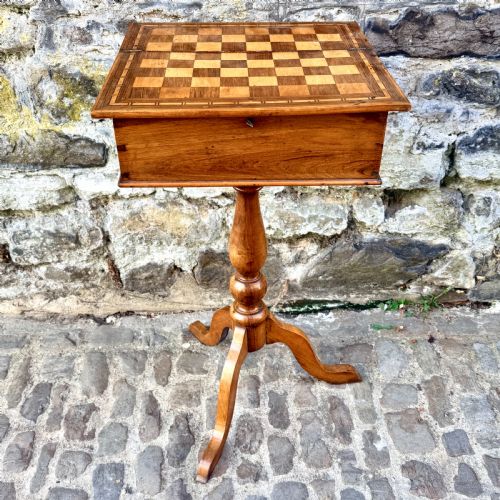
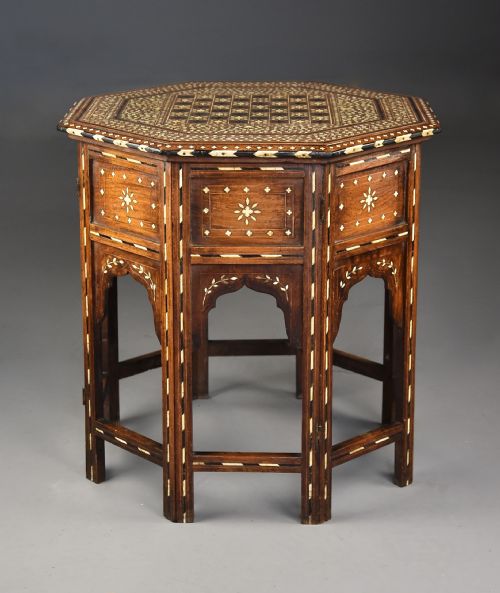
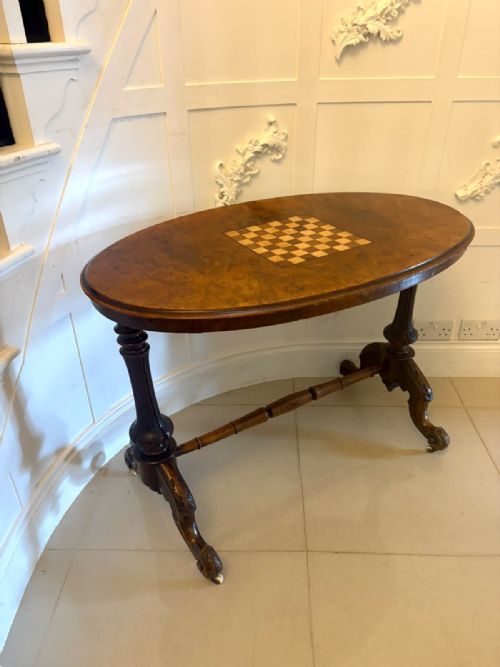
A 19th century chess table serves primarily as a dedicated surface for board games whilst doubling as an occasional table in a parlour or sitting room. The pieces recorded span the Regency and Victorian eras, alongside French Provincial examples.
Most entries on this page take the form of games tables or centre tables fitted with inlaid or marble chess boards. Forms include tripod bases and carved centre tables, reflecting the domestic habits of the period.
Construction and materials
Cabinet makers utilised a range of fine timbers, notably walnut, burr walnut, rosewood, oak, and fruitwood. Inlaid wood and ebonised wood create the contrasting squares required for the board.
Selected examples incorporate specialised decoration such as penwork or inset specimen marble tops. Brass details and carved elements frequently appear on Victorian and Regency pieces.
Retail Price Guide 2026
Typical UK retail prices for 19th century chess table, calculated from the Sellingantiques database of over a million retail prices indexed since 2003. This retail price guide relies exclusively on Sellingantiques data; no external sources or auction records are used, so the figures do not describe the wider market.
A game of chess could safely continue while tea was served nearby, provided no one knocked the tripod base.
Judging quality
Quality rests in the precision of the wood inlay and the selection of figured timbers like burr walnut and rosewood. Superior examples integrate decorative elements such as penwork or specimen marble with harmonious proportions.
The sophistication of the structural carving and the choice of secondary woods separate standard production from finer workshop output of the period.
George Merrifield
The 19th Century Chess Table Glossary
- Burr walnut
- A highly figured veneer taken from the wart or growth on a walnut tree. It yields rich, swirling grain patterns highly prized by Victorian cabinet makers.
- Penwork
- A decorative technique using fine ink lines on wood to create intricate motifs and borders. It appears on Regency games tables.
- Specimen marble
- Multi-coloured marbles assembled to form a geometric tabletop surface. This technique produces durable and decorative chess boards.
- Ebonised wood
- Timber treated to imitate ebony, providing deep black contrast. It supplies the dark squares on many inlaid chess boards.
Frequently Asked Questions
Were these tables used for dining?
These tables functioned primarily as games or occasional surfaces rather than dining furniture. Their dimensions and integrated boards suited parlour entertainment.
Some designs incorporated compartments or tipping tops, keeping the focus squarely on leisure activities.
How do I tell Regency from Victorian examples?
Regency tables often display lighter rosewood or penwork decoration, reflecting earlier classicism. Look for architectural lines and specific proportions.
Victorian pieces frequently employ burr walnut and heavier carving, aligning with mid-century domestic tastes.
Are the chess boards always inlaid?
While wood inlay is common, certain pieces feature specimen marble tops. Other variants utilise ebonised wood alongside lighter timbers to form the grid.
Each method reflects the material preferences of the specific maker and period.
Where should I place a chess table?
A chess table sits comfortably as a centre table or occasional piece in a study or drawing room. Its dual utility allows it to hold lamps or books when not in use.
Keeping the piece away from direct heat sources protects the delicate veneers and inlays.