



19th Century Chamberstick
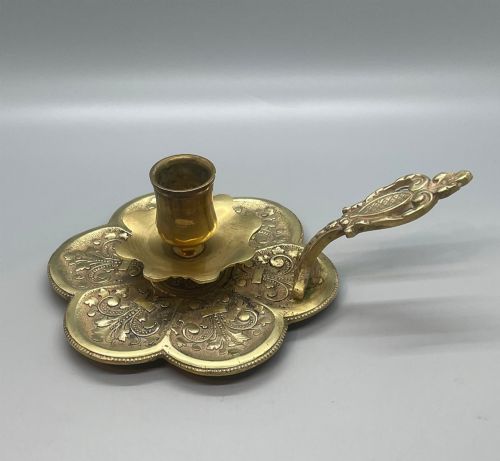
These 19th century chamberstick examples are portable bedside candle holders designed for lighting a dark bedchamber.
19th Century Chamberstick
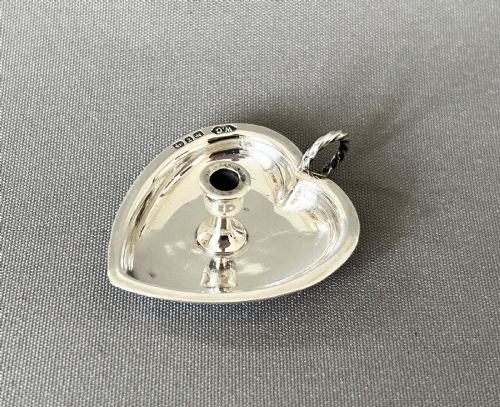
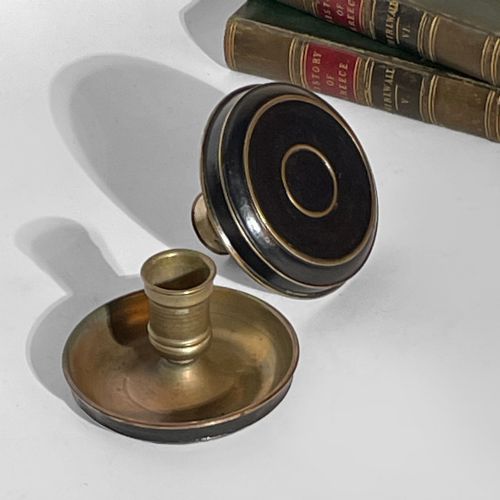
A 19th century chamberstick is a low-profile candle holder fitted with a wide drip pan and a loop handle for carrying through a dark house. These domestic pieces appear in brass, silver plate, porcelain, and treen walnut, reflecting both utilitarian function and decorative display.
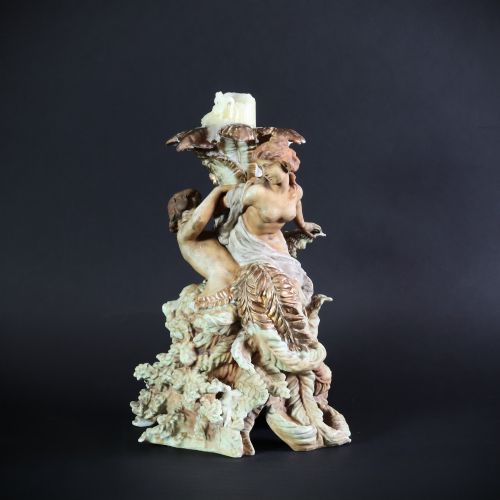
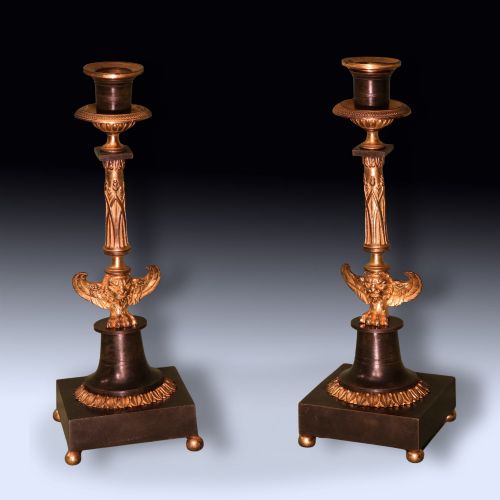
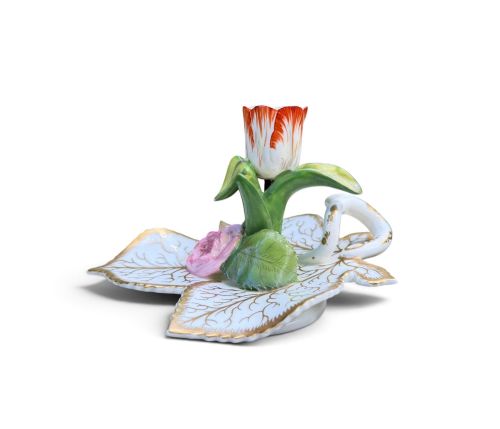
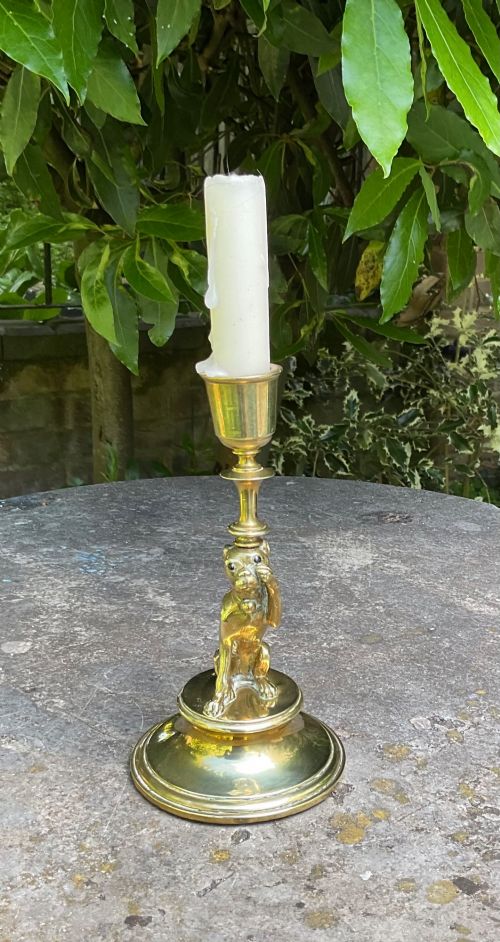
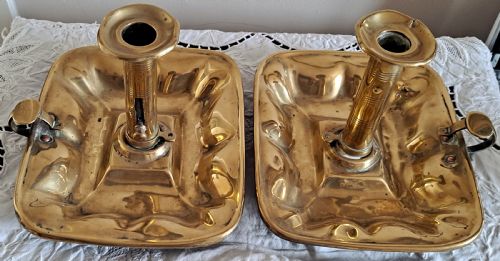
The selection ranges from Georgian porcelain tulip designs and Regency pieces to Victorian novelty forms like pug dogs. Makers utilised materials such as ceramic enamel, gilding, and marble to create items spanning simple brass pairs to ornate Grand Tour cloisonne.
Buyers encounter forms associated with specific movements, including Arts and Crafts brass items and Old Sheffield plated chamber candlesticks. Travelling cased versions and crested silver plated examples also feature among the variations found in this category.
How they were made
Metal chambersticks rely on traditional casting and plating techniques, particularly brass fabrication and silver plating over a base metal. Old Sheffield plate utilises a fused layer of silver on copper, while other pieces employ mercury gilding, gold leaf, and metal casting.
Ceramic examples demonstrate period porcelain manufacturing, shaped into botanical forms like tulips or figural figures such as a girl with flowers. Surface decoration includes hand-painted enamel, ceramic enamel, and intricate micro mosaic work alongside cloisonne.
Woodworking techniques appear in treen examples, such as walnut turned and combined with brass fittings. Artisans integrated functional elements like snuffer cones and match holders directly into the saucer base during construction.
19th Century Chamberstick Retail Price Guide 2026
Typical asking prices for 19th century chamberstick among the pieces listed under this phrase on Sellingantiques today, from the lower quarter to the upper quarter. They describe what is for sale here now, not the wider market.
Materials span brass, silver plate, porcelain, enamel, ceramic enamel, gilding, gold leaf, and metal.
What varies in quality
Quality rests in the crispness of the casting, the fidelity of the decorative detail, and the integrity of the base materials. Fine silver plated examples show careful management of the fused metal layers, whereas lesser pieces reveal wear through to the base metal.
Ceramic quality is defined by the precision of the porcelain moulding and the delicacy of the hand-painted enamels. Finer decorative pieces integrate specialised stones or micro mosaic panels securely within the metal or marble framework.
Spode·Minton·Benhan and Froud
The 19th Century Chamberstick Glossary
- Chamberstick
- A short candlestick mounted on a wide saucer pan with a handle, used for lighting bedrooms and hallways.
- Old Sheffield Plate
- An early plating method fusing a thin sheet of silver to a copper core, visible where edges wear.
- Treen
- Small domestic wooden objects fashioned by turning on a lathe or hand-carving from timber.
- Grand Tour
- Souvenirs and classical antiquities collected by wealthy travellers visiting European cultural sites during the nineteenth century.
- Cloisonne
- An ancient metalworking technique where enamel paste is applied within wire compartments on a metal base.
19th Century Chamberstick: Frequently Asked Questions
What is a chamberstick used for?
A chamberstick was utilised for lighting the way through unlit corridors and bedchambers before the invention of electric domestic lighting.
The wide saucer pan caught any dripping wax, protecting the user's hands and carpets while carrying the open flame.
How do I date a brass chamberstick?
Dating relies on stylistic clues, manufacturing marks, and construction methods characteristic of periods like the Georgian era or the Victorian age.
Earlier pieces often display softer casting and hand-finished details, while later nineteenth-century examples incorporate industrial manufacturing techniques.
Were chambersticks made of silver?
Solid silver examples exist alongside the more common silver plated, brass, and porcelain varieties seen in nineteenth-century homes.
Silver plated versions utilised copper or base metal cores, offering the appearance of solid silver at a lower cost.