
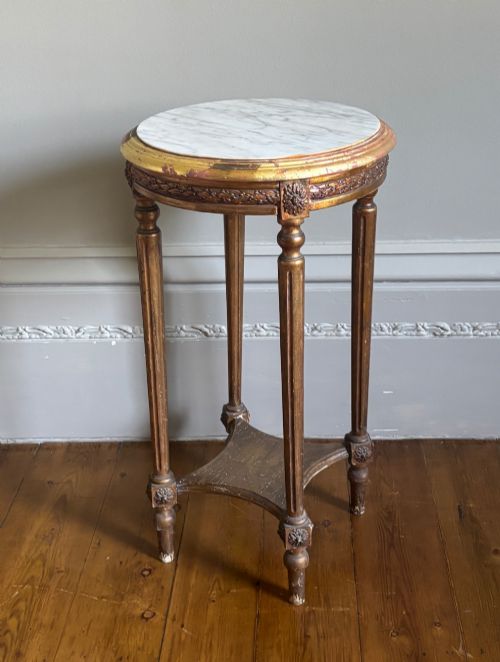


19th Century Carved Gueridon
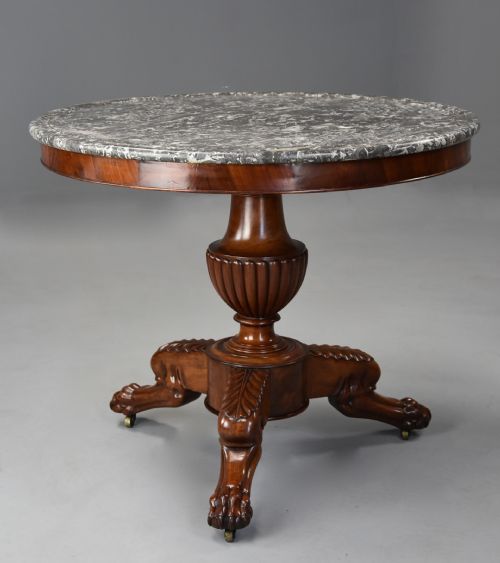
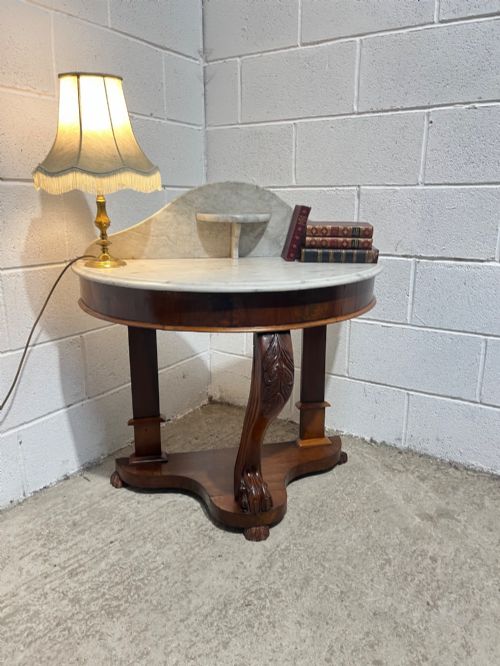
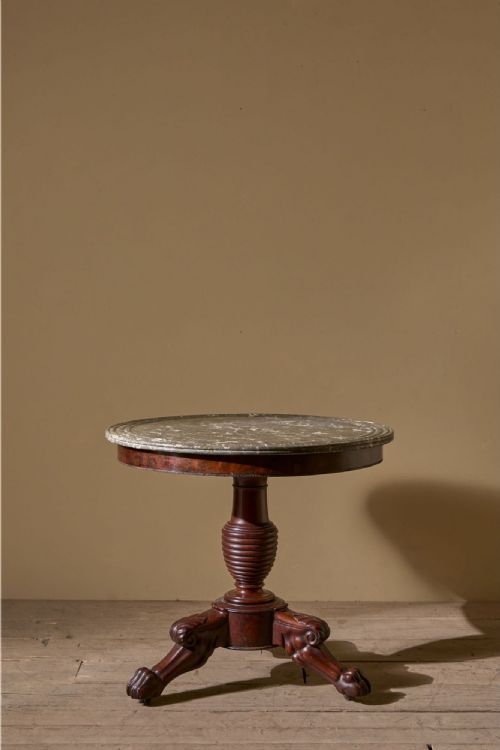
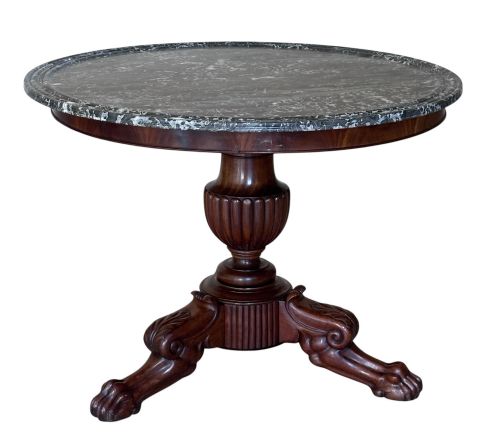
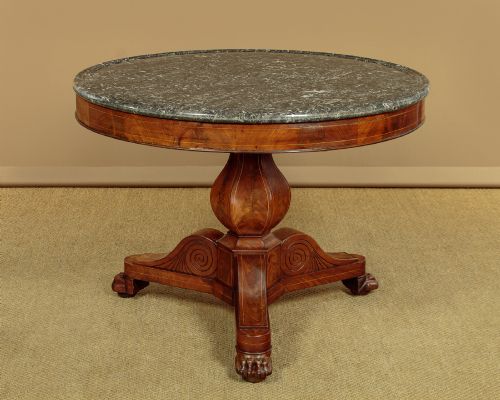
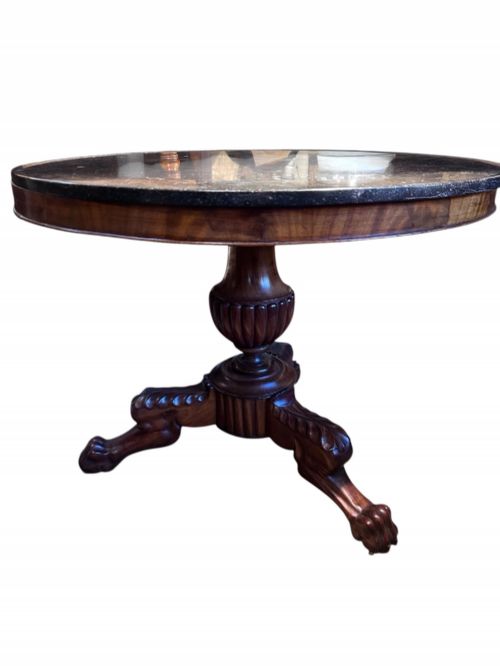
These 19th century carved gueridon tables are circular occasional pieces topped with marble or wood, prized for bringing French elegance to a room.
19th Century Carved Gueridon
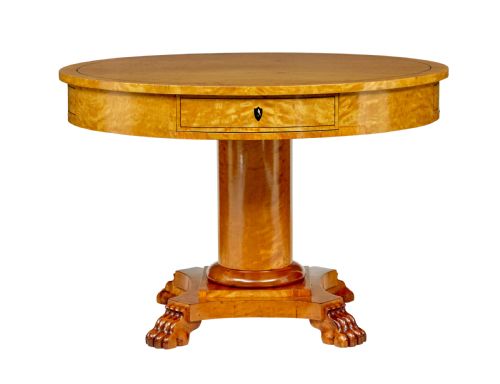
A 19th century carved gueridon functions primarily as a circular centre table or freestanding stand, often positioned in the middle of a room to hold lamps or decorative objects. The form derives from classical French interior design and appears frequently in mahogany, walnut, oak, and birch across this selection.
Buyers encounter numerous variations ranging from simple Louis Philippe designs to ornate French Empire examples featuring carved swan decoration or rams heads. Pieces span the entirety of the nineteenth century, including specific decades such as eighteen-fifty, eighteen-sixty, and eighteen-ninety.
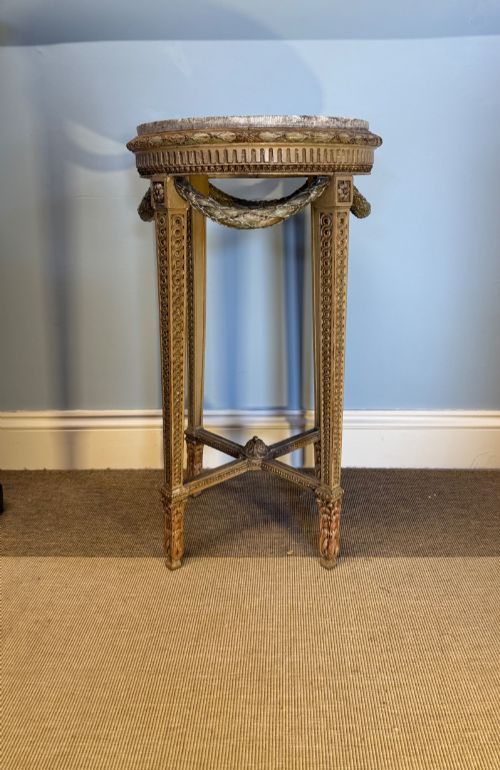
Alongside standard centre tables, the selection includes related forms such as console tables, plant stands, pedestals, and torchere stands. Regional styles extend beyond France to encompass Swedish Biedermeier birch tables and Italian Blackamoor figures.
How they were made
Cabinet makers constructed the circular tops of solid mahogany, walnut, or oak, frequently inset with heavy veined, grey, or white marble slabs. Bases were often shaped from carved wood or giltwood, supported by central pillars or tripod legs.
Detailing on finer examples incorporates brass mounts, painted finishes, and porphyry marble tops. Carvers utilised chisels to render figurative elements such as swans, rams heads, and crouching figures directly into the timber.
Listings feature mahogany, walnut, oak, birch, and giltwood alongside marble and brass elements.
What varies in quality
The distinction between standard examples and the finest pieces rests upon the crispness of the wood carving and the weight of the materials. Superior tables display deeply undercut carving on the legs and bases rather than shallow moulding.
The choice of stone also dictates quality, with thick, highly figured original veined marble tops elevating a piece above those with plain or replacement timber inserts. Integration of original brass mounts and structural stability in the central pillar further separate workshop standards.
Henry Dasson
The 19th Century Carved Gueridon Glossary
- Gueridon
- A small circular table or stand, originating in seventeenth-century France and popular throughout the nineteenth century. These pieces typically stand on a single central column or three carved legs.
- Empire
- A neoclassical design style spanning the late eighteenth and early nineteenth centuries. It draws heavily on ancient Roman, Greek, and Egyptian motifs such as swans and rams heads.
- Torchere
- A tall ornamental stand designed to hold a light or a decorative object. They often take the form of carved wooden figures or slender fluted columns.
- Giltwood
- Timber that has been coated with a thin layer of gold leaf. This finish appears frequently on high-status French and Regency decorative furniture.
- Biedermeier
- A Central European design style from the first half of the nineteenth century. It prioritises clean lines and domestic comfort over heavy ornamentation, often utilising blonde woods like birch.
19th Century Carved Gueridon: Frequently Asked Questions
What is a gueridon table used for?
These circular tables served primarily as centre pieces in grand rooms, providing a stable surface for holding lamps, vases, or small decorative items. Their compact footprint also made them useful as occasional tables beside seating.
Today, they function well in entrance halls or living spaces as display surfaces. Their distinctive bases add a sculptural element to modern interiors without requiring extensive floor space.
How do I identify a French Empire gueridon?
French Empire pieces typically feature dark mahogany timbers combined with white or grey marble tops and prominent classical motifs. Look for carved swan mounts, rams heads, or bronze detailing on the central column.
These tables date largely from the early nineteenth century and reflect the architectural tastes of the Napoleonic era. The structural proportions are usually heavy and symmetrical.
Are marble tops on these tables original?
Original marble inserts generally fit flush into the wooden rim and show appropriate signs of age, such as minor surface wear or matching patination to the base. The thickness and type of stone should align with the manufacturing period.
Many nineteenth-century tables paired heavy stone with timber structures to provide stability for the freestanding form. Examining the underside often reveals whether the stone rests in an original rebate.
Where should I place a torchere stand?
Torchere stands are tall, slender pedestals designed to elevate lamps, urns, or sculptures rather than serve as general tables. They suit corners or blank wall spaces where vertical height adds balance to a room.
Because many nineteenth-century examples feature delicate carved wooden figures or tripod legs, they require placement away from heavy traffic areas to ensure stability.