


Tall Carved Urn Stand
A tall carved urn stand elevates a prized vase or planter, bringing presence and proportion to a room.
Tall Carved Urn Stand
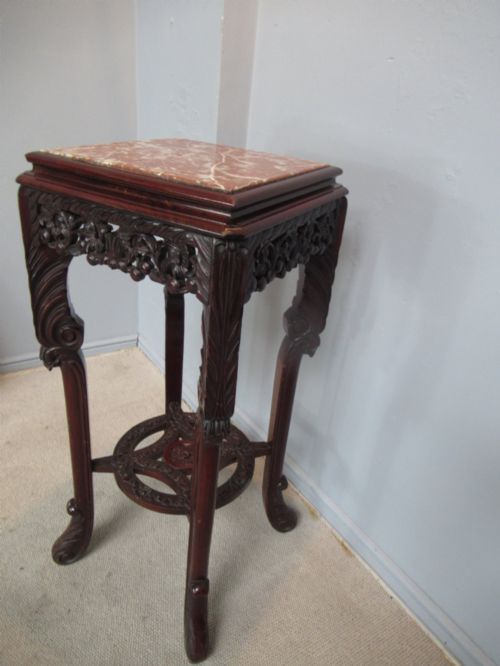
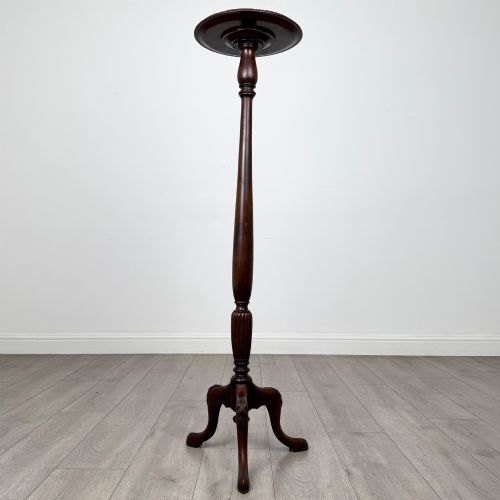
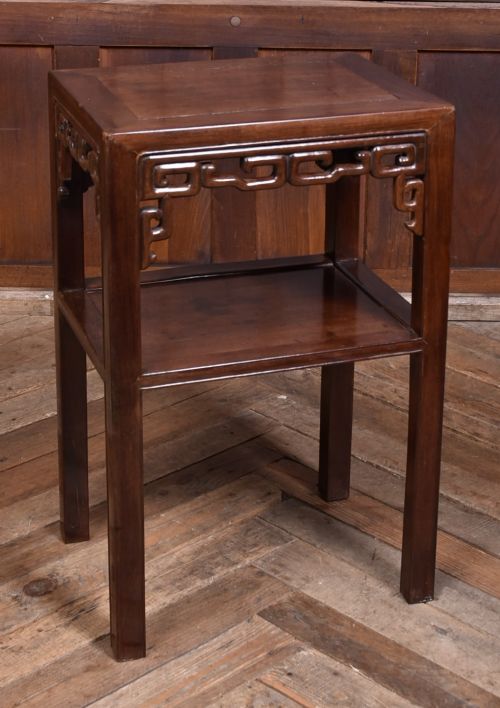
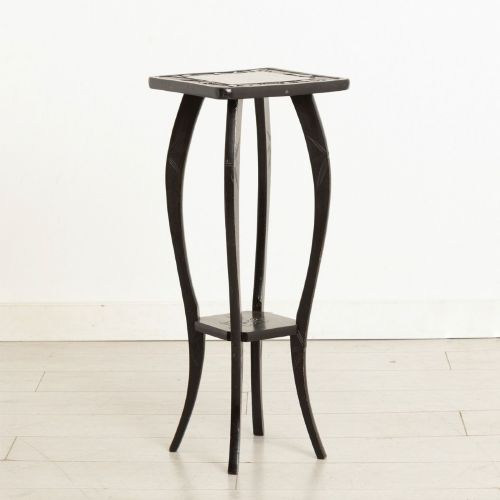
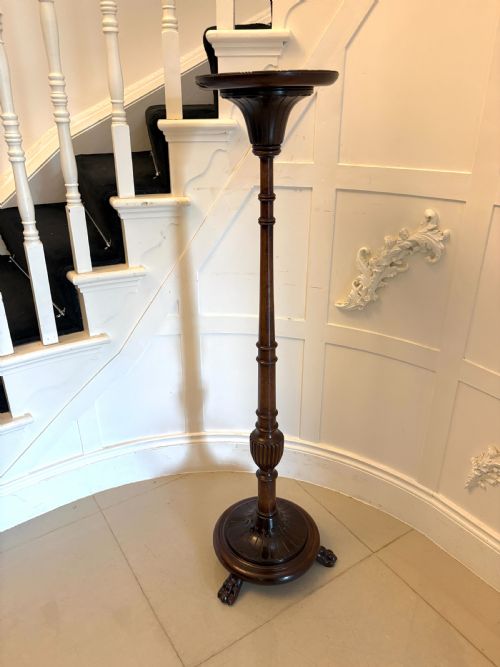
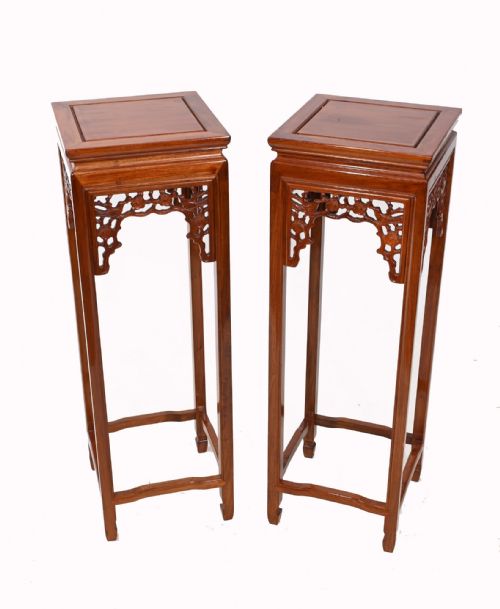
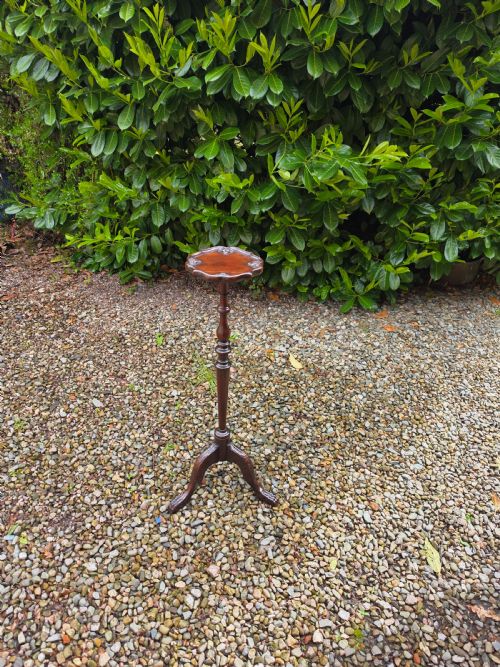
A tall carved urn stand functions primarily to elevate planters, vases, and busts, serving as a vertical anchor in a room. When exploring this selection of tall carved urn stand examples, buyers encounter diverse forms including torcheres, plant stands, and occasional tables.
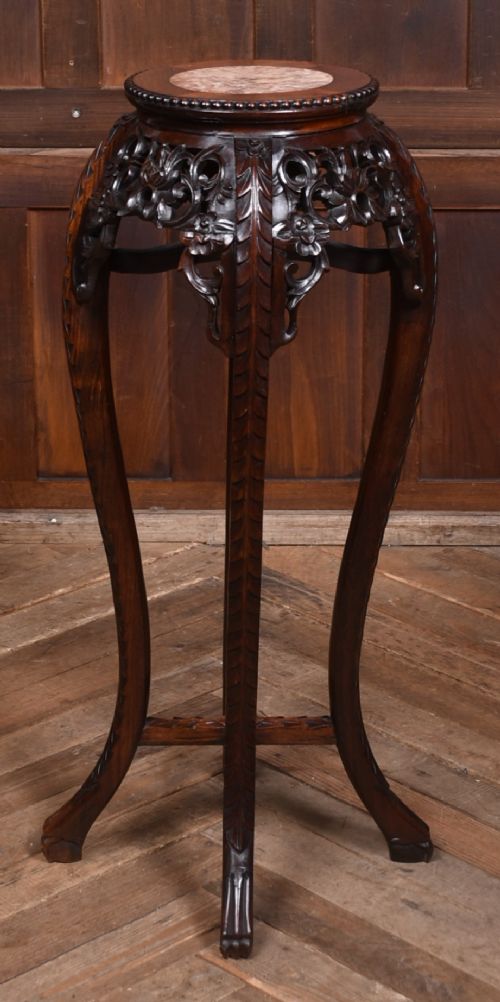
Originating largely from the nineteenth and early twentieth centuries, these pieces draw on Victorian, Edwardian, and Chinese Qing Dynasty aesthetics. The forms range from English mahogany columns to oriental hardwood tables inset with marble.
Most items on this page lean towards traditional domestic use, combining display surfaces with sculptural turned or carved supports. They bridge utilitarian function and decorative display, designed to hold heavy vessels securely.
What varies in quality
Depth and crispness of the hand-carving separate standard production from superior examples. Sharp definition in foliage or scrollwork indicates skilled workshop execution.
Selection of timber grain and the integrity of inset marble or stone slabs dictate the overall rank of the piece. Heavier, stable base construction ensures the tall column supports weight without sway.
A French walnut stand linked to Rolls Royce shares floor space with traditional Edwardian plant columns.
Liberty of London
The Tall Carved Urn Stand Glossary
- Torchere
- A tall stand designed to support a light or a decorative object. Originally built to hold candles, these evolved into tall pedestals for vases and busts.
- Jardiniere stand
- A specialised low or tall table built to hold a plant container or planter bowl. They frequently feature water-resistant tops such as marble or glazed tile.
- Huali
- A fragrant Chinese hardwood prized during the Qing Dynasty for rich grain and durability. Artisans utilised it extensively for fine display furniture.
- Barley twist
- A carved wooden column formed in a helical screw shape. This decorative turning style appears frequently on English oak and walnut supports.
Tall Carved Urn Stand: Frequently Asked Questions
How were tall carved urn stands used historically?
These stands occupied corners, hallways, and drawing rooms to lift decorative objects to eye level. They displayed valuable oriental porcelain, potted ferns, and bronze sculptures.
Elevating these items protected delicate floor surfaces from dampness and placed artistic pieces in prominent sightlines. They acted as structural furniture that doubled as art pedestals.
Can these stands support heavy ceramic pots?
Solid hardwood and heavy timber construction allow many of these stands to bear significant weight. Marble-top variants provide a robust, stable surface for substantial stone or ceramic vessels.
Checking the rigidity of the central column and base spread ensures the structure remains balanced under load. Most historical designs were engineered specifically to carry heavy garden urns indoors.
How do I identify a Chinese export stand from a Victorian one?
Chinese export stands frequently utilise dense oriental hardwoods like hongmu or huali, often featuring marble inserts and intricate pierced carving. Victorian English pieces rely more commonly on mahogany, walnut, or oak with classical revival motifs.
Looking at the joinery methods and the specific botanical carving styles clarifies the regional origin. Qing Dynasty pieces display distinct mortise and tenon traditions distinct from European cabinetmaking.