


19th Century Caddy Box
A 19th century caddy box is a tactile vessel for storing dry leaf tea that brings period craftsmanship and rich timber into a modern interior.
19th Century Caddy Box
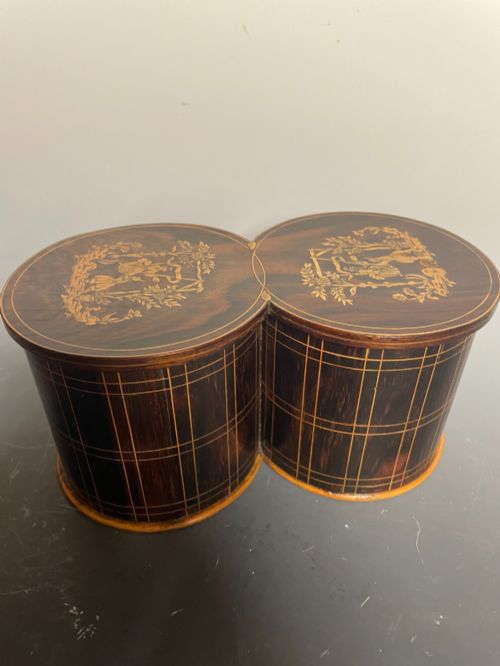
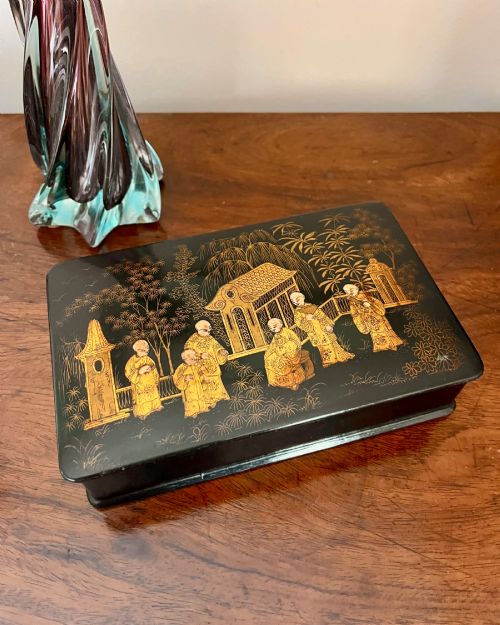
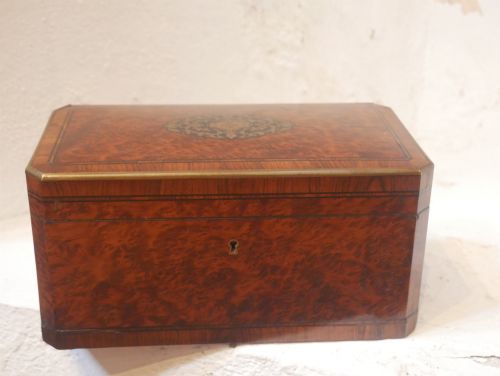
A 19th century caddy box encompasses a range of lidded containers intended for domestic storage, most frequently taking the form of tea caddies, teapoys, and decorative boxes. These objects originate from Georgian, Regency, and Victorian eras, spanning periods from 1800 through the late 19th century.
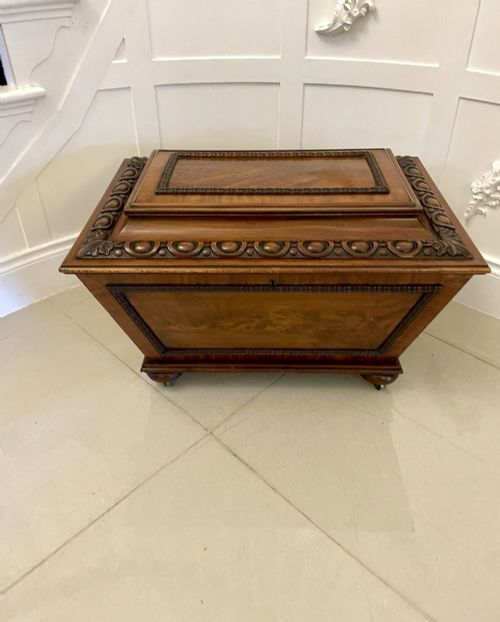
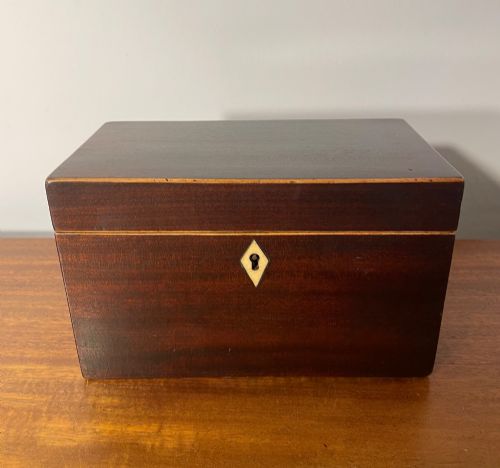
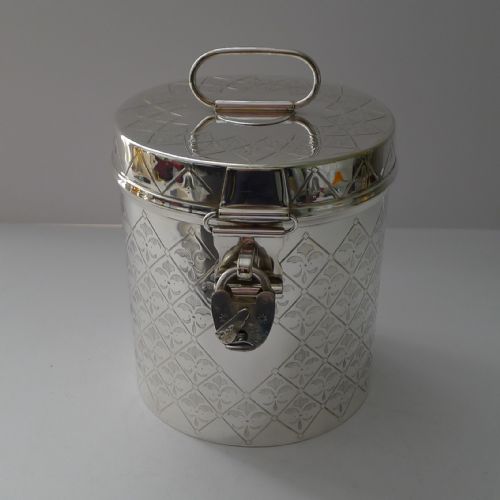
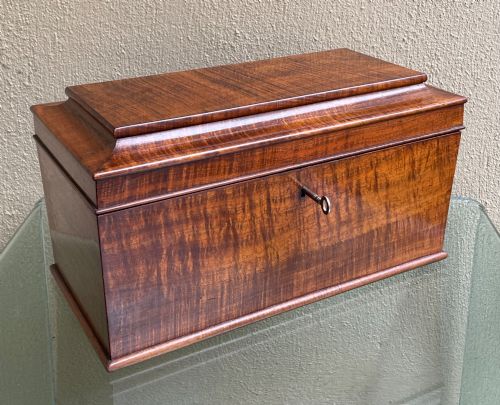
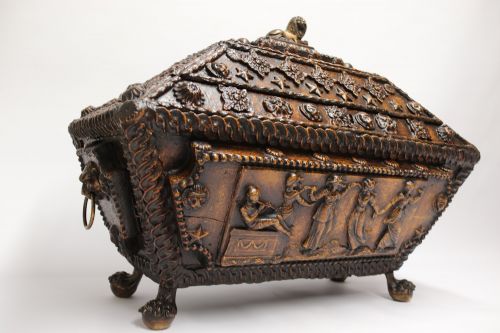
The tea caddy is the most common form met on this page, appearing in rectangular, sarcophagus, and dome shapes designed to hold loose leaves securely. Alongside tea containers, the selection includes writing boxes, work boxes, and cellarettes fashioned from timber and metal.
Makers and workshops from England, France, Scotland, China, and India produced these vessels, resulting in diverse regional interpretations. Buyers encounter standard desktop tea containers alongside larger standing teapoys and specialised boxes fitted with internal compartments.
Materials and technique
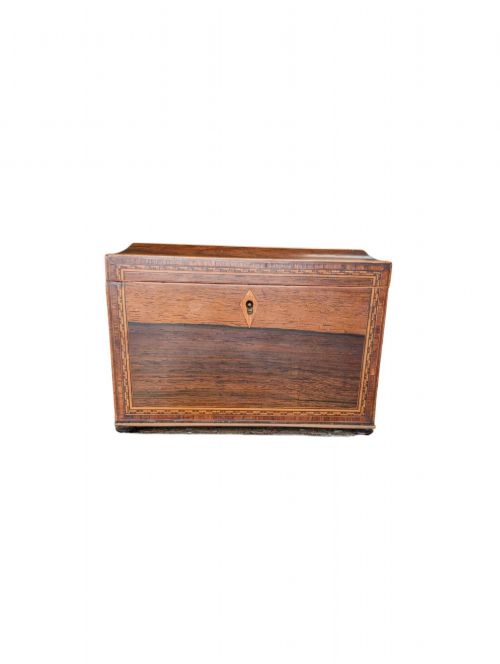
Cabinetmakers constructed these boxes using dense hardwoods such as mahogany, rosewood, walnut, and amboyna, frequently selecting flame mahogany or parquetry to showcase natural grain patterns. Structural carcases were often reinforced with brass lockplates, hinges, and escutcheons.
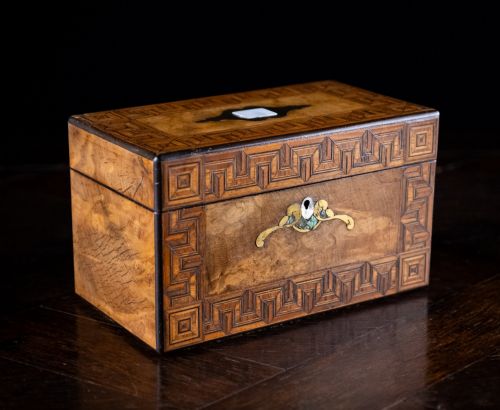
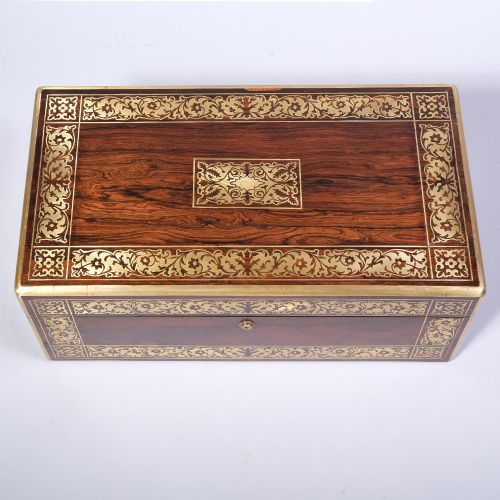
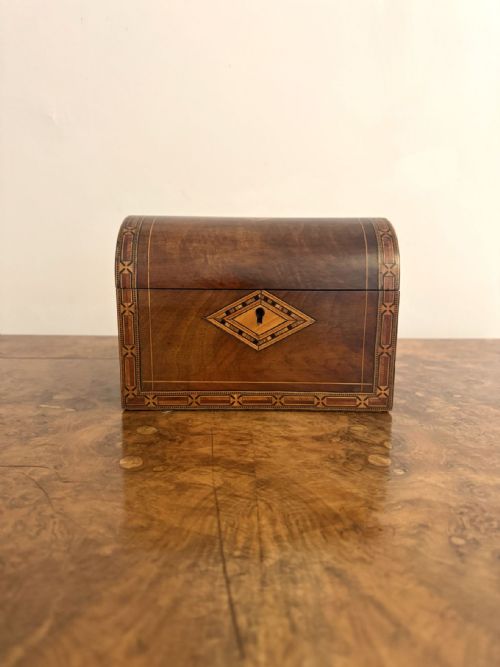
Surface decoration relies heavily on inlay techniques, including brass stringing, Tunbridge ware, and mother-of-pearl, alongside delicate gesso work and hand-painted motifs. Specialised examples incorporate organic materials like tortoiseshell, bone, and carved bamboo to create textured exterior panels.
Some tea boxes hid their leaves behind tiny bone knobs so small they required the patience of a Victorian butler to operate.
Standards of execution
Quality rests upon the precision of the cabinetwork, evident in tight wood joints, well-fitted internal lids, and the balanced integration of brass or mother-of-pearl inlay. Superior pieces retain their original functional hardware, including working locks, keys, and internal glass or metal cannisters.
The choice of timber and veneer grading distinguishes standard production from exceptional work, with finely figured rosewood or flame mahogany commanding greater visual depth. The finesse of specialised decoration, such as intricate Tunbridge mosaic or carved padouk, separates ordinary utility items from masterwork boxes.
Tahan·Mappin and Webb·Henry Hollamby·William Rudkins
The 19th Century Caddy Box Glossary
- Caddy
- A small container originally used for storing tea leaves. These boxes often feature internal divisions and fitted lids to keep dry goods fresh.
- Teapoy
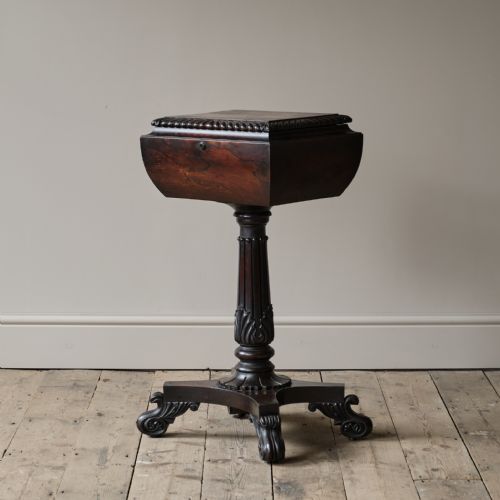
- A pedestal table fitted with a lidded box on top for holding tea. This furniture form became popular during the Regency and Victorian periods.
- Tunbridge Ware
- A type of decorative woodwork characterised by mosaic patterns made from tiny wood blocks. Artisans created detailed pictorial designs by assembling thousands of coloured wood segments.
- Sarcophagus
- A coffin-like shape with a sloping lid utilised for tea caddies and boxes. This architectural form was favoured during the Regency era.
- Escutcheon
- A flat plate surrounding a keyhole that protects the surrounding wood from wear. These mounts are frequently fashioned from brass or bone.
19th Century Caddy Box: Frequently Asked Questions
What is a 19th century caddy box used for today?
These boxes function as decorative storage on desks, sideboards, and dressing tables for small personal items, jewellery, or keepsakes. Their divided interiors lend themselves to organising modern trinkets while retaining historical character in a room.
Placing one on a surface introduces warm timber tones and period metalwork into an interior. They require minimal maintenance beyond regular dusting and occasional conditioning of the wood.
How do I identify a Regency caddy box?
Regency examples frequently display architectural proportions, sarcophagus silhouettes, and precise brass inlay work set into dark rosewood or mahogany. Lion mask handles and heavy ring pulls often appear on pieces from this specific period.
The interiors typically contain two or three fitted wooden or metal compartments with individual lids. Feet frequently take the form of small brass ball or bracket supports lifting the box slightly off the table.
What is Tunbridge inlay on a box?
Tunbridge inlay consists of mosaic decoration formed from thousands of precisely cut wood segments arranged to create geometric or floral pictures. Makers assembled these tiny pieces into blocks before slicing them thinly to veneer the box surface.
This technique requires immense skill and produces a smooth, multicoloured mosaic band around the edges or lid. Pieces featuring this work often bear attribution to known makers of the craft.
Are original keys common with these boxes?
Original keys appear with some frequency, though many antique boxes survive without them due to centuries of displacement. Locks were standard additions for securing expensive tea leaves from domestic staff.
The presence of a working lock and matching key adds historical completeness to the piece. However, absence of a key does not diminish the decorative appeal of the exterior craftsmanship.