




19th Century Brienz
19th century brienz carvings are expressive wooden sculptures and functional items from Swiss workshops that bring remarkable animal character and rustic charm into a room.
19th Century Brienz
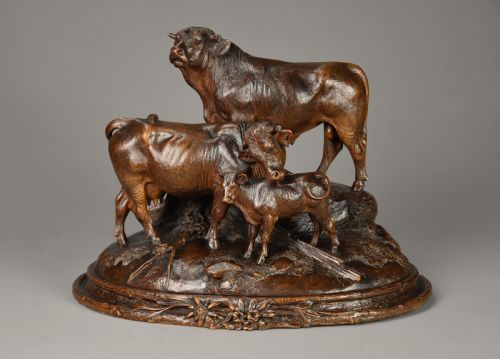
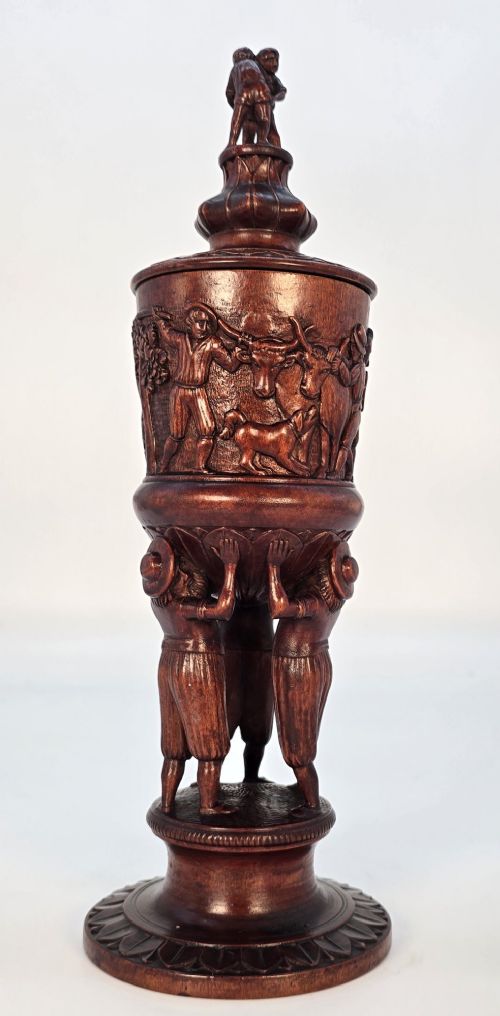
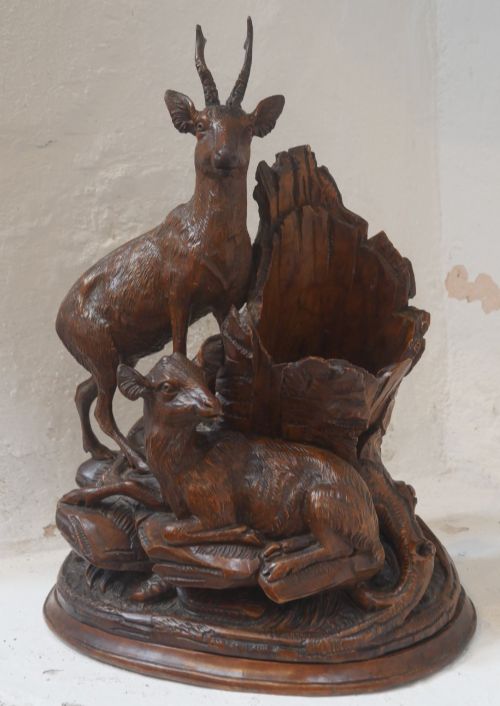
When you search for 19th century brienz, you encounter hand-carved wooden sculptures and utility objects originating from the Swiss woodcarving tradition. These pieces typically take the form of bears, mountain goats, cattle groups, and other alpine fauna rendered with vivid realism.
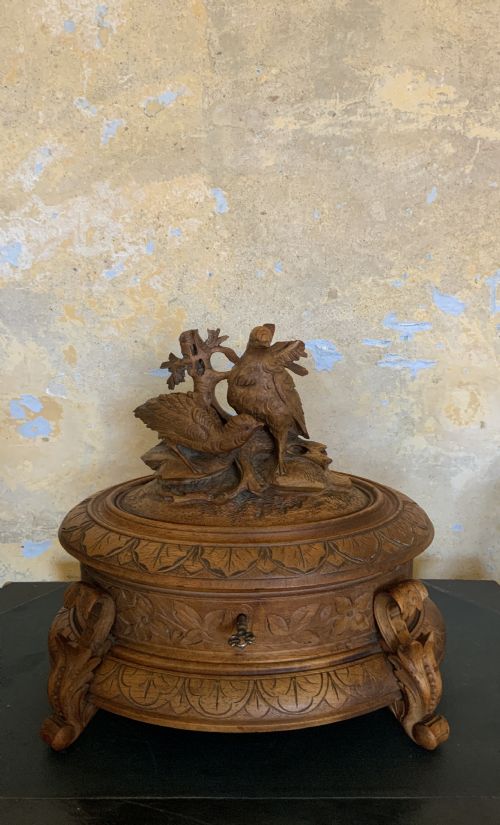
The objects on this page span decorative figures, mantel clocks, humidors, wall hooks, and caskets. Animal subjects dominate the selection, often functioning as practical items such as nutcrackers, inkwells, and stick stands.
Most examples date from the Victorian era up to the early twentieth century, reflecting the peak of Swiss carving craftsmanship. Walnut and linden wood serve as the primary mediums for these detailed works.
How they were made
Carvers utilised soft hardwoods such as linden wood and dense walnut, allowing them to execute intricate fur textures and musculature. These timbers were worked with specialised gouges and chisels to achieve deep undercutting and lifelike proportions.
Many items incorporate secondary materials like horn for claws or eyes, and brass for clock movements and hardware. Surface finishes range from natural wax polishes to darker stains that accentuate the grain of the carved wood.
Listings feature linden wood and walnut across forms including mantel clocks, wall hooks, and tobacco jars.
What varies in quality
The distinction between ordinary and exceptional carving lies in the anatomical precision and the animation of the subject. Master carvers captured tension in limbs and alertness in facial expressions, whereas lesser pieces appear stiff and formulaic.
Depth of relief and cleanliness of the tool work dictate the refinement of a piece. Finer examples retain crisp detailing in fur and foliage without excessive sanding that softens the hand of the maker.
J Huggler
The 19th Century Brienz Glossary
- Black Forest
- A regional style of nineteenth-century woodcarving originating in central Europe and Switzerland, famous for realistic animal subjects and rustic furniture. Bears and alpine wildlife form the core of this tradition.
- Humidor
- A specialised box or jar designed to keep cigars or tobacco at the proper humidity. These containers often take whimsical animal shapes in this carving tradition.
- Chamois
- A species of goat-antelope native to mountains in Europe, frequently depicted in Swiss wood carvings alongside ibex and bears. These mountain animals celebrate the alpine landscape.
19th Century Brienz: Frequently Asked Questions
What animals appear most often?
Bears dominate the subject matter, appearing as standing figures, inkwells, and tobacco holders.
Mountain goats, chamois, and cattle also feature prominently in groups and decorative sculptures.
Were these items purely decorative?
Many pieces served daily functions despite their sculptural appearance. Carvers integrated compartments for tobacco, clocks, and hooks for coats or whips.
Utility merged with novelty so that mantel clocks, inkwells, and nutcrackers doubled as parlor ornaments.
How do I care for carved wood?
Keep wooden carvings away from direct heat sources and strong sunlight to prevent the timber from drying and splitting.
An occasional application of microcrystalline wax maintains the sheen without building up a heavy residue.
How can I tell the age?
Examine the tooling marks under magnification and check the type of wood and secondary materials like brass hardware.
Wear patterns on touch points and the patina of the wax finish offer further clues to the period.