


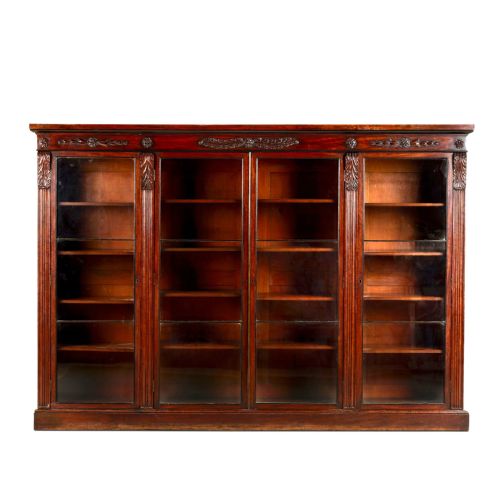
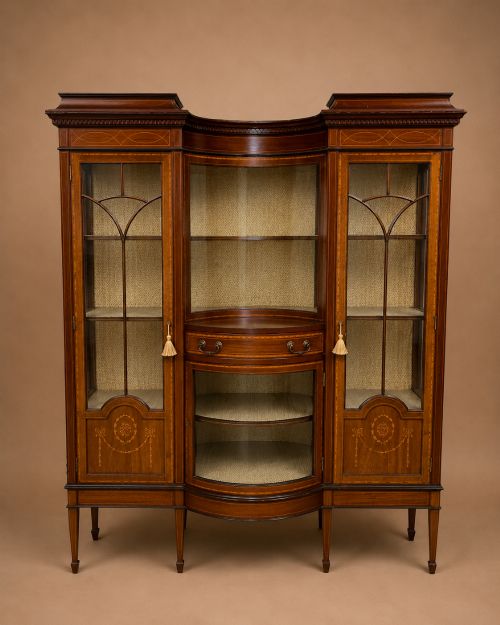
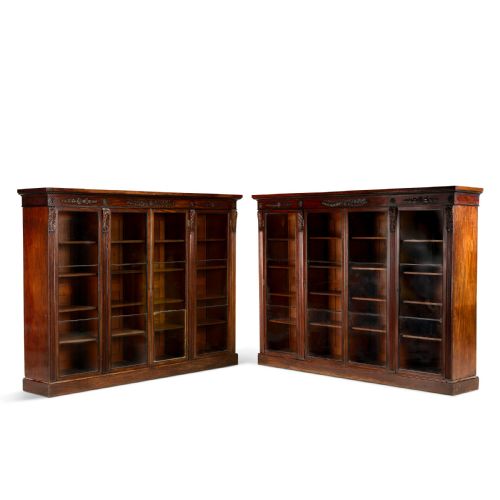
19th Century Breakfront Cabinet
A 19th century breakfront cabinet brings architectural presence and generous display space to a room, prized for its characteristic projecting centre section.
19th Century Breakfront Cabinet
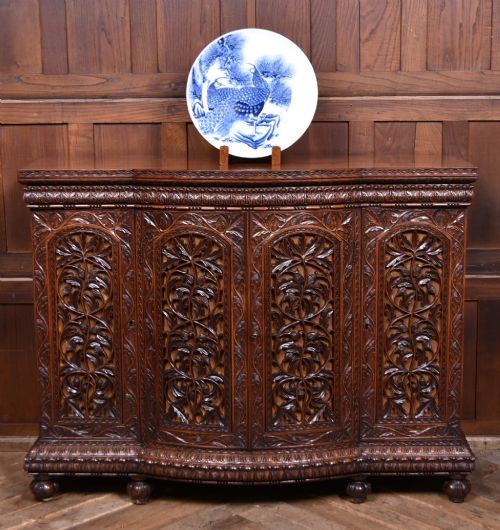
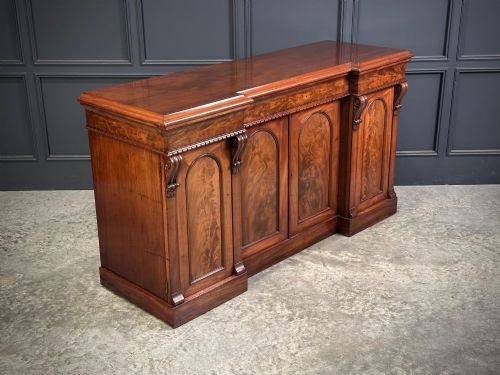
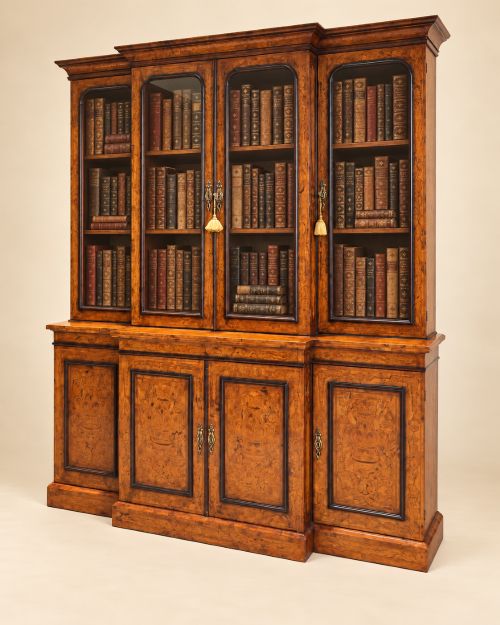
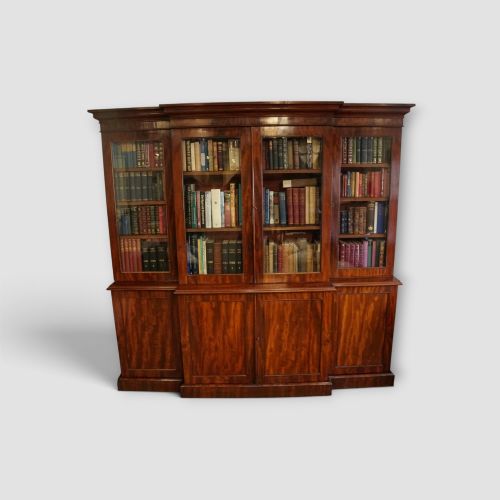
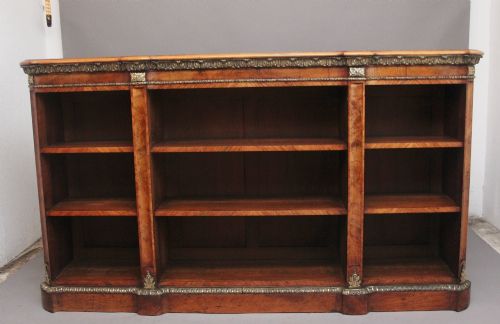
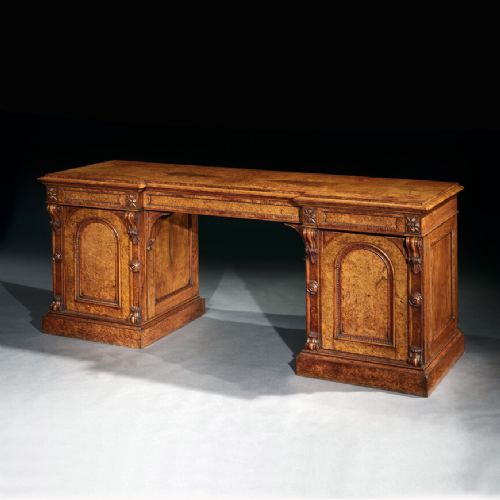
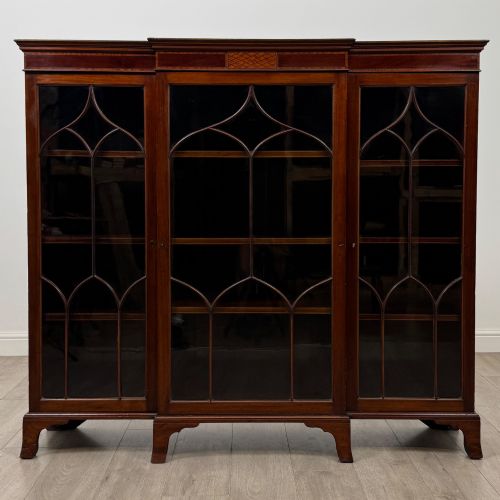
A 19th century breakfront cabinet is a substantial piece of case furniture defined by a central section that projects forward from the flanking wings. When searching for this form, buyers encounter variants ranging from tall glazed bookcases and open library shelves to lower credenzas and side cabinets.
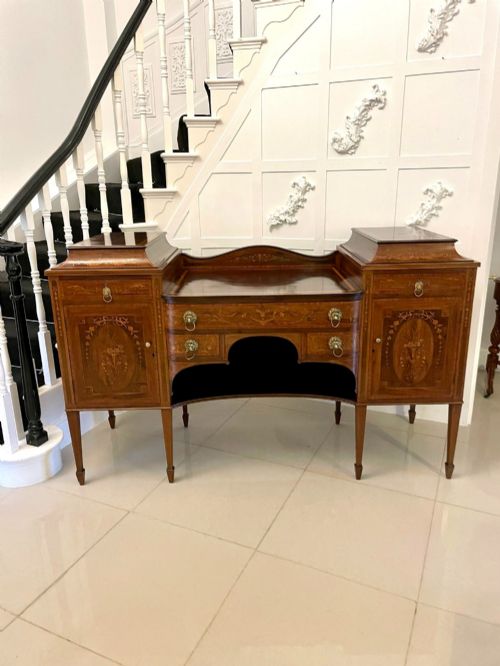
The pieces appearing on this page span the 19th century, drawing on Victorian, Regency, and William IV eras. Makers of these periods employed styles that varied from classical architectural proportions to Gothic Revival influences and Sheraton Revival marquetry.
Most examples are constructed with multiple doors or sections, often housing adjustable shelves behind glass or solid timber panels. The architectural staggered front creates deep shadow lines that give these cabinets a commanding physical presence in a library, dining room, or drawing room.
Materials and Construction
Cabinetmakers built these pieces using robust native and exotic timbers, most notably figured mahogany, walnut, and burr walnut. Secondary decorative treatments involved rosewood, satinwood, amboyna, and ebonised wood veneers applied over sound structural carcases.
Mounts in cast or chased ormolu, brass grilles to door panels, and detailed marquetry inlay appear frequently across the better workshops. Marble tops and Sevres porcelain panels also feature on specific credenza and side cabinet formats from the period.
The furniture includes styles spanning Regency, William IV, Victorian, and Gothic Revival periods.
Craftsmanship and Proportion
Quality in a breakfront cabinet rests in the selection of timber veneers, such as richly figured flame mahogany or highly patterned burr walnut matched across the expansive door surfaces and central projection. The treatment of architectural details, from crisply carved mouldings to finely fitted brass grilles and ormolu mounts, separates standard production from exceptional work.
Internal joinery, the precise movement of large doors, and the integration of adjustable shelving demonstrate the standard of the cabinetmaker's workshop. Pieces bearing signatures or stamps from documented makers command attention through their superior structural integrity and refined proportions.
Hewetsons London·Johnstone and Jeanes·Jas Shoolbred·Gillows·Lamb of Manchester
The 19th Century Breakfront Cabinet Glossary
- Breakfront
- A cabinet design where the central section extends further forward than the left and right sections. This configuration breaks up the flat plane of a long wall and adds architectural depth.
- Marquetry
- Decorative patterns formed by fitting together thin veneers of different coloured woods, ivory, or metal. It is commonly seen on the friezes and door panels of late Victorian cabinets.
- Ormolu
- Gilded bronze used for decorative mounts, feet, and key escutcheons on high-status 19th-century furniture. It provides a bright metallic contrast against dark timbers like walnut and mahogany.
- Ebonised
- Timber treated with a chemical stain or finish to imitate ebony. This dark, uniform surface was favoured for dramatic contrast in late 19th-century cabinet work.
19th Century Breakfront Cabinet: Frequently Asked Questions
What is a breakfront cabinet?
A breakfront cabinet is a large piece of furniture featuring a central section that steps forward from the flanking sides. This architectural arrangement creates distinct vertical sections across the front.
Cabinetmakers used this layout for bookcases, sideboards, and display cabinets throughout the 19th century. The design breaks the monotony of a flat wall and provides varied depths for interior storage.
How were these cabinets used?
These cabinets served primarily to store and display valuable books, porcelain, and household silver in formal rooms. Tall bookcases lined private libraries and drawing rooms, while lower credenzas sat in dining rooms and parlours.
Glass-fronted doors protected delicate volumes from dust and soot while keeping them visible. Solid wood lower sections concealed less decorative household items.
Where should I place one?
A breakfront cabinet requires a substantial wall with adequate clearance to accommodate its projecting centre and wide footprint. Placing it in a principal room allows the architectural proportions to anchor the space.
Because many examples incorporate glass doors or open shelving, positioning them away from direct, harsh sunlight protects antique timber veneers and paper contents. Adequate lighting helps reveal the grain patterns in the mahogany or burr walnut.
How do I identify the period?
Period identification relies on observing the combination of timber choices, decorative motifs, and construction techniques. Regency pieces often utilise clean lines and flame mahogany, while Victorian cabinets frequently employ burr walnut, heavy ormolu mounts, and complex marquetry.
Cabinet construction methods inside the carcase, such as hand-cut dovetails and the style of shelf adjustments, further help distinguish early 19th-century examples from later Victorian reproductions.