




19th Century Bonheur Du Jour
When buying a 19th century bonheur du jour, collectors secure a refined ladies writing desk equipped with tiers, drawers and compartments.
19th Century Bonheur Du Jour
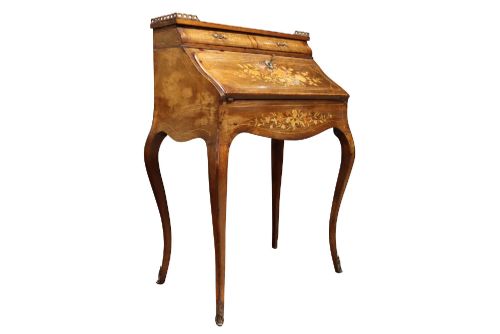
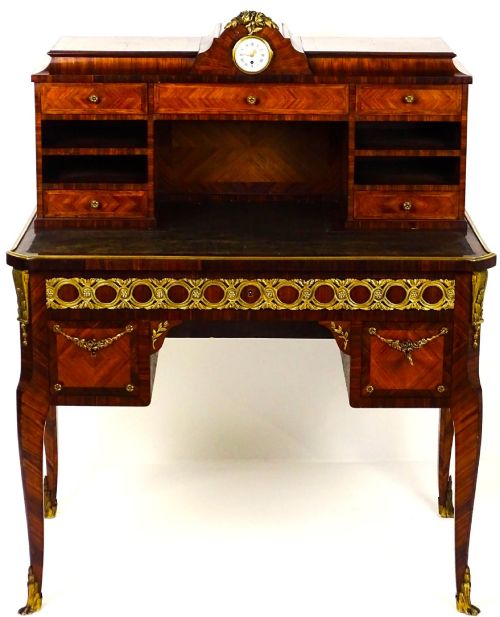
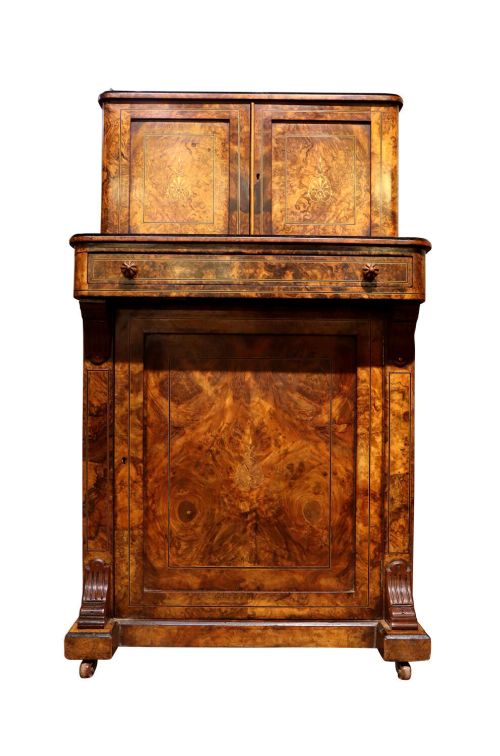
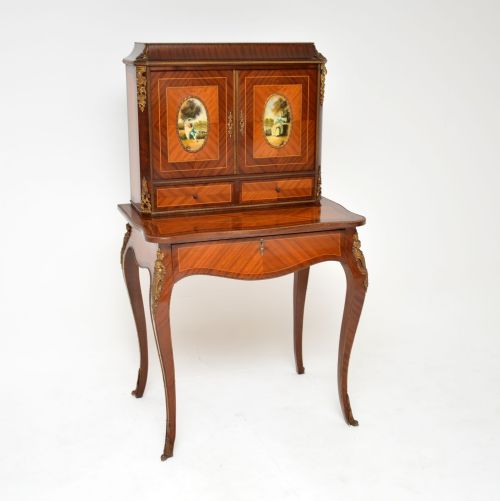
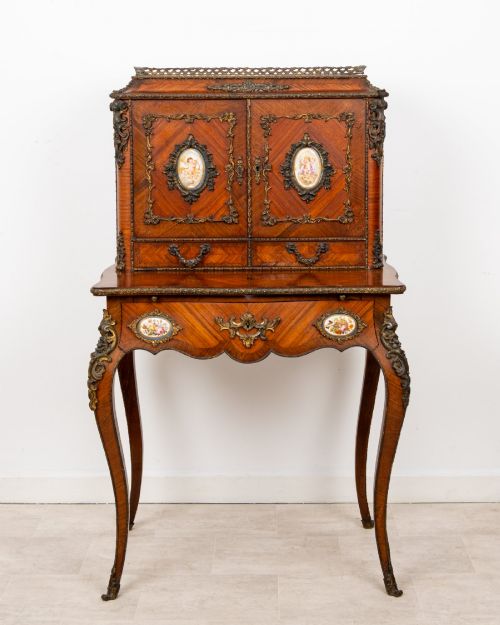
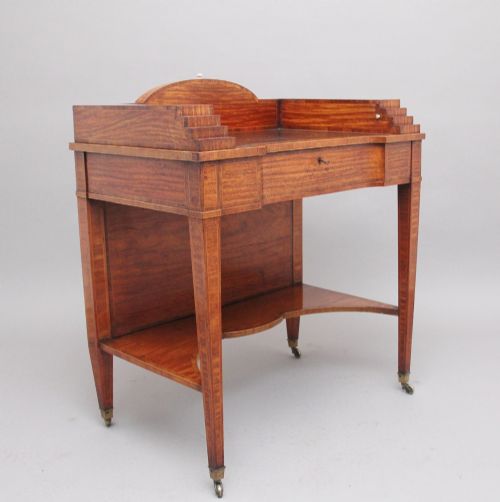
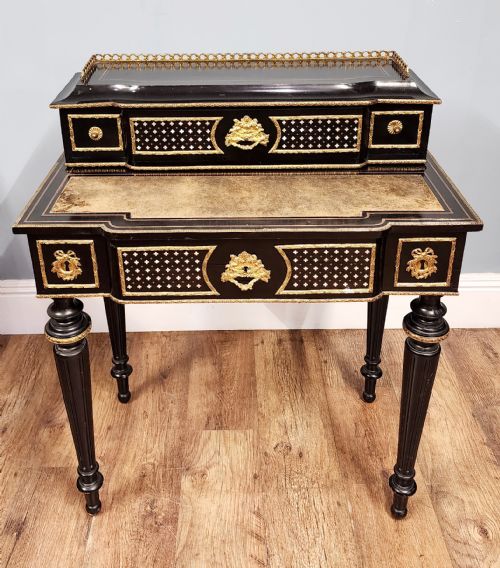
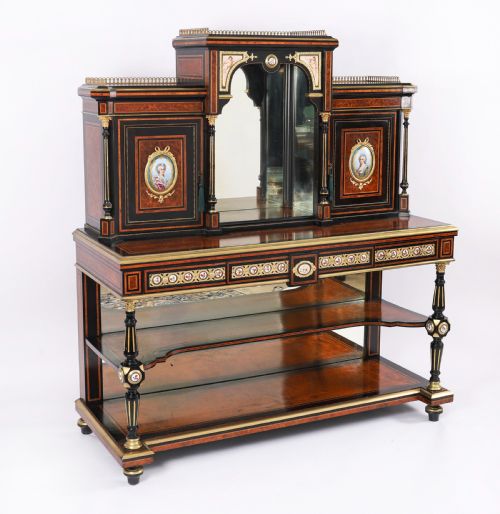
A 19th century bonheur du jour is a small, light writing desk designed for ladies, incorporating a superstructure of shelves, drawers, and small cupboards above the writing surface. These pieces emerged from French workshops and crossed into English interiors during the Regency period and the Victorian era, remaining popular through the close of the nineteenth century.
The versions met on this page span several stylistic revivals, notably Louis XV, Louis XVI, and Napoleon III tastes, alongside Sheraton influences. Most examples take the form of writing cabinets or bureaus de dame, executed in French styles or English cabinet-making traditions from the 1850s to the 1890s.
While many take traditional freestanding forms, variations include pieces with sliding cylinders, pull-out leather-lined writing slides, and integrated porcelain plaques. They serve as compact writing stations or display furniture in domestic settings.
How They Were Made
Cabinet-makers constructed carcases from native timbers like mahogany, walnut, and satinwood, or applied exotic veneering including kingwood, rosewood, amboyna, and burr walnut. Marquetry and parquetry patterns created intricate floral or geometric designs across the surfaces.
Gilt bronze and ormolu mounts framed panels, corners, and legs, often paired with brass inlay or Vernis Martin lacquered scenes. Ceramic elements such as Sevres-style porcelain plaques appeared inset into doors and superstructures.
Interiors frequently contained leather-lined writing surfaces, small pigeonholes, and concealed secret drawers operated by hidden spring mechanisms.
The furniture spans Louis XV, Louis XVI, and Napoleon III revival styles alongside Victorian cabinet-making.
What Varies in Quality
The standard of timber selection and veneer matching defines the baseline of a piece, with figured burr woods, amboyna, and detailed marquetry indicating elevated craftsmanship. The crispness of cast ormolu mounts and the precision of their chasing distinguish exceptional workshops from standard production.
Attribution to documented makers or retail houses elevates the standing of individual pieces, seen in marked examples from established makers. The integration of specialised decorative elements, such as hand-painted Vernis Martin panels or hand-painted porcelain plaques, elevates the complexity of the construction.
Paul Sormani·John MaClean·Adriano Brambilla·Edwards & Roberts·Gillows
The 19th Century Bonheur Du Jour Glossary
- Bonheur du jour
- A small ladies writing desk featuring a raised tier of pigeonholes and drawers on the writing surface, translating from French as day of joy.
- Ormolu
- Gilt bronze mounts applied to furniture for decoration, cast and chased with intricate detail before receiving a gold wash.
- Marquetry
- The art of applying pieces of veneer to a structure to form decorative patterns and pictorial scenes.
- Vernis Martin
- A type of simulated Japanese lacquer developed in France, utilising successive layers of varnish to create glossy decorative panels.
- Bureau de dame
- A French term for a ladies desk, often taking the form of a bonheur du jour or small slope-front writing cabinet.
- Secretaire
- A piece of furniture containing a writing drawer or a fold-down writing flap concealing fitted compartments.
19th Century Bonheur Du Jour: Frequently Asked Questions
What is a bonheur du jour?
A bonheur du jour is a small, decorative ladies writing desk featuring a tiered superstructure above the main writing surface.
These pieces were designed for correspondence and light administrative tasks rather than heavy business use.
How were they used?
Owners utilised these desks in private boudoirs and drawing rooms for writing letters, storing stationery, and displaying small ornaments.
The raised shelves and cabinets kept writing materials and personal items organised within easy reach.
Where were they made?
Many examples originate from French cabinet-makers working in Paris during the nineteenth century under various revival styles.
At the same time, English workshops produced similar forms influenced by French design or native Sheraton traditions.
How do I care for one?
Maintain these desks by keeping them away from direct sunlight and steady heat sources to protect delicate veneers and wood timbers.
Dust surfaces gently with a dry cloth and preserve leather writing inserts with appropriate specialist treatments.