

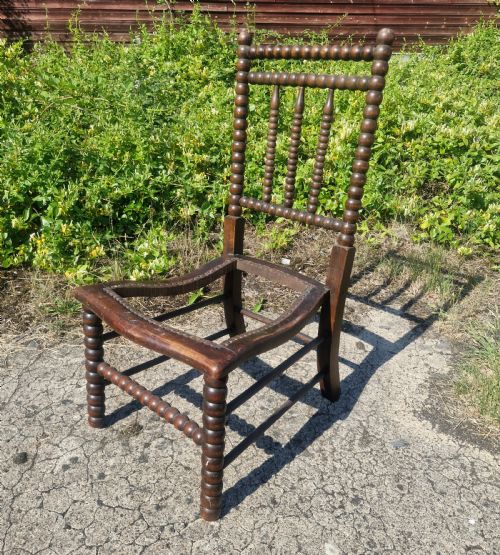


19th Century Bobbin Chair
A 19th century bobbin chair brings rhythmic turned spindles and robust vernacular character into a room.
19th Century Bobbin Chair
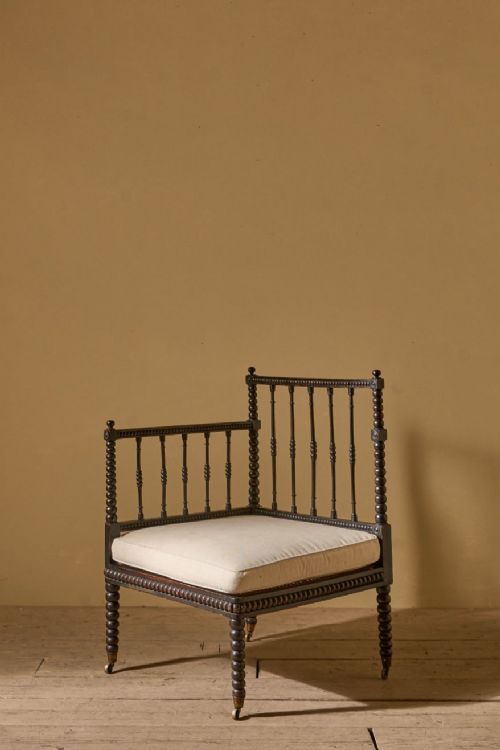
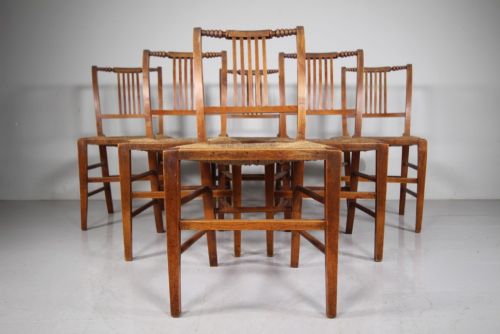
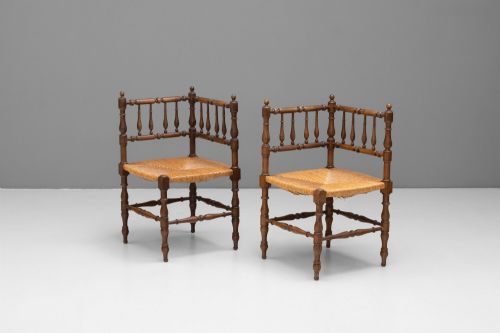
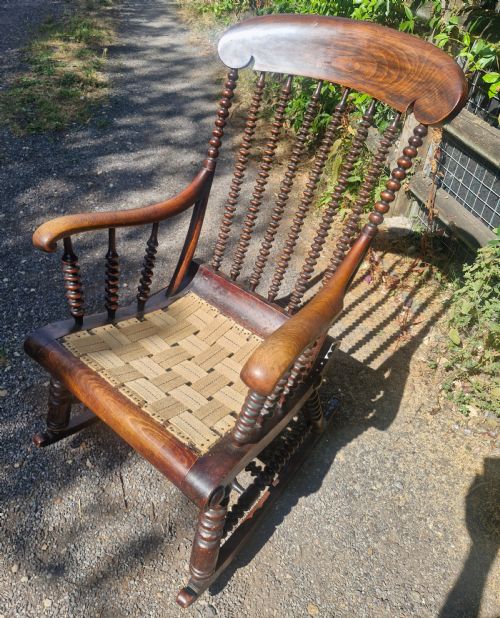
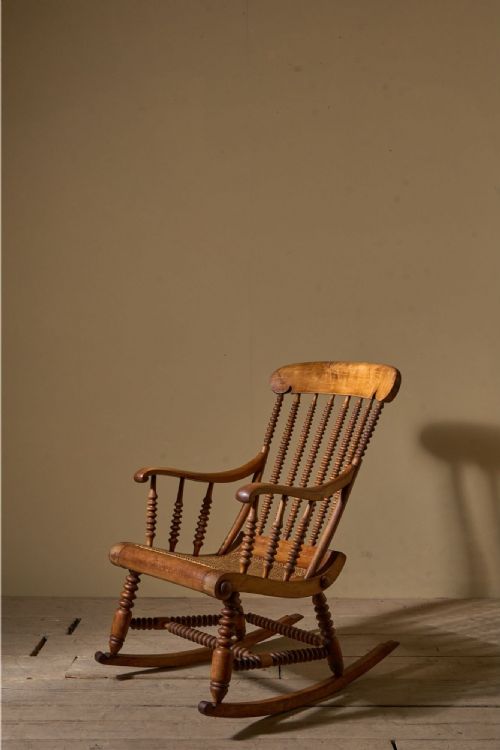
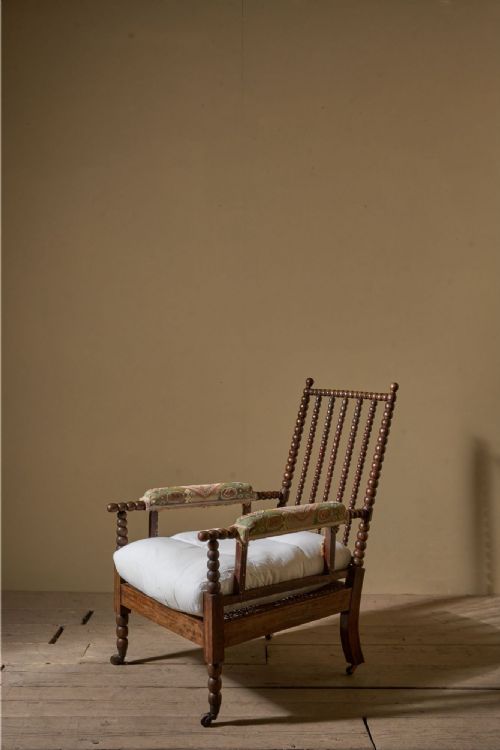
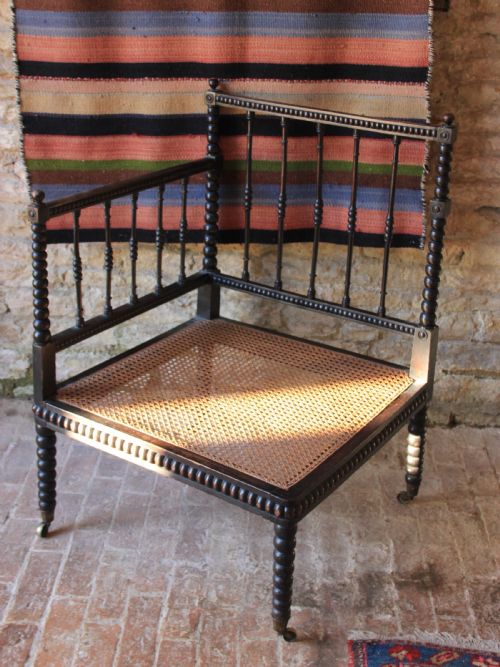
A 19th century bobbin chair uses distinct spool-shaped or turned wooden profiles across its frame, forming uprights, stretchers, and armrests that catch the light. You will frequently encounter armchairs, rocking chairs, and corner chairs built in this manner, often originating from English country workshops or Scandinavian folk traditions.
Beyond standard seating, the listings reveal daybeds, slipper chairs, and children's versions utilising the same repetitive turned vocabulary. These pieces bridge formal revival styles and rustic utility, appearing in ebonised finishes, simulated rosewood, or pale native timbers.
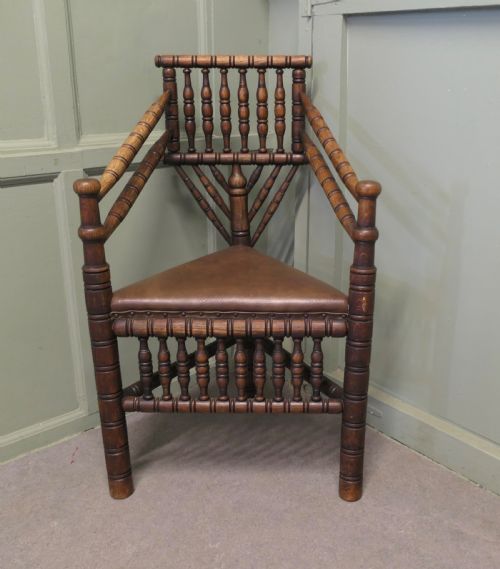
The form draws on much older vernacular traditions, specifically seventeenth-century turner's chairs, reinterpreted through Victorian revivalism and continental folk art. Choosing one means introducing a piece of functional sculpture where the turned woodwork dictates the entire visual weight.
How they were made
Turned components dominate the construction, shaped on a lathe to create the characteristic series of rounded knobs that give the bobbin chair its name. Woods like oak, ash, elm, beech, and walnut provide the structural integrity required for these slender, repeating profiles.
Surfaces frequently receive special treatment, such as ebonising or faux rosewood graining, to imitate more expensive exotic hardwoods. Seating areas integrate cane webbing, rush, fabric, or upholstered pads resting on sturdy wooden frames.
The archive reveals regional variations, including Scandinavian folk art pieces and English country iterations sharing the same distinctive spool-turned vocabulary.
What varies in quality
The crispness and uniformity of the lathe work define the initial tier of distinction, separating precise regional turning from looser provincial execution. Dense timbers like oak and walnut maintain sharper details along the spool profiles compared to softer woods.
Proportion and structural retention also dictate worth, as slender turned framing can suffer from looseness over decades of use. Examples retaining original surface treatments, such as ebonising or brass cup castors, present a more unified historical character.
Liberty & Co
The 19th Century Bobbin Chair Glossary
- Bobbin turning
- A form of woodwork where a lathe shapes a continuous series of rounded, spool-like spheres along a wooden shaft. This technique provides the primary decorative element for the entire chair frame.
- Ebonised wood
- Timber treated with a dark stain or chemical process to imitate expensive ebony. This finish was common in nineteenth-century workshops to create a formal contrast against lighter interiors.
- Rush seating
- Woven marsh grass or sedge utilised to form a resilient, textured seat pad. It appears frequently on vernacular chairs alongside cane and upholstered options.
- Turner's chair
- A sturdy, heavy armchair constructed almost entirely from turned wooden spindles and members. The 19th century style draws direct inspiration from these earlier sturdy forms.
- Simulated rosewood
- A painted or stained surface treatment applied to common timbers to replicate the rich grain and colour of genuine rosewood. Makers utilised this method to achieve a decorative aesthetic affordably.
19th Century Bobbin Chair: Frequently Asked Questions
What is a bobbin chair?
A bobbin chair is a seat constructed with frame members shaped on a lathe to resemble a string of spools or bobbins. This distinct turning method creates a repetitive, decorative profile across the legs, arms, and back.
These chairs emerged in various forms during the nineteenth century, drawing inspiration from seventeenth-century furniture traditions and European folk art.
How were bobbin chairs used?
These pieces served multiple domestic functions, appearing as fireside armchairs, bedroom seats, rocking chairs, and corner chairs. Their sturdy construction suited daily use in country houses and parlours alike.
Specific variants like daybeds, children's seats, and slipper chairs extended their utility into different rooms of the nineteenth-century home.
How do I style a bobbin chair?
A bobbin chair introduces strong vertical and horizontal rhythm through its turned spindles, making it an effective accent piece in minimalist or traditional interiors. Placing the chair where light can catch the profile of the bobbins highlights the lathe work.
Pairing the chair with plain walls or simple textiles allows the complex wooden frame to remain the visual focal point of the room.
How can I tell the period of a bobbin chair?
Dating relies on examining the timber species, secondary framing materials, and the style of the turning. Nineteenth-century examples often incorporate ebonised finishes, brass castors, or revival aesthetics like the Saxon or Gothic styles.
Construction methods, tool marks hidden beneath the frame, and the type of rush or cane work also provide clues to whether a piece originates from the early, mid, or late nineteenth century.