



1960s Gold Pearl Necklace
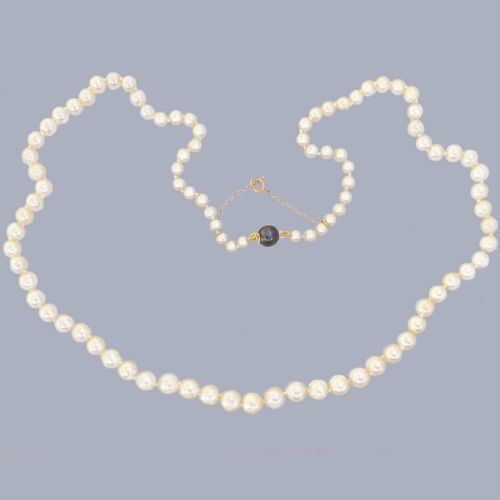
A 1960s gold pearl necklace brings together lustrous cultured pearls and precious metal clasps characteristic of mid-century design.
1960s Gold Pearl Necklace
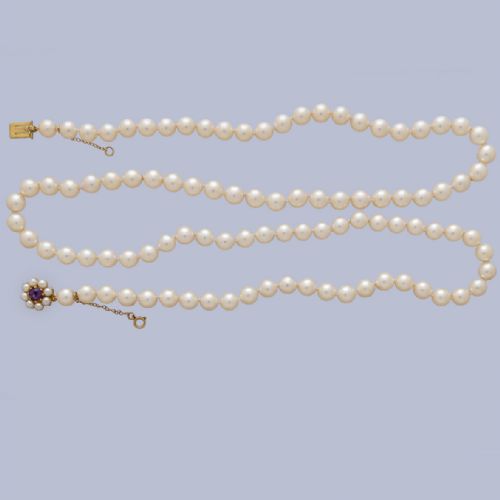
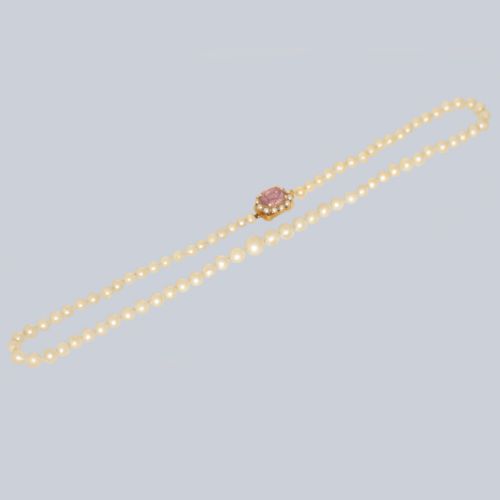
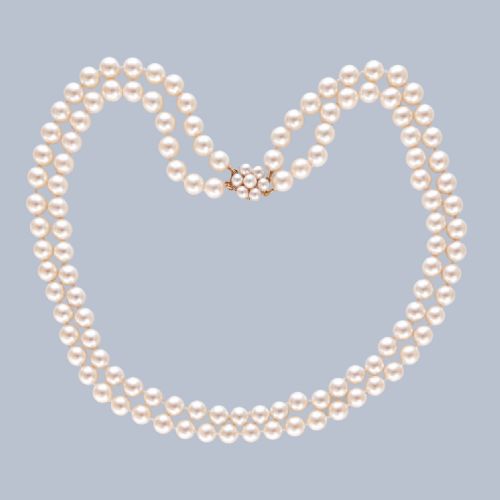
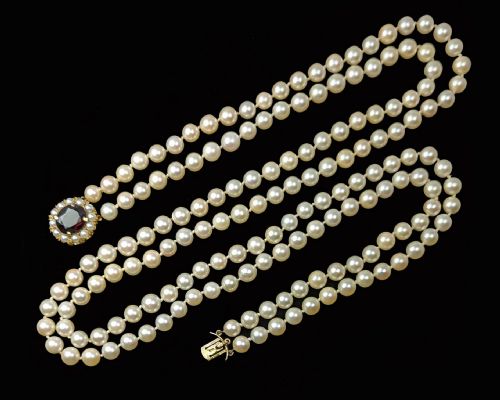
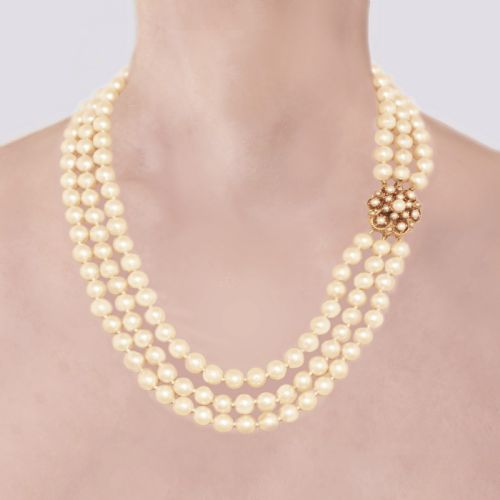
A 1960s gold pearl necklace encompasses single strands, double strands, triple strands, and long graduated lengths originating from the mid-century period. These necklaces typically combine cultured pearls with secure clasps fashioned from yellow gold, often enhanced by gemstones.
The variants encountered on this page range from short chokers to long multi-strand configurations. Gemstone-set clasps featuring garnet, amethyst, sapphire, diamond, or ruby provide decorative focal points that distinguish individual pieces.
Materials and Construction Techniques
These pieces are constructed using cultured pearls strung on silk thread, frequently secured by hand knotting between individual pearls to protect the strand. Clasps are manufactured from 9ct or 18ct gold, and occasionally platinum, utilising traditional jeweller assembly methods.
Metal components incorporate hallmarking from assay offices such as London and Birmingham, confirming the gold standard and year of production within the 1960 decade.
1960s Gold Pearl Necklace Retail Price Guide 2026
Typical asking prices for 1960s gold pearl necklace among the pieces listed under this phrase on Sellingantiques today, from the lower quarter to the upper quarter. They describe what is for sale here now, not the wider market.
Listings feature 9ct gold, 18ct gold, and platinum alongside cultured pearls, garnets, amethysts, sapphires, diamonds, and rubies from the 1960s.
Factors Distinguishing Quality
The quality of a piece rests upon the uniformity and lustre of the cultured pearls, alongside the complexity of the gold clasp work. Master jewellers employed intricate floral clusters, abstract forms, and multi-gemstone settings that elevate the status of the clasp.
Evidence of professional re-stringing and the presence of certified gemstones or Birmingham and London assay hallmarks further differentiate standard commercial production from finer designer output.
Cropp & Farr
The 1960s Gold Pearl Necklace Glossary
- Cultured pearl
- Pearls formed with human intervention by inserting a nucleus into an oyster, resulting in the nacre layers seen in these necklaces. They form the primary material body of mid-century pearl jewellery.
- Graduated
- Pearls arranged in a sequence where the size decreases progressively from the centre front towards the clasp. This technique requires careful sorting of pearls by diameter.
- Choker
- A short necklace style designed to fit closely around the base of the neck, commonly seen in double strand configurations from the 1960s.
- Hallmark
- An official stamp applied by an assay office indicating the purity of the precious metal and the year of manufacture. London and Birmingham offices appear frequently on these clasps.
- Silk thread
- The traditional fibrous material used to thread pearls, allowing the necklace to drape flexibly while maintaining strength between individual beads.
1960s Gold Pearl Necklace: Frequently Asked Questions
How do I wear a multi-strand pearl necklace?
Multi-strand pearl necklaces suit formal attire and high-neck garments, resting flat against the collarbone or chest depending on the length.
The prominent clasps, often set with garnets, amethysts, or diamonds, can be worn positioned at the back of the neck or turned to the front as a feature pendant.
Are these pearls natural or cultured?
The pearls listed on this page are cultured pearls and natural seed pearls formed during the mid-twentieth century.
Cultured varieties display the consistent size and reliable lustre typical of 1960s pearl production techniques.
What gold purities are used in these clasps?
The clasps on these necklaces are predominantly cast in 9ct gold, with select pieces utilising 18ct yellow gold or platinum settings.
Assay office hallmarks stamped onto the gold components verify the specific metal standard used by the maker.
How should I care for a vintage pearl necklace?
Pearls require gentle cleaning with a soft cloth and protection from household chemicals, perfumes, and cosmetics that can degrade the nacre and silk thread.
Periodic re-stringing on silk thread prevents strand breakage, particularly for longer or multi-strand necklaces subject to regular wear.