




1960s Gold Dress Ring
A 1960s gold dress ring brings substantial stones and sculptural mid-century styling together for daily wear.
1960s Gold Dress Ring
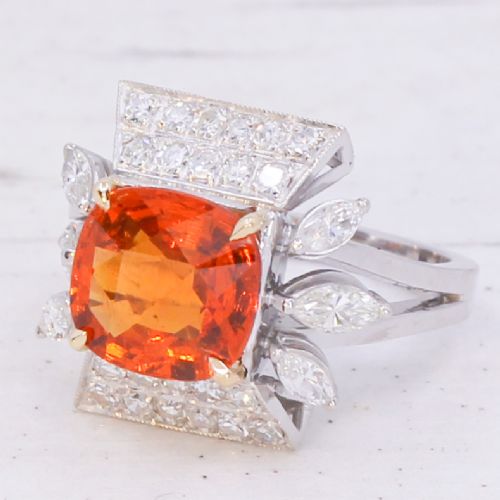
A 1960s gold dress ring is a statement piece built around significant central gems like aquamarine, amethyst, sapphire, or diamond, often styled as a cocktail or cluster ring. These pieces reflect mid-century and modernist aesthetics, encompassing bold geometry alongside revivalist details.
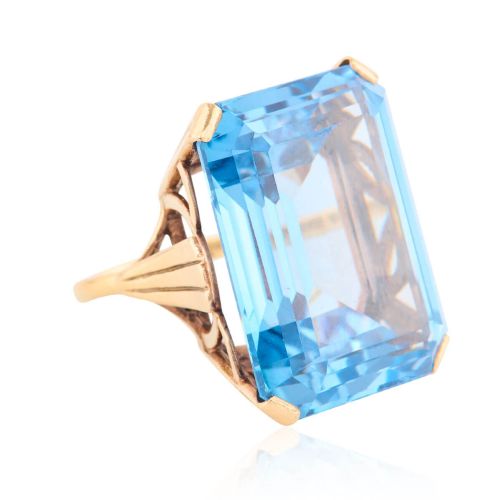
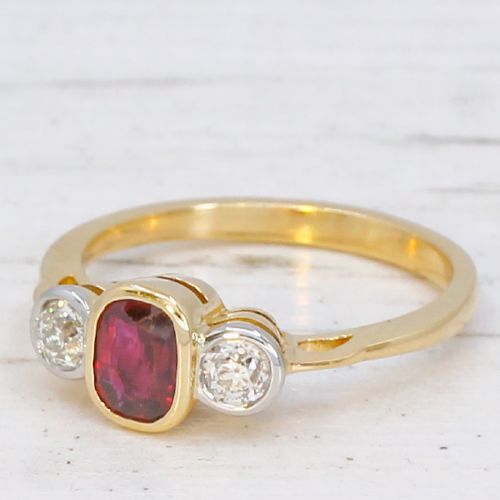
The selection on this page centres primarily on the 1960s, featuring variations in 9ct and 18ct yellow or white gold, platinum settings, and Italian goldsmithing. Many examples showcase large, colourful stones held in substantial metalwork designed to catch the eye.
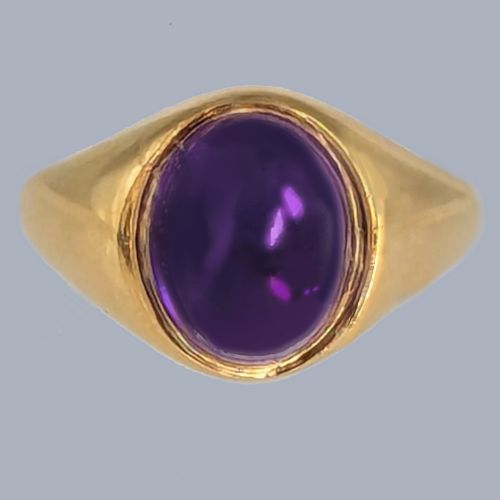
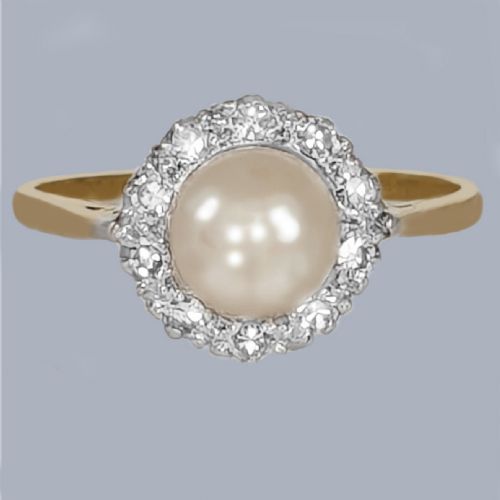
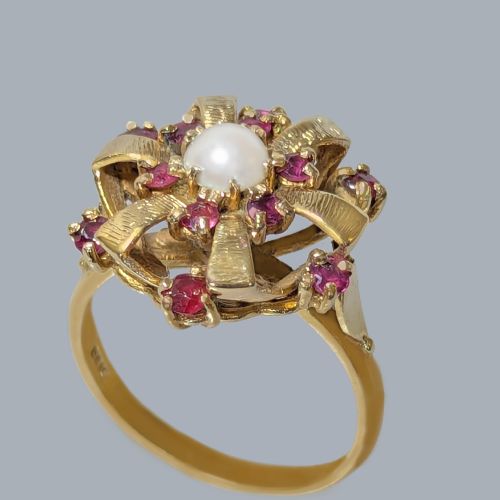
Buyers encounter everything from delicate pearl cluster configurations to heavy cabochon amethyst solitaires and intricate scrolled open-work designs. These rings span minimalist single-stone settings to complex ballerina and crossover arrangements.
How they were made
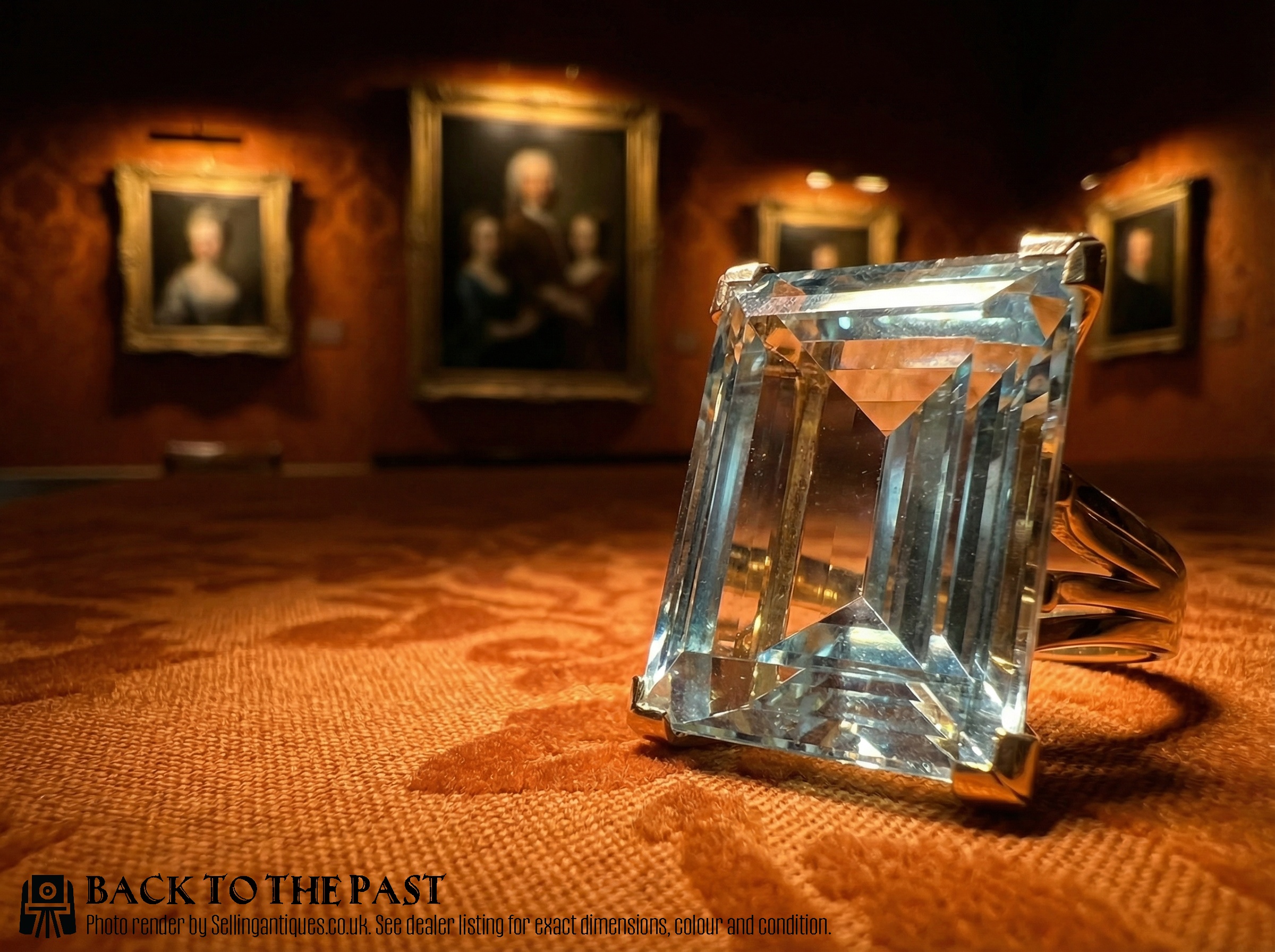
Goldsmiths of the period employed both yellow and white gold alongside platinum, casting robust mounts to secure heavy gemstones such as multi-carat aquamarines and emeralds. Setting techniques varied from secure prong arrangements to precise lattice and open-work frames.
The construction relies heavily on the pairing of high-carat gold with contrasting diamonds and coloured stones, utilising solid shanks and substantial basket settings to support large focal gems.
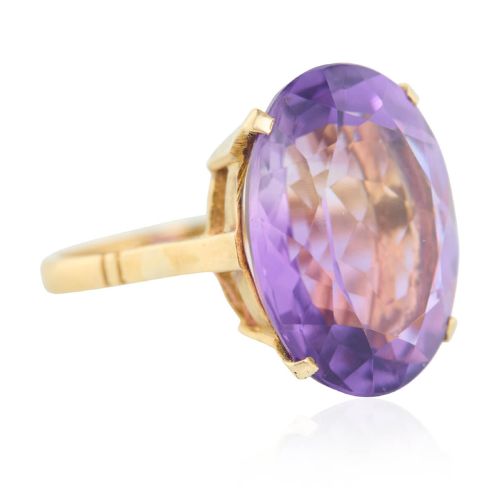
One exceptional ring packs a massive 22.17 carat amethyst solitaire, proving the sixties took go-big-or-go-home very seriously.
What varies in quality
Quality rests in the presence of unheated or certified natural gemstones, the weight and purity of the gold, and the complexity of the mid-century metalwork. Substantial carat weights in clean rubies, sapphires, and emeralds elevate a piece significantly.
Execution of design distinguishes standard production from superior examples, particularly in intricate modernist lattice work, Italian scrolled open-work, and balanced cluster geometry that maintains structural integrity alongside visual impact.
The 1960s Gold Dress Ring Glossary
- Cocktail Ring
- A large, prominent ring designed to draw attention during evening social events. These pieces typically feature oversized central gemstones surrounded by smaller diamonds.
- Cabochon
- A gemstone shaped and polished with a smooth, rounded surface rather than faceted edges. This cut is frequently utilised for opaque or translucent stones like amethysts and opals.
- Ballerina Ring
- A cluster design featuring a central oval or round gemstone encircled by tapered baguettes or radiating diamonds. The silhouette resembles the tutu of a ballerina.
- Crossover Ring
- A style where the shank sweeps up and crosses over the top of the finger, often holding two opposing stones in atoi-et-moi arrangement.
- Paste
- Hand-cut glass or lead crystal used to simulate precious gemstones. High-quality historical paste shows exceptional brilliance and careful foil backing.
1960s Gold Dress Ring: Frequently Asked Questions
What defines a 1960s gold dress ring?
These rings are characterised by bold mid-century design, substantial gold weight, and prominent central gemstones. They reflect the experimental design ethos of the era through textured metals and unconventional stone pairings.
Buyers find everything from simple single-stone amethyst designs to elaborate diamond and sapphire clusters created for evening wear.
How do I care for my vintage gold ring?
Regular cleaning in warm soapy water maintains the brilliance of the metal and stones, though softer gems like pearls and opals require gentle handling. Professional checks ensure the prongs holding large stones remain secure.
Store each ring separately in a lined box to prevent scratching between harder diamonds and softer coloured stones.
Are these rings suitable for daily wear?
Many of these pieces utilise sturdy 18ct or 9ct gold settings built to withstand regular use. However, rings featuring softer organic materials or high-carat emeralds benefit from mindful wearing habits.
Removing the jewellery during heavy manual tasks protects the intricate metalwork and prevents impact damage to prominent central gems.
How can I tell a 1960s ring apart from earlier styles?
Mid-century pieces lean towards architectural modernist lines, abstract open-work, and asymmetrical forms that depart from strict Edwardian or Art Deco symmetry. Hallmarks and specific manufacturing techniques help confirm the exact decade.
The use of textured yellow gold finishes and distinct cluster arrangements also points directly to mid-century craftsmanship.