





1960s French Canvas Art
These 1960s French canvas art works bring mid-century Paris and the French provinces straight to your walls with bold oil paint textures.
1960s French Canvas Art
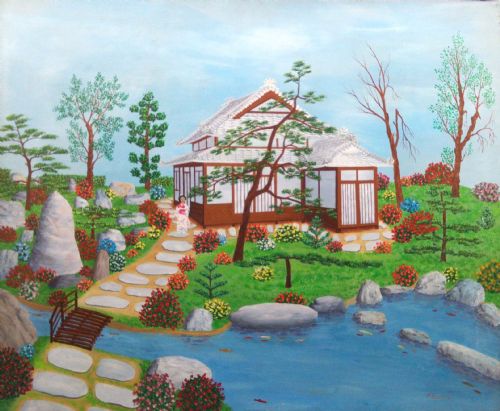
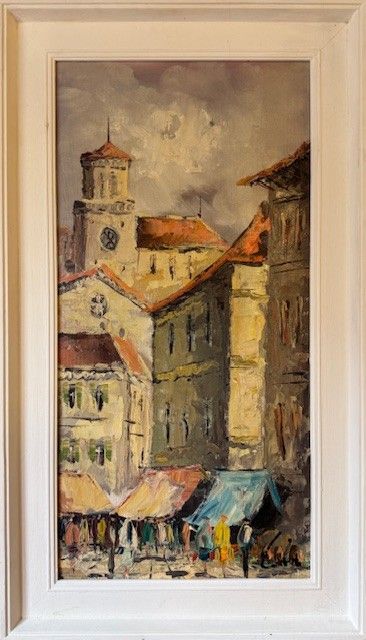
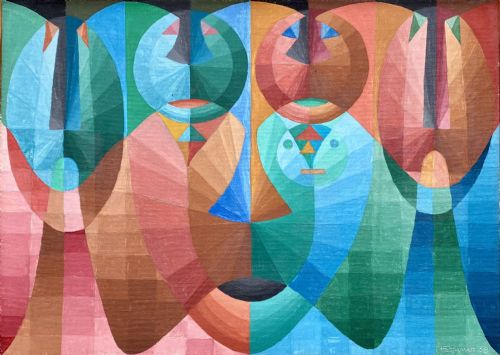
When you search for 1960s french canvas art, you are looking at mid-century paintings that capture the vibrancy of France through a canvas medium. These pieces span styles from naive outsider art and abstract impressionism to mid-century modernism, french expressionism, and op art.
The works you will encounter on this page range from lively market squares and Parisian river scenes to dynamic horse racing at Longchamp and abstracted still life arrangements. They bring mid-century French aesthetic directly into modern interiors through genuine period paintings.
Makers and artists represented include figures like Raymond Picque, Gabriel Dauchot, Ron Folland, and Christian Caillard alongside capable outsider artists. Each painting records a specific viewpoint on French life during the nineteen sixties, rendered in oil.
How They Were Made
These works are executed primarily in oil paint applied to woven canvas supports, utilising the rich texture and slow drying time of the medium to build depth. Many canvases remain secured within their original wood frames, completing the mid-century presentation.
Techniques vary from the thick, expressive brushwork of French expressionist and outsider compositions to the precise geometric arrangements seen in op art. Artists employed a palette ranging from muted rustic tones to vibrant jazzy hues depending on the specific modernist movement.
Listings feature works exclusively in oil paint on canvas, spanning styles from naive outsider art to precise op art geometry.
What Varies in Quality
The distinction between works rests on the confidence of the brushwork and the strength of the composition, whether handling a bustling city street or a quiet still life. Named artists with documented exhibition histories or group affiliations command greater attention than anonymous creators.
Preservation of the original oil paint surface and the character of the accompanying wood frame contribute significantly to the overall presence of the piece. The ambition of the subject matter, from simple domestic scenes to complex panoramic river views, shapes the impact of the work.
Raymond Picque·Gabriel Dauchot·Ron Folland·Christian Caillard
The 1960s French Canvas Art Glossary
- Canvas
- A heavy woven fabric used as a surface for painting. It provides a textured base that holds thick layers of oil paint.
- Expressionism
- An artistic style where the artist distorts reality for emotional effect. In these works, it manifests through dynamic brushwork and energetic colour choices.
- Naïve art
- Work created by self-taught artists often characterised by a childlike simplicity in perspective and proportion. It offers an unvarnished view of subjects like rural barns and harbour building.
- Op art
- A style of visual art that uses optical illusions through geometric patterns. These pieces employ abstract forms to create a sense of movement on the canvas surface.
- Mid-century modern
- The design and art movement spanning roughly the middle decades of the twentieth century. It prioritises clean lines, bold abstraction, and modernist sensibilities.
1960s French Canvas Art: Frequently Asked Questions
How do I hang a heavy framed canvas?
Ensure your wall fixings match the weight of both the canvas and its wooden frame. Use picture wire rated well above the painting's actual weight.
Position the work at eye level to replicate gallery standards and keep it away from direct heat sources that might affect the oil paint.
Are these paintings signed by the artist?
Many of these mid-century works bear signatures from documented painters or group founders, while others remain by anonymous hands. Attribution depends on legible signatures and historical records.
Unsigned pieces rely on style, material evidence, and subject matter to establish their mid-century French origin.
How do I clean oil paint on canvas?
Dust the surface gently with a soft, dry brush to remove loose particles without disturbing the textured oil paint layers. Avoid water and chemical solvents entirely.
Professional conservation is required for deep cleaning or repairing tears in the canvas support.
What rooms suit mid-century French art?
These colourful canvases fit well in living spaces, studies, and dining rooms where their bold palettes can anchor the interior design. Mid-century modern furniture complements the period aesthetic.
Pair abstract geometric pieces with minimalist decor, or let expressionist market scenes warm up a neutral room.