




1960s Framed Oil Artwork
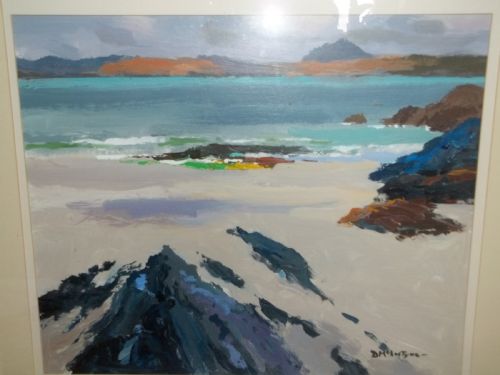
These 1960s framed oil artwork pieces capture mid-century modernism and impressionism on canvas, offering buyers vibrant wall art and textured oil paintings for interior spaces.
1960s Framed Oil Artwork
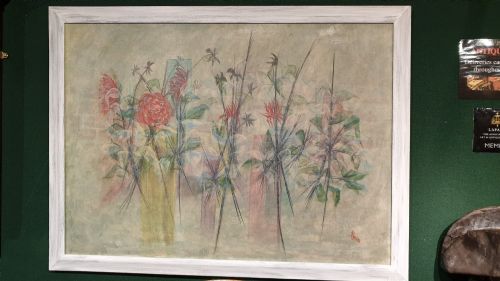
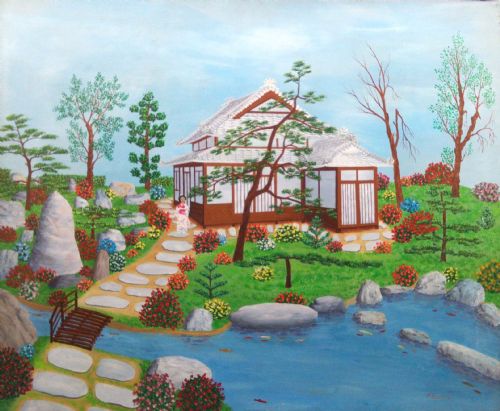
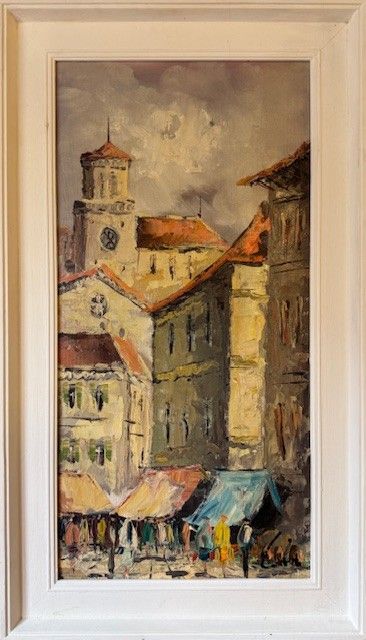
When searching for 1960s framed oil artwork, collectors encounter a diverse selection of oil paintings on canvas and board housed within wooden frames. These works span mid-century modern, French expressionism, and naive art styles, capturing landscapes, cityscapes, portraits, and still life scenes.
The pieces on this page are predominantly mid-century creations from the 1950s and 1960s, alongside select nineteenth-century works. Buyers frequently meet French market scenes, racing subjects, floral displays, and abstract cityscapes that reflect the artistic movements of the era.
How they were made
Artists of this period applied oil paint directly onto stretched canvas or board, frequently building thick layers of impasto to create tactile surface textures. Canvases are secured within wooden frames, often enhanced with gilt detailing to complement the painted composition.
The integration of oil mediums allowed creators to manipulate light and shadow dynamically, whether rendering architectural Parisian quays or abstract botanical studies.
At least one canvas captures a fortunate token of friendship featuring delicate lily of the valley flowers acting as a charming domestic talisman.
What varies in quality
Distinction across the range rests upon the expressive handling of the oil medium and the originality of the composition. Works by documented painters exhibiting confident brushwork and sophisticated colour palettes stand apart from anonymous student pieces.
The physical integration between the canvas, the paint layer, and the supporting wooden frame also determines the overall integrity of the piece.
Tony Giles·Helen Layfield Bradley·Raymond Picque·Gabriel Dauchot·Amile Coppieters·Ron Folland·William Littlejohn·Noel Quintavalle·William Ernst Burwell·Donald McIntyre·Dion Pears
The 1960s Framed Oil Artwork Glossary
- Impasto
- A technique where oil paint is laid thickly on the canvas, standing out in relief from the surface. This method accentuates the physical gesture of the artist's brush.
- Mid-Century Modern
- A design and art movement spanning roughly the middle decades of the twentieth century. It prioritises clean abstraction, expressive form, and modern subjects.
- Naive Art
- Visual art created by a person without formal training, characterised by a childlike simplicity in perspective and line. These works often possess a direct, charming emotional honesty.
- Expressionism
- A modernist style where the artist seeks to depict subjective emotions rather than objective reality. It relies on distorted forms and bold applications of pigment.
- Canvas
- A heavy woven fabric used as a surface for oil painting, typically stretched across a wooden frame. It remains the principal support medium seen across these listings.
1960s Framed Oil Artwork: Frequently Asked Questions
How do I identify a 1960s oil painting?
Look for stylistic cues such as mid-century abstract compositions, impasto textures, and subject matter ranging from European street scenes to post-war industrial landscapes. Signatures, dates inscribed on the reverse, and stretcher frame construction help confirm the period.
Examination of the canvas material and wood framing style further assists in separating genuine mid-century examples from later reproductions.
How were these framed oil artworks displayed originally?
These paintings were produced primarily for domestic interior decoration and gallery exhibitions, mounted in wooden frames designed to complement the specific aesthetic of the canvas. Many retain their original period frames.
The scale of these works ranges from intimate tabletop still lifes to large panoramic cityscapes intended as focal points for living spaces.
How should I care for a framed oil painting?
Keep oil paintings away from direct sunlight and fluctuating humidity to prevent the canvas from sagging and the oil paint from cracking. Dust the surface and the wooden frame gently with a dry, soft cloth.
Avoid using liquid cleaners or chemical solvents on either the painted canvas or the vintage wood frame.
What is the difference between canvas and board supports?
Canvas consists of woven fabric stretched over a wooden frame, offering slight flexibility and a distinct textured surface for oil paint. Board provides a rigid, flat panel support that resists warping and impacts differently.
Both supports were widely utilised by mid-century artists depending on the desired scale and technique.