


1950s Pearl Jewellery
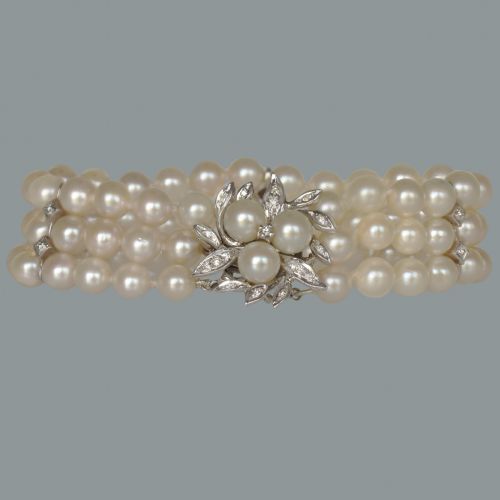
These mid-century 1950s pearl jewellery pieces combine lustrous pearls with diamond and gold clasps for timeless evening wear.
1950s Pearl Jewellery
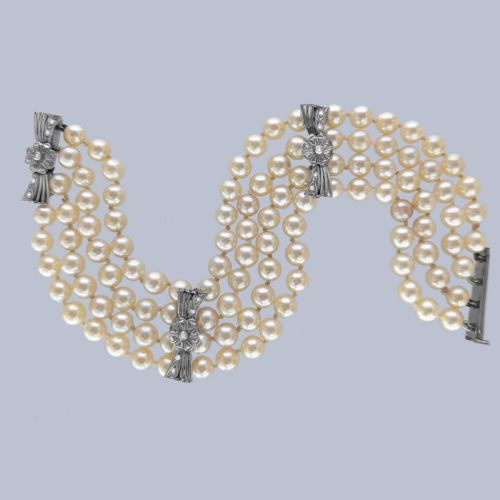
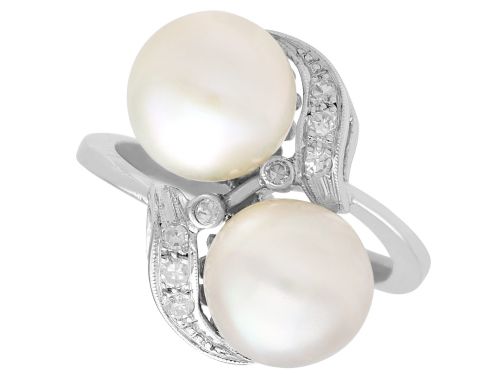
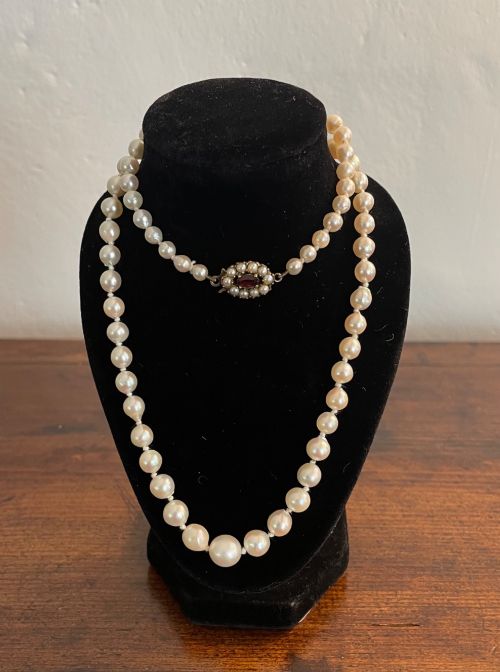
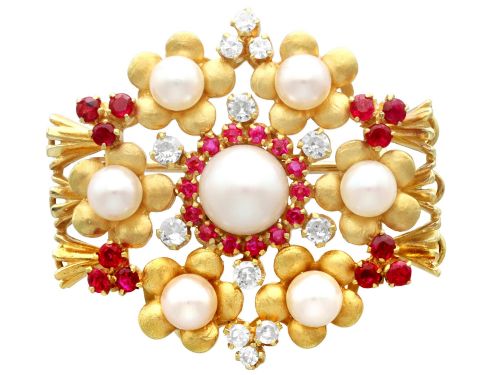
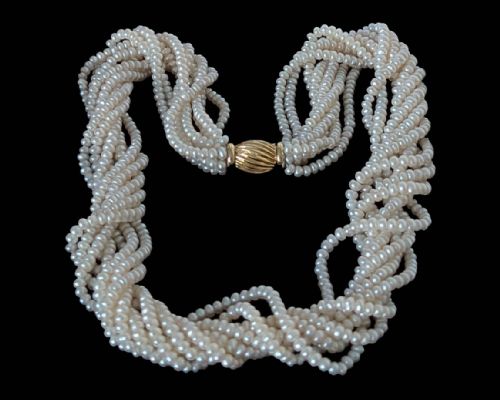
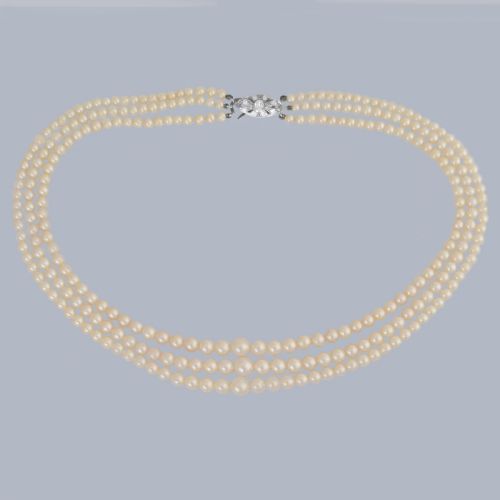
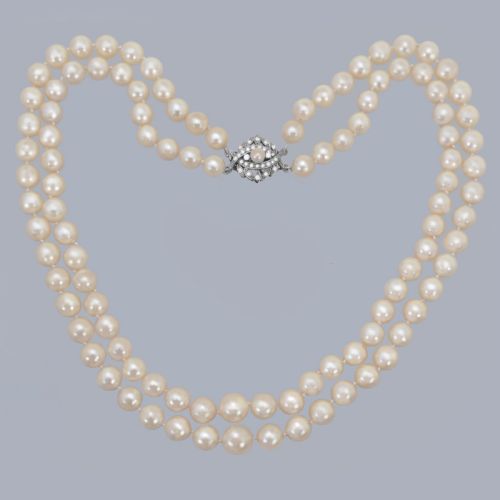
When you search for 1950s pearl jewellery, you encounter multi-strand necklaces, rings, clip-on earrings, brooches, and bracelets from the mid-century period. These designs showcase pearls paired with diamond, ruby, sapphire, emerald, and garnet clasps.
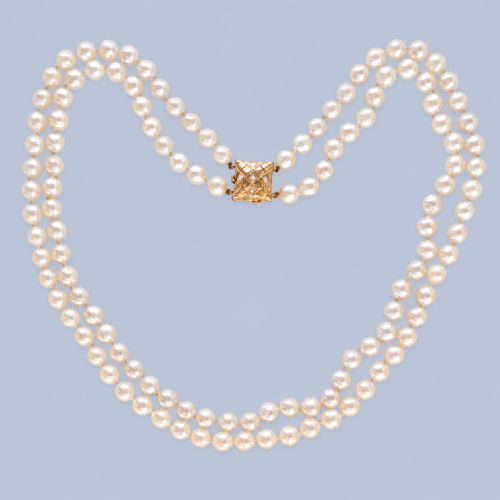
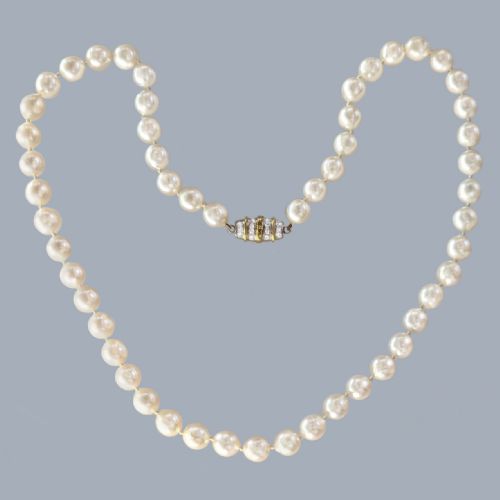
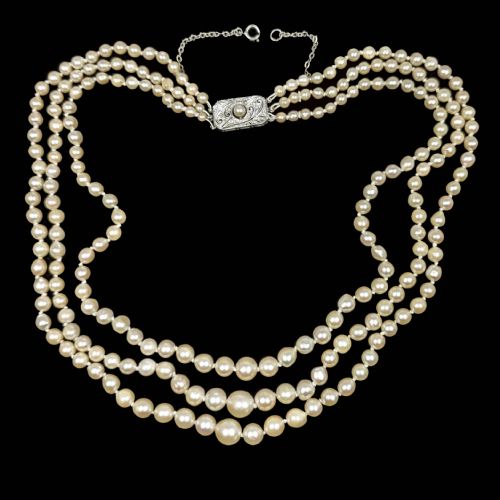
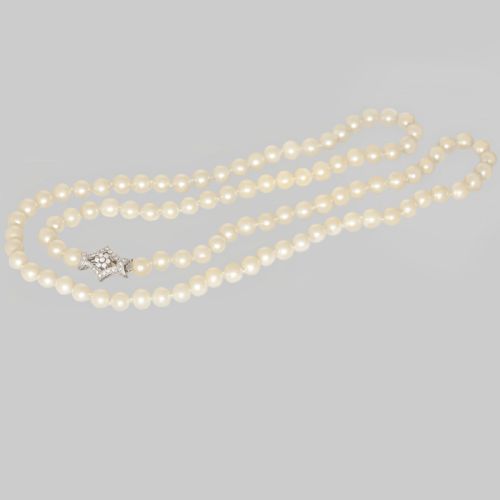
Necklaces dominate the selection, appearing frequently as double, triple, and multi-strand configurations alongside single-strand iterations. Clasps often feature decorative gold work in 9ct and 18ct white or yellow gold.
The aesthetic reflects mid-century fine jewellery trends, incorporating floral, foliate, and geometric clasps that double as focal points when worn at the front or side of the neck.
How they were made
Maker techniques rely on threading cultured or freshwater seed pearls onto durable cords, frequently secured with restrung foundations to ensure structural integrity. Clasps utilise traditional settings in 9ct or 18ct gold to house diamonds and coloured gemstones.
Metals such as 18ct white gold and 18ct yellow gold are worked into intricate foliate, floral, or geometric forms. Gemstones including old-cut diamonds, rubies, sapphires, and emeralds are flush or prong set into these clasps and mountings.
Materials across these listings include cultured pearls, freshwater seed pearls, 9ct gold, 14ct gold, 18ct white and yellow gold, diamonds, rubies, sapphires, emeralds, and garnets.
What varies in quality
Quality differences emerge in the strand count, pearl size uniformity, and the complexity of the gemstone-set clasp. Multi-strand necklaces with certified pearls and substantial diamond or precious stone clasps sit at the upper end.
The presence of independent gemological reports, such as AnchorCert certificates, and the prestige of gold alloys like 18ct white or yellow gold distinguish finer rings and necklaces from simpler seed pearl variations.
The 1950s Pearl Jewellery Glossary
- Cultured pearl
- A pearl created by the introduction of a nucleus into an oyster, resulting in the organic gems found in mid-century necklaces and bracelets. They offer consistent lustre and shape.
- Seed pearl
- Very small natural or cultured pearls used in multi-strand configurations or clustered arrangements. They provide a delicate, textured appearance.
- Old-cut diamond
- A diamond cut with older geometric faceting styles typical of mid-century and earlier fine jewellery. These stones scatter candlelight effectively.
- AnchorCert report
- An independent laboratory certification detailing the authenticity and characteristics of pearls. It provides verified data for high-value necklaces.
- Clip-on earrings
- Non-pierced fastening earrings popular in the 1950s. They secure comfortably to the earlobe without requiring a post.
1950s Pearl Jewellery: Frequently Asked Questions
How do I wear a multi-strand pearl necklace?
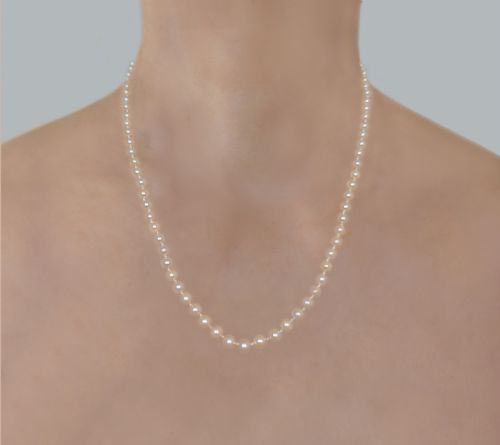
Multi-strand necklaces sit closely against the collarbone, making them suitable for formal necklines and evening dresses. The decorative clasp can be rotated to the front as a feature or worn at the back for a traditional look.
Pair these necklaces with matching clip-on earrings or diamond rings from the same mid-century period to create a coordinated ensemble.
Are 1950s pearls natural or cultured?
The pieces from this era predominantly feature cultured pearls or freshwater seed pearls, grown through controlled aquaculture methods established by the mid-twentieth century. These pearls exhibit the deep lustre characteristic of the period.
Certification reports accompanying certain necklaces verify the origin and specific traits of the pearls used in the strands.
How should I care for vintage pearl jewellery?
Pearls are organic gems that require gentle handling, avoiding direct contact with perfumes, cosmetics, and hairsprays. Store them flat in a lined box to prevent the silk threads from stretching or fraying.
Many vintage necklaces are restrung periodically to maintain the strength of the strands, ensuring the pearls remain secure during regular wear.