




Pearl and Diamond Bracelet
A pearl and diamond bracelet combines luminous organic gems with sparkling stones, offering timeless wrist adornment.
Pearl and Diamond Bracelet
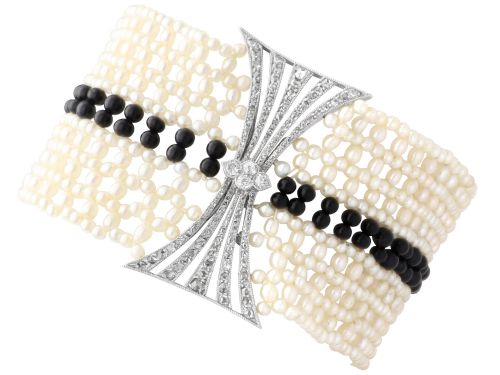
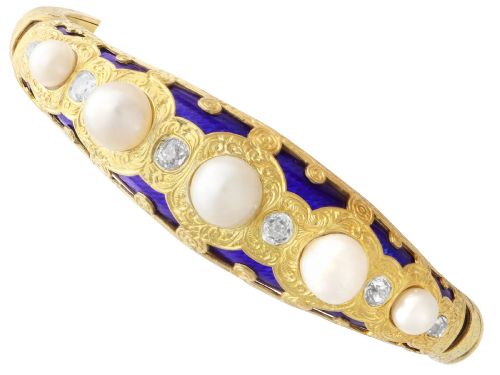
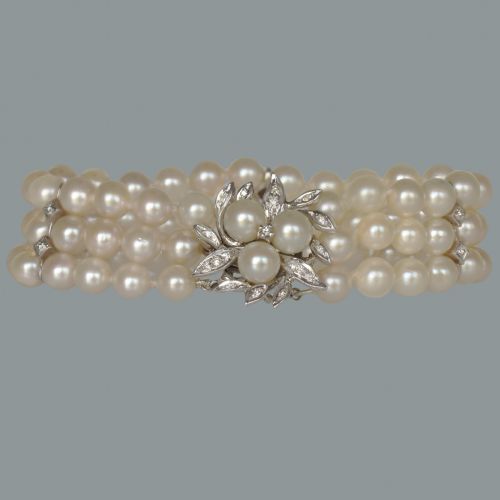
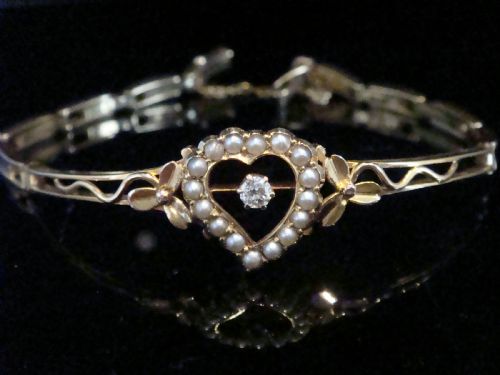
A pearl and diamond bracelet brings together delicate pearls and brilliant diamonds, appearing across multiple eras including Victorian, Edwardian, and mid-century designs. Buyers examining this category will frequently encounter multi-strand configurations alongside hinged bangles and delicate line bracelets.
The selection ranges from elaborate floral clasps set with old cut diamonds to simple lines of gemstones mounted in gold or platinum. These versatile jewels trace their origins from late nineteenth-century workshops through to the mid-twentieth century.
Materials and Construction
Goldsmiths utilised varying purities of gold, including 9ct, 14ct, 15ct, 18ct yellow and rose gold, alongside platinum and white gold. Seed pearls and saltwater pearls were strung securely or mounted alongside sapphires, emeralds, and enamel.
Diamonds are integrated using claw settings, floral cluster arrangements, and line mountings. Metalwork often incorporates fine platinum tops on gold bases to enhance the brilliance of the diamonds.
Materials recorded across the inventory include platinum, 18ct yellow gold, 15ct rose gold, and enamel.
Evaluating Quality
Quality rests in the uniformity and lustre of the pearls, whether natural saltwater specimens or cultured varieties. The precision of the diamond setting and the complexity of the clasp design further distinguish finer examples.
The choice of precious metal, from standard gold to platinum combinations, influences the overall weight and refinement of the piece. Preservation of delicate enamel work and secure strand alignment also mark superior execution.
The Pearl and Diamond Bracelet Glossary
- Seed Pearl
- A very small natural or cultured pearl, often pierced and threaded in multiples to form delicate strands or intricate cluster designs.
- Old Cut Diamond
- A hand-faceted diamond cut popular before modern brilliant-cutting techniques, characterised by a smaller table and a higher crown.
- Natural Saltwater Pearl
- A pearl formed spontaneously in marine molluscs without human intervention, prized for its distinct lustre and organic origin.
- Bangle
- A rigid bracelet that slides over the hand or opens with a hinged clasp, frequently seen in Edwardian designs.
Pearl and Diamond Bracelet: Frequently Asked Questions
How do I care for my pearl and diamond bracelet?
Pearls are organic gems that require gentle cleaning with a soft, damp cloth and should be kept away from harsh chemicals and cosmetics. Store the bracelet flat to prevent stretching the silk or thread holding multiple strands.
Diamonds are harder stones but can still be scratched or collect dirt beneath the settings. Periodic checks by a jeweller ensure the claws holding both diamonds and pearls remain secure.
Are these bracelets suitable for daily wear?
While durable enough for careful wear, historical bracelets with delicate seed pearls or multi-strand layouts benefit from reserved use on special occasions. Platinum and gold settings offer good structural integrity, but organic pearls demand gentle treatment.
Avoiding exposure to water, perfumes, and abrasive surfaces preserves the lustre of the pearls. Storing the piece in a dedicated lined box prevents friction against other jewellery.
What is the difference between natural and cultured pearls?
Natural saltwater pearls develop organically within marine oysters without artificial nucleating agents, making them scarcer in historical pieces. Cultured pearls are grown with human assistance, though both types appear across various periods on this page.
Visual examination under magnification often reveals the subtle differences in nacre depth and lustre. Both varieties have been utilised by jewellers across the Victorian, Edwardian, and vintage eras.
How can I date my bracelet?
Stylistic markers such as Edwardian platinum-topped gold work, Victorian floral cluster clasps, or mid-century geometric lines provide initial chronological clues. Examining the cut of the diamonds, such as old mine or old European cuts, helps narrow down the period of manufacture.
Hallmarks stamped on the metal mounts offer official assay office marks and date letters where present. Comparing these elements with documented examples from the archive assists in confirming the era.